
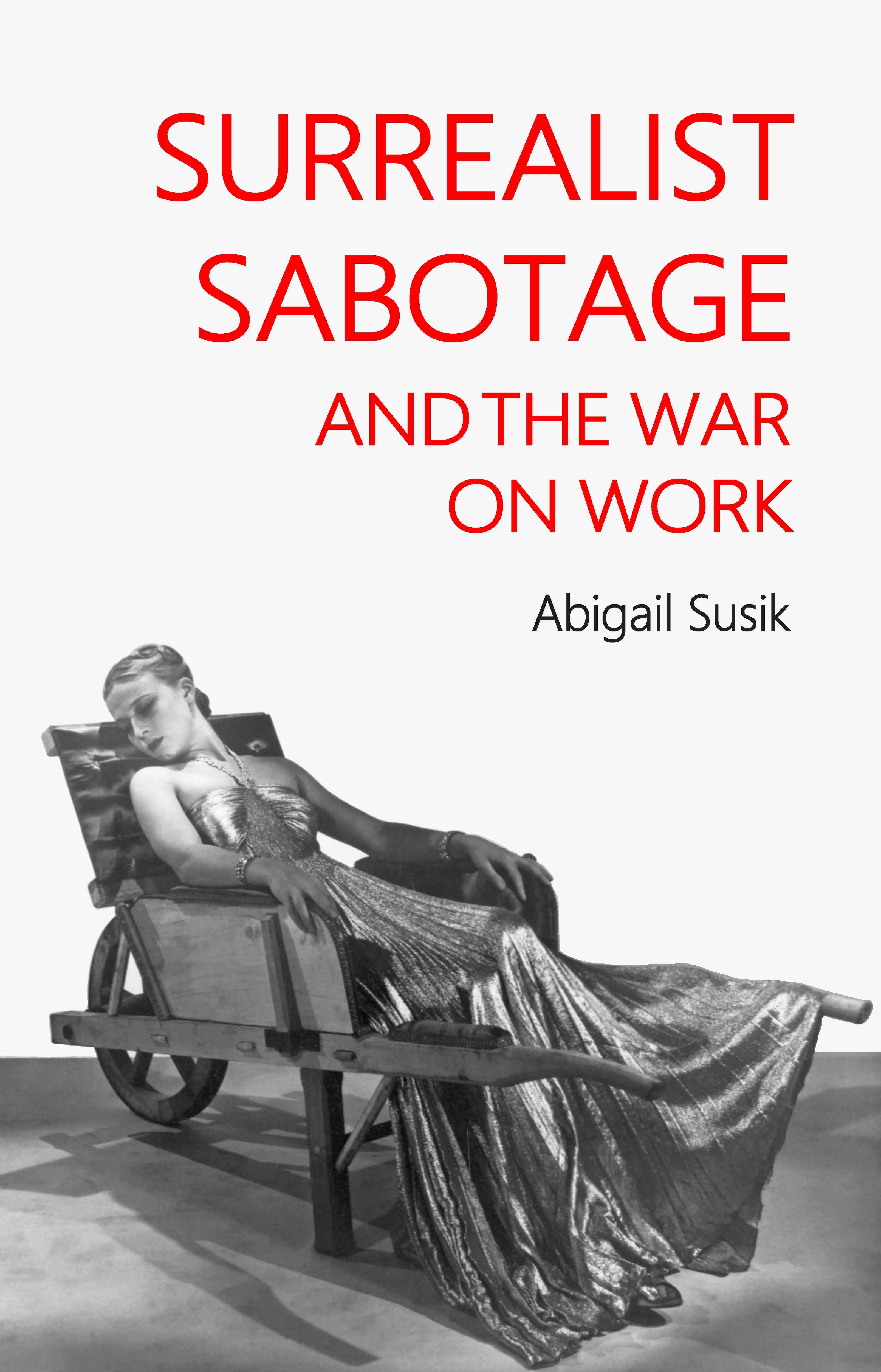
In Surrealist sabotage and the war on work, art historian Abigail Susik uncovers the expansive parameters of the international surrealist movement’s ongoing engagement with an aesthetics of sabotage between the 1920s and the 1970s, demonstrating how surrealists unceasingly sought to transform the work of art into a form of unmanageable anti-work. In four case studies devoted to surrealism’s transatlantic war on work, Susik analyses how artworks and texts by Man Ray, André Breton, Simone Breton, André Thirion, Óscar Domínguez, Konrad Klapheck, and the Chicago surrealists, among others, were pivotally impacted by the intransigent surrealist concepts of principled work refusal, permanent strike, and autonomous pleasure. Underscoring surrealism’s profound relevance for readers engaged in ongoing debates about gendered labour and the wage gap, endemic over-work and exploitation, and the vicissitudes of knowledge work and the gig economy, Surrealist sabotage and the war on work reveals that surrealism’s creative work refusal retains immense relevance in our wired world.
Betaal eenvoudig met kaart, Klarna, Apple Pay of Google Pay. Niet tevreden? Je hebt altijd 14 dagen bedenktijd. Lees meer in onze voorwaarden. Heb je vragen, mail ons dan via hello@memmo.org.
Memmo maakt studeren makkelijker – waar je ook bent ter wereld. Wij brengen je cursusboeken en slimme studietools samen op één plek: samenvattingen, quizzen, podcasts en flashcards. En Ted, je studievriend die antwoord geeft op alles wat je je afvraagt. Meer dan 50.000 studenten studeren hier al – gebouwd om je sneller te laten leren en minder stress te geven.
Misschien vind je dit ook leuk
Koop het boek0