
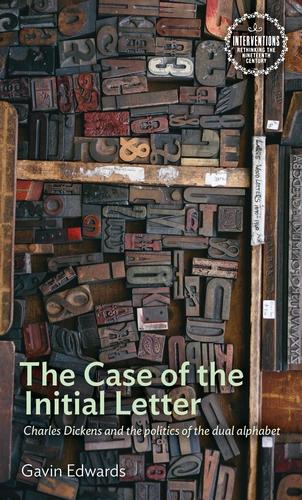
The book analyses attempts by Dickens and other nineteenth-century writers to challenge established ways of using the distinction between upper and lower case letters, in the interests of a wider radicalism. It discusses Dickens’s satire - on ‘Shares’ in Our Mutual Friend, on Paul Dombey’s position as the ‘Son’ of Dombey and Son - alongside the proto-modernist typography of suffragist poet Augusta Webster and the work of Marx’s translators transforming German conventions of capitalisation into English under the influence of Dickens and Carlyle. Placing these innovations within the history of the dual alphabet from its invention by Carolingian scribes to its rejection by modernist poets and the Bauhaus printers, the book tracks the dual alphabet through Dickens’s manuscripts, corrected proofs, and the ‘prompt copies’ for his public Readings, highlighting distinct ways in which writing, printing and speech produce meaning.
Betaal eenvoudig met kaart, Klarna, Apple Pay of Google Pay. Niet tevreden? Je hebt altijd 14 dagen bedenktijd. Lees meer in onze voorwaarden. Heb je vragen, mail ons dan via hello@memmo.org.
Memmo maakt studeren makkelijker – waar je ook bent ter wereld. Wij brengen je cursusboeken en slimme studietools samen op één plek: samenvattingen, quizzen, podcasts en flashcards. En Ted, je studievriend die antwoord geeft op alles wat je je afvraagt. Meer dan 50.000 studenten studeren hier al – gebouwd om je sneller te laten leren en minder stress te geven.
Misschien vind je dit ook leuk
Koop het boek0