
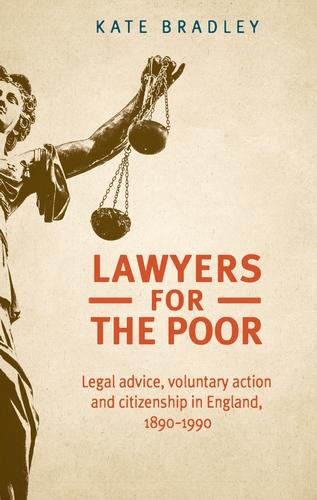
From the 1890s onwards, social reformers, volunteer lawyers, and politicians increasingly came to see access to affordable or free legal advice as a critical part of helping working-class people uphold their rights with landlords, employers, and retailers – and, from the 1940s, with the welfare state. Whilst a state scheme was launched in 1949, it was never fully implemented and help from a lawyer remained out of the reach of many people. Lawyers for the poor is the first full-length study of the development of voluntary action and mutual schemes to make the law more accessible, and the pressure put on the legal profession and governments to bring in further reforms. It offers new insights of the role of access to the law in shaping ideas about citizenship and civil rights in the twentieth century.
Betaal eenvoudig met kaart, Klarna, Apple Pay of Google Pay. Niet tevreden? Je hebt altijd 14 dagen bedenktijd. Lees meer in onze voorwaarden. Heb je vragen, mail ons dan via hello@memmo.org.
Memmo maakt studeren makkelijker – waar je ook bent ter wereld. Wij brengen je cursusboeken en slimme studietools samen op één plek: samenvattingen, quizzen, podcasts en flashcards. En Ted, je studievriend die antwoord geeft op alles wat je je afvraagt. Meer dan 50.000 studenten studeren hier al – gebouwd om je sneller te laten leren en minder stress te geven.
Misschien vind je dit ook leuk
Koop het boek0