
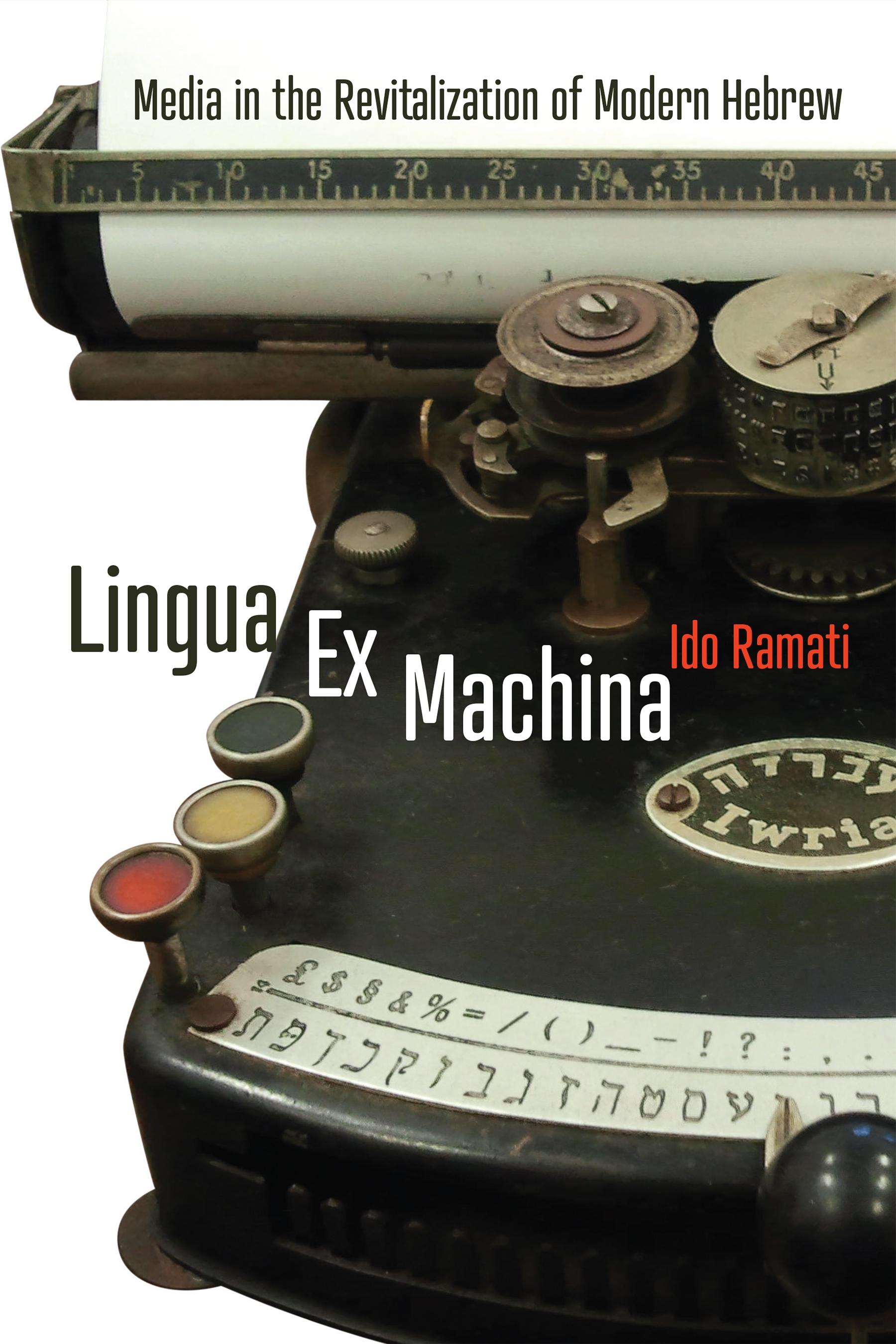
An investigation of the connections between the parallel rise of modern Hebrew and modern media
After lying dormant for two millennia as a mainly written language, Hebrew awoke from its literary slumber to become a living modern vernacular. This revitalization is unique and unprecedented in world history, and its success has been studied in fields from linguistics to cultural history. However, the role of modern technologies in mediating this revival has not yet been considered.
What happens when an ancient language meets modern technology? Lingua Ex Machina explores such a moment in its investigation of the role media technologies—including typewriters, phonographs, and computers—played in the revitalization and modernization of Hebrew from the end of the nineteenth century into the present day.
Ido Ramati examines the role sound recording technologies played in shaping the reemergence of modern Hebrew speech, reveals how the Hebraized typewriter pushed for the modernization of writing in Hebrew, and ultimately argues that these media—whose development and adoption paralleled the revitalization of Hebrew—were an active force in shaping the language as a modern communicative medium. This case study of Hebrew furnishes researchers with a rare opportunity to investigate the complex relation between language, its speakers, and technology at a decisive moment, and sheds new light on the study of media technologies and their theoretical, lingual, and social implications.
Betaal eenvoudig met kaart, Klarna, Apple Pay of Google Pay. Niet tevreden? Je hebt altijd 14 dagen bedenktijd. Lees meer in onze voorwaarden. Heb je vragen, mail ons dan via hello@memmo.org.
Memmo maakt studeren makkelijker – waar je ook bent ter wereld. Wij brengen je cursusboeken en slimme studietools samen op één plek: samenvattingen, quizzen, podcasts en flashcards. En Ted, je studievriend die antwoord geeft op alles wat je je afvraagt. Meer dan 50.000 studenten studeren hier al – gebouwd om je sneller te laten leren en minder stress te geven.