
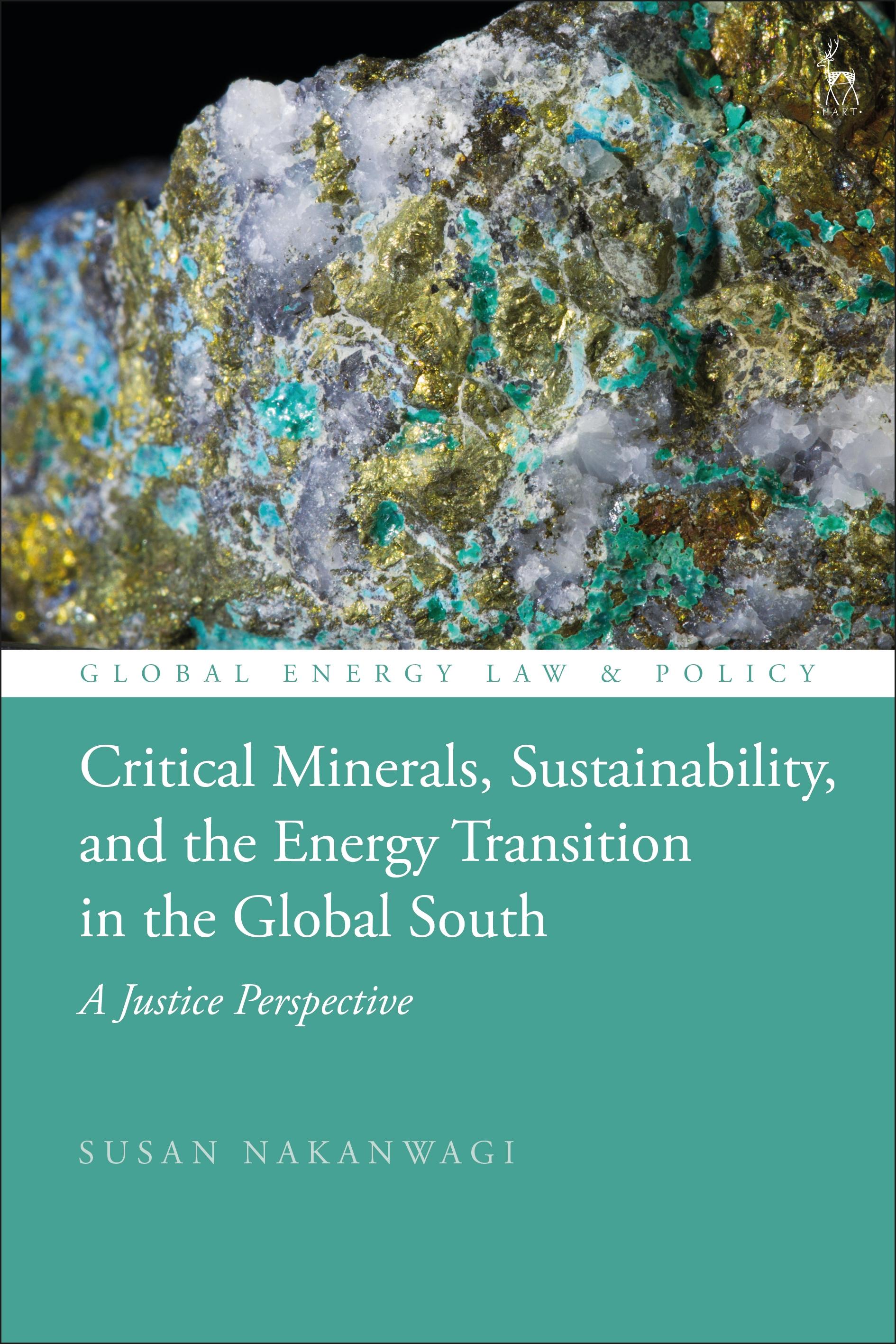
This book addresses the relationship between efficient management of critical minerals and sustainability in the Global South, including Sub-Saharan Africa.
Critical minerals are essential raw materials for the technologies that are pivotal in today's energy transition. However, critical mineral host states and communities face social, economic, ecological, political, technological, and governance injustices. The book contends that the criteria currently used in assessing criticality and critical mineral development do not fulfil the sustainable development ambitions of developing countries and that broader considerations must be taken into account to include the stakeholders involved as well as the spatial dimension of the critical mineral value chain.
In particular, the book argues that the law must consider the broader context in which minerals become critical to particular processes. It positions this argument within the current context of climate change, the just energy transition, the minerals-energy nexus, and geopolitical tensions.
By analysing the copper-cobalt value chain through case studies on DRC, Zambia, China, and the EU, the book provides new avenues for critical mineral development and acknowledges the necessity for sustainability amidst the exacerbated impacts of climate change.
Addressing a key challenge of the global energy transition, the book argues for a just holistic framework, which includes parameters such as domestic value addition, human rights in business development, environmental sensitivity, the development of communication channels from remote marginalised communities to international policymakers, and the re-designing of criticality considerations beyond supply and economic aspects.
Critical minerals are essential raw materials for the technologies that are pivotal in today's energy transition. However, critical mineral host states and communities face social, economic, ecological, political, technological, and governance injustices. The book contends that the criteria currently used in assessing criticality and critical mineral development do not fulfil the sustainable development ambitions of developing countries and that broader considerations must be taken into account to include the stakeholders involved as well as the spatial dimension of the critical mineral value chain.
In particular, the book argues that the law must consider the broader context in which minerals become critical to particular processes. It positions this argument within the current context of climate change, the just energy transition, the minerals-energy nexus, and geopolitical tensions.
By analysing the copper-cobalt value chain through case studies on DRC, Zambia, China, and the EU, the book provides new avenues for critical mineral development and acknowledges the necessity for sustainability amidst the exacerbated impacts of climate change.
Addressing a key challenge of the global energy transition, the book argues for a just holistic framework, which includes parameters such as domestic value addition, human rights in business development, environmental sensitivity, the development of communication channels from remote marginalised communities to international policymakers, and the re-designing of criticality considerations beyond supply and economic aspects.
Pagina's: 216
Categorie: Ekonomi & Utveckling
e-ISBN: 9781509976713
Verzendgewicht: 1.2 kg
Verzending binnen: 1-2 dagen
Betaal eenvoudig met kaart, Klarna, Apple Pay of Google Pay. Niet tevreden? Je hebt altijd 14 dagen bedenktijd. Lees meer in onze voorwaarden. Heb je vragen, mail ons dan via hello@memmo.org.
Memmo maakt studeren makkelijker – waar je ook bent ter wereld. Wij brengen je cursusboeken en slimme studietools samen op één plek: samenvattingen, quizzen, podcasts en flashcards. En Ted, je studievriend die antwoord geeft op alles wat je je afvraagt. Meer dan 50.000 studenten studeren hier al – gebouwd om je sneller te laten leren en minder stress te geven.