
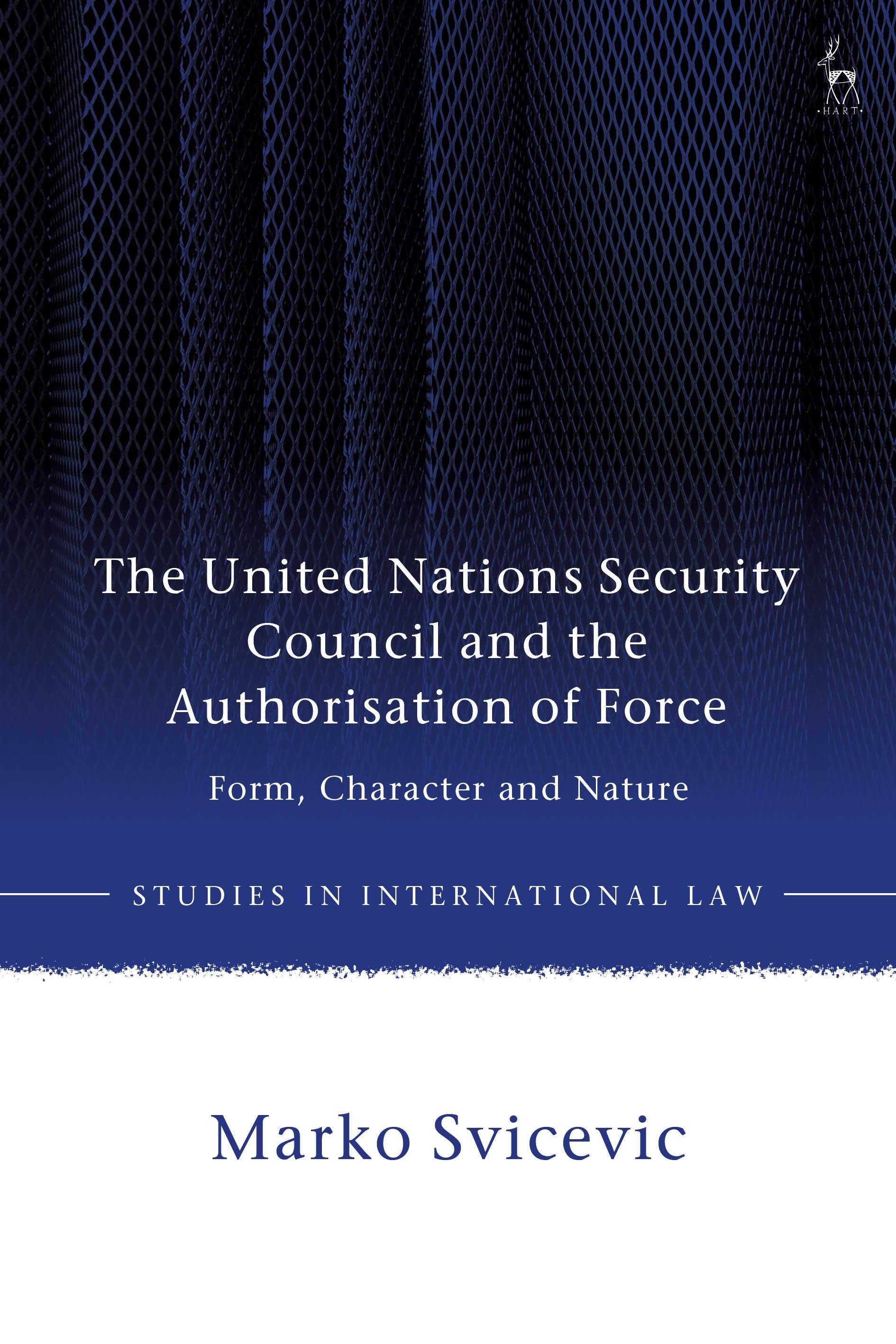
This book examines the United Nations Security Council's authorisation of the use of force, considering the extensive body of UN Security Council resolutions across its now eighty years of existence.
As one of the established exceptions to the Article 2(4) UN Charter prohibition on the use of force, UN Security Council authorisation of force remains a key focus for both States and scholars alike. Despite the apparent consequences of authorisation, authorising resolutions lack prescribed formats or mandatory content. The UN Security Council has over time, however, developed a consistent practice of prior explicit authorisation.
The development of this practice is reflected in a number of essential characteristics within authorising resolutions of the UN Security Council. These include explicit determinations of a threat to international peace and security, the invocation of Chapter VII (or VIII) of the UN Charter, the use of specific authorising language, the inclusion of time or functional limits on authorisation, and the imposition of reporting obligations on those authorised to use force. The book ultimately argues that prior explicit authorisation constitutes a well-established practice, rejecting the legality and admissibility of implicit and retroactive authorisation.
As one of the established exceptions to the Article 2(4) UN Charter prohibition on the use of force, UN Security Council authorisation of force remains a key focus for both States and scholars alike. Despite the apparent consequences of authorisation, authorising resolutions lack prescribed formats or mandatory content. The UN Security Council has over time, however, developed a consistent practice of prior explicit authorisation.
The development of this practice is reflected in a number of essential characteristics within authorising resolutions of the UN Security Council. These include explicit determinations of a threat to international peace and security, the invocation of Chapter VII (or VIII) of the UN Charter, the use of specific authorising language, the inclusion of time or functional limits on authorisation, and the imposition of reporting obligations on those authorised to use force. The book ultimately argues that prior explicit authorisation constitutes a well-established practice, rejecting the legality and admissibility of implicit and retroactive authorisation.
Pagina's: 264
Categorie: Juridik
e-ISBN: 9781509971268
Verzendgewicht: 1.2 kg
Verzending binnen: 1-2 dagen
Betaal eenvoudig met kaart, Klarna, Apple Pay of Google Pay. Niet tevreden? Je hebt altijd 14 dagen bedenktijd. Lees meer in onze voorwaarden. Heb je vragen, mail ons dan via hello@memmo.org.
Memmo maakt studeren makkelijker – waar je ook bent ter wereld. Wij brengen je cursusboeken en slimme studietools samen op één plek: samenvattingen, quizzen, podcasts en flashcards. En Ted, je studievriend die antwoord geeft op alles wat je je afvraagt. Meer dan 50.000 studenten studeren hier al – gebouwd om je sneller te laten leren en minder stress te geven.