
Bloomsbury's Books are protected using Digital Rights Management (DRM). As such, it is not possible to copy or print this Book, nor will it be accessible with an Adobe ID other than your own.
"...an institution for those who practise public law...it has the authority that comes from being compiled by an author of singular distinction". (Lord Woolf, from the Foreword to the Fifth Edition)
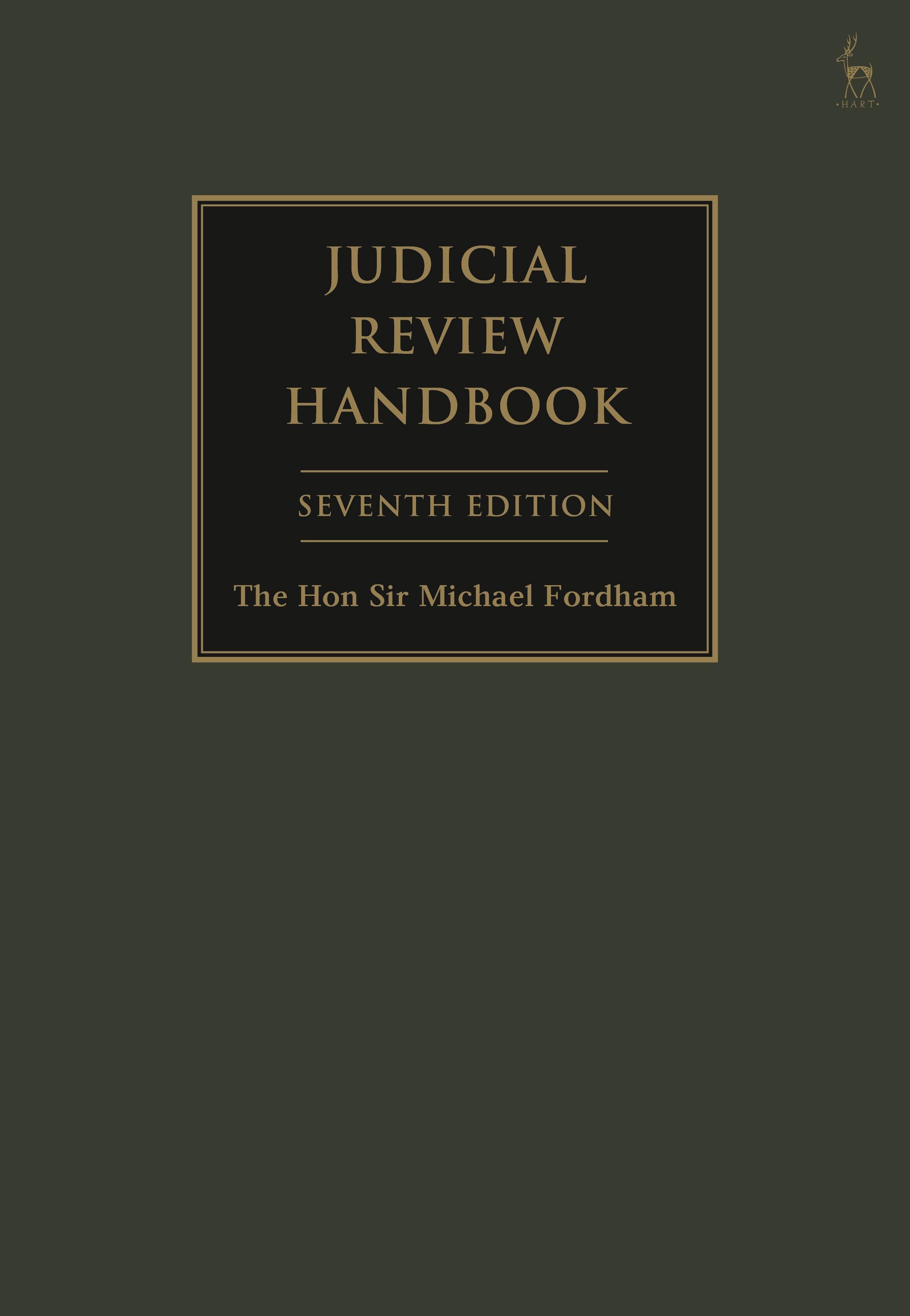
The new edition of this Handbook remains an indispensable source of reference and a guide to the case-law in judicial review. Established as an essential part of the library of any practitioner engaged in public law cases, if offers unrivalled coverage of administrative law, including, but not confined to, the work of the Administrative Court and its procedures. Once again completely revised and up-dated, the seventh edition approximates to a restatement of the law of judicial review, organised around 63 legal principles, each supported by a comprehensive presentation of the sources and an unequalled selection of reported case quotations. It also includes essential procedural rules, forms and guidance issued by the Administrative Court.
As in the previous edition, both the Civil Procedure Rules and Human Rights Act 1998 feature prominently as major influences on the shaping of the case-law. Attention is also given to impact of the Supreme Court. Here Michael Fordham casts an experienced eye over the Court's work in the area of judicial review, and assesses the signs from a Court that will be one of the key influences in the development of judicial review in the modern era.
The author, a leading member of the English public law bar, and now has been involved in many of the leading judicial review cases in recent years and is the founding editor of the Judicial Review journal.
"...an institution for those who practise public law...it has the authority that comes from being compiled by an author of singular distinction". (Lord Woolf, from the Foreword to the Fifth Edition)
The new edition of this Handbook remains an indispensable source of reference and a guide to the case-law in judicial review. Established as an essential part of the library of any practitioner engaged in public law cases, if offers unrivalled coverage of administrative law, including, but not confined to, the work of the Administrative Court and its procedures. Once again completely revised and up-dated, the seventh edition approximates to a restatement of the law of judicial review, organised around 63 legal principles, each supported by a comprehensive presentation of the sources and an unequalled selection of reported case quotations. It also includes essential procedural rules, forms and guidance issued by the Administrative Court.
As in the previous edition, both the Civil Procedure Rules and Human Rights Act 1998 feature prominently as major influences on the shaping of the case-law. Attention is also given to impact of the Supreme Court. Here Michael Fordham casts an experienced eye over the Court's work in the area of judicial review, and assesses the signs from a Court that will be one of the key influences in the development of judicial review in the modern era.
The author, a leading member of the English public law bar, and now has been involved in many of the leading judicial review cases in recent years and is the founding editor of the Judicial Review journal.
Betaal eenvoudig met kaart, Klarna, Apple Pay of Google Pay. Niet tevreden? Je hebt altijd 14 dagen bedenktijd. Lees meer in onze voorwaarden. Heb je vragen, mail ons dan via hello@memmo.org.
Memmo maakt studeren makkelijker – waar je ook bent ter wereld. Wij brengen je cursusboeken en slimme studietools samen op één plek: samenvattingen, quizzen, podcasts en flashcards. En Ted, je studievriend die antwoord geeft op alles wat je je afvraagt. Meer dan 50.000 studenten studeren hier al – gebouwd om je sneller te laten leren en minder stress te geven.