
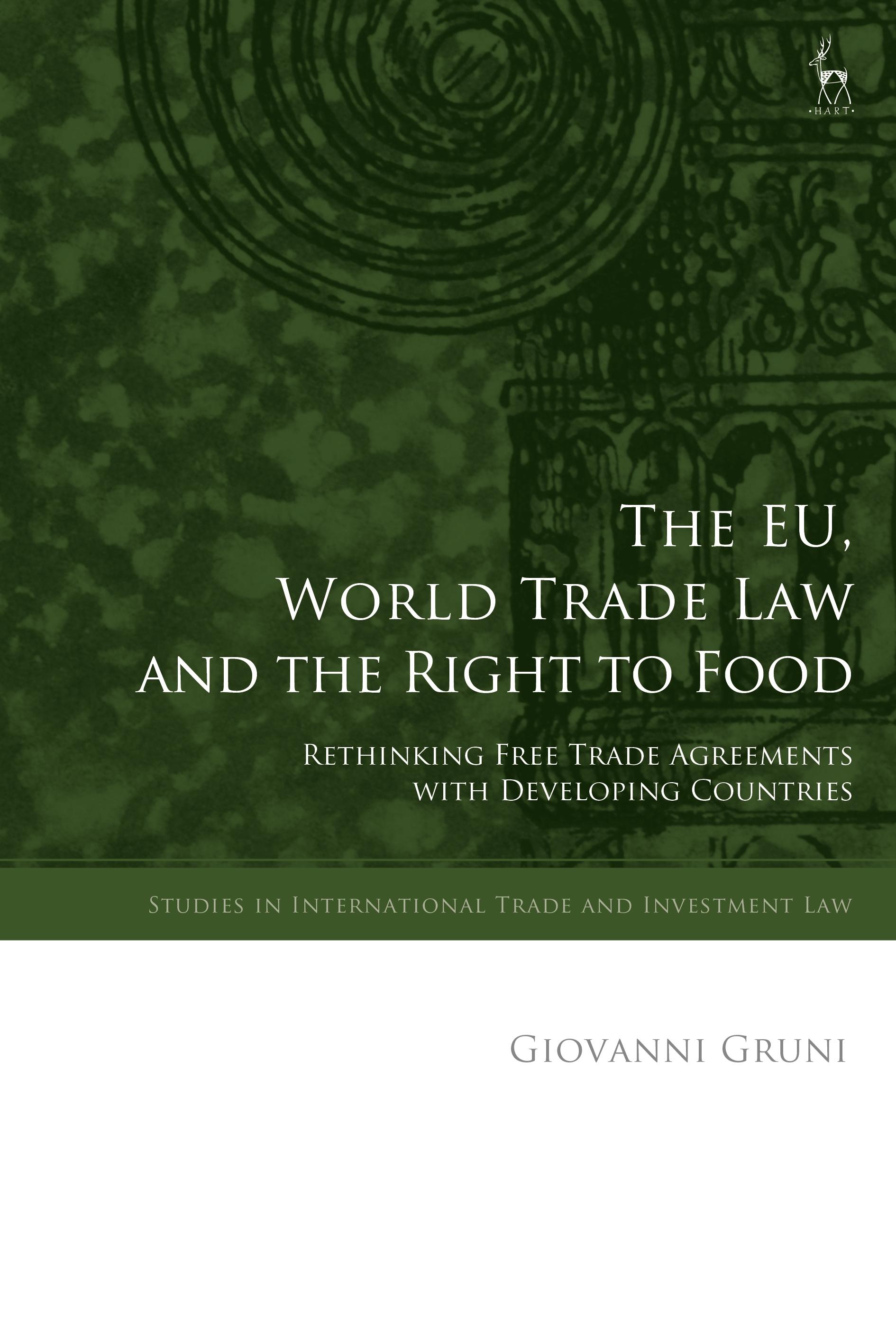
In recent years the European Union has developed a comprehensive strategy to conclude free trade agreements which includes not only prominent trade partners such as Canada, the United States and Japan but also numerous developing countries.
This book looks at the existing WTO law and at the new EU free trade agreements with the Caribbean and sub-Saharan Africa through the lens of the human right to adequate food. It shows how the clauses on the import and export of food included in recent free trade agreements limit the capacity of these countries to implement food security policies and to respect their human rights obligations. This outcome appears to be at odds with international human rights law and dismissive of existing human rights references in EU-founding treaties as well as in treaties between the EU and developing states.
Yet, the book argues against the conception in human rights literature that there is an inflexible agenda encoded in world trade law which is fundamentally conflictual with non-economic interests. The book puts forward the idea that the European Union is perfectly placed to develop a narrative of globalisation considering other areas of public international law when negotiating trade agreements and argues that the EU does have the competences and influence to uphold a role of international leadership in designing a sustainable global trading system. Will the EU be ambitious enough?
A timely contribution to the growing academic literature on the relation between world trade law and international human rights law, this book imagines a central role for the EU in reconciling these two areas of international law.
This book looks at the existing WTO law and at the new EU free trade agreements with the Caribbean and sub-Saharan Africa through the lens of the human right to adequate food. It shows how the clauses on the import and export of food included in recent free trade agreements limit the capacity of these countries to implement food security policies and to respect their human rights obligations. This outcome appears to be at odds with international human rights law and dismissive of existing human rights references in EU-founding treaties as well as in treaties between the EU and developing states.
Yet, the book argues against the conception in human rights literature that there is an inflexible agenda encoded in world trade law which is fundamentally conflictual with non-economic interests. The book puts forward the idea that the European Union is perfectly placed to develop a narrative of globalisation considering other areas of public international law when negotiating trade agreements and argues that the EU does have the competences and influence to uphold a role of international leadership in designing a sustainable global trading system. Will the EU be ambitious enough?
A timely contribution to the growing academic literature on the relation between world trade law and international human rights law, this book imagines a central role for the EU in reconciling these two areas of international law.
Pagina's: 224
Categorie: Juridik
e-ISBN: 9781509916221
Verzendgewicht: 1.2 kg
Verzending binnen: 1-2 dagen
Betaal eenvoudig met kaart, Klarna, Apple Pay of Google Pay. Niet tevreden? Je hebt altijd 14 dagen bedenktijd. Lees meer in onze voorwaarden. Heb je vragen, mail ons dan via hello@memmo.org.
Memmo maakt studeren makkelijker – waar je ook bent ter wereld. Wij brengen je cursusboeken en slimme studietools samen op één plek: samenvattingen, quizzen, podcasts en flashcards. En Ted, je studievriend die antwoord geeft op alles wat je je afvraagt. Meer dan 50.000 studenten studeren hier al – gebouwd om je sneller te laten leren en minder stress te geven.