
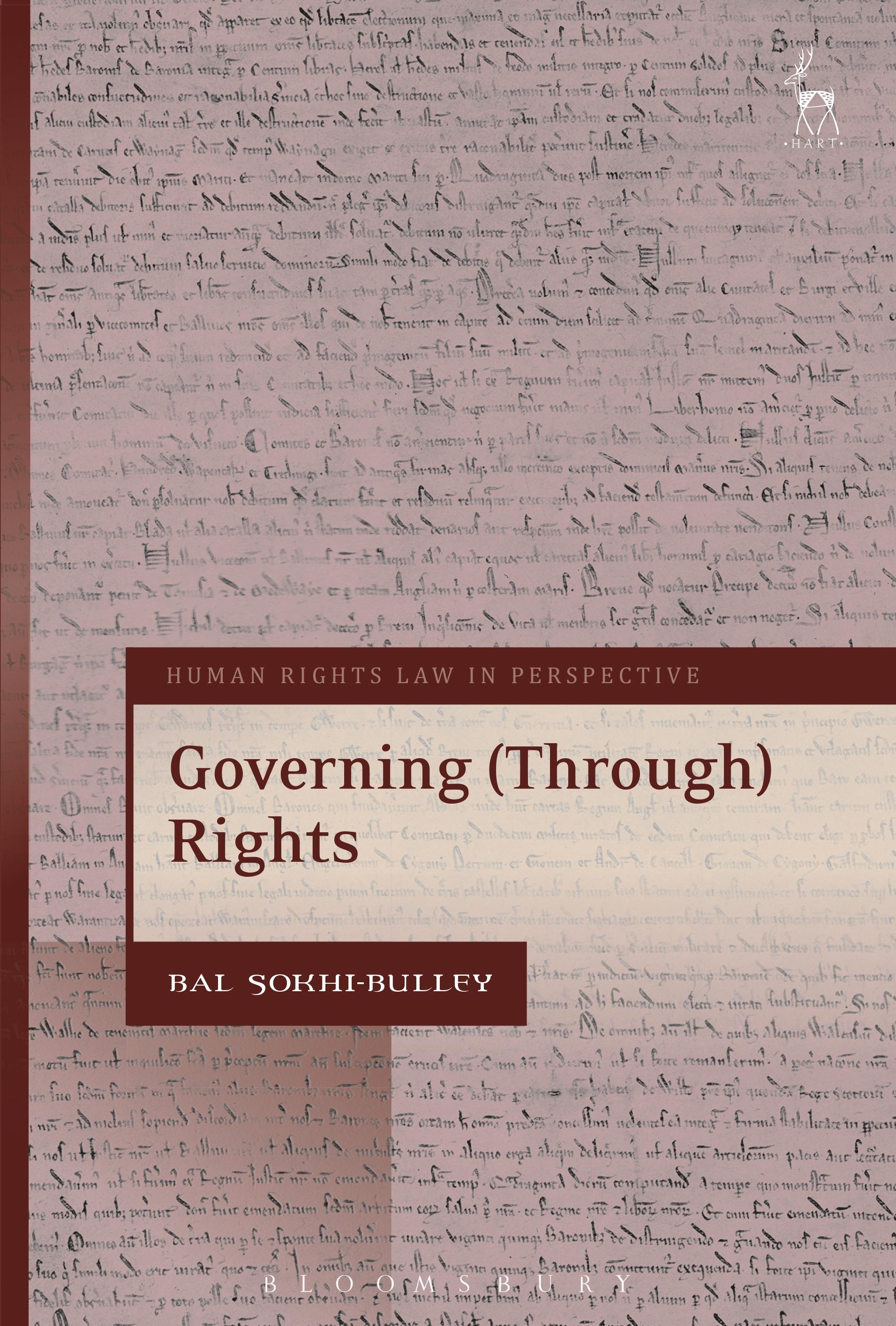
Taking a critical attitude of dissatisfaction towards rights, the central premise of this book is that rights are technologies of governmentality. They are a regulating discourse that is itself managed through governing tactics and techniques – hence governing (through) rights. Part I examines the 'problem of government' (through) rights. The opening chapter describes governmentality as a methodology that is then used to interrogate the relationship between rights and governance in three contexts: the international, regional and local. How rights regulate certain identities and conceptions of what is good governance is examined through the case study of non-state actors, specifically the NGO, in the international setting; through a case study of rights agencies, and the role of experts, indicators and the rights-based approach in the European Union or regional setting; and, in terms of the local, the challenge that the blossoming language of responsibility and community poses to rights in the name of less government (Big Society) is problematised. In Part II, on resisting government (through) rights, the book also asks what counter-conducts are possible using rights language (questioning rioting as resistance), and whether counter-conduct can be read as an ethos of the political, rights-bearing subject and as a new ethical right. Thus, the book bridges a divide between critical theory (ie Foucauldian understandings of power as governmentality) and human rights law.
Betaal eenvoudig met kaart, Klarna, Apple Pay of Google Pay. Niet tevreden? Je hebt altijd 14 dagen bedenktijd. Lees meer in onze voorwaarden. Heb je vragen, mail ons dan via hello@memmo.org.
Memmo maakt studeren makkelijker – waar je ook bent ter wereld. Wij brengen je cursusboeken en slimme studietools samen op één plek: samenvattingen, quizzen, podcasts en flashcards. En Ted, je studievriend die antwoord geeft op alles wat je je afvraagt. Meer dan 50.000 studenten studeren hier al – gebouwd om je sneller te laten leren en minder stress te geven.