
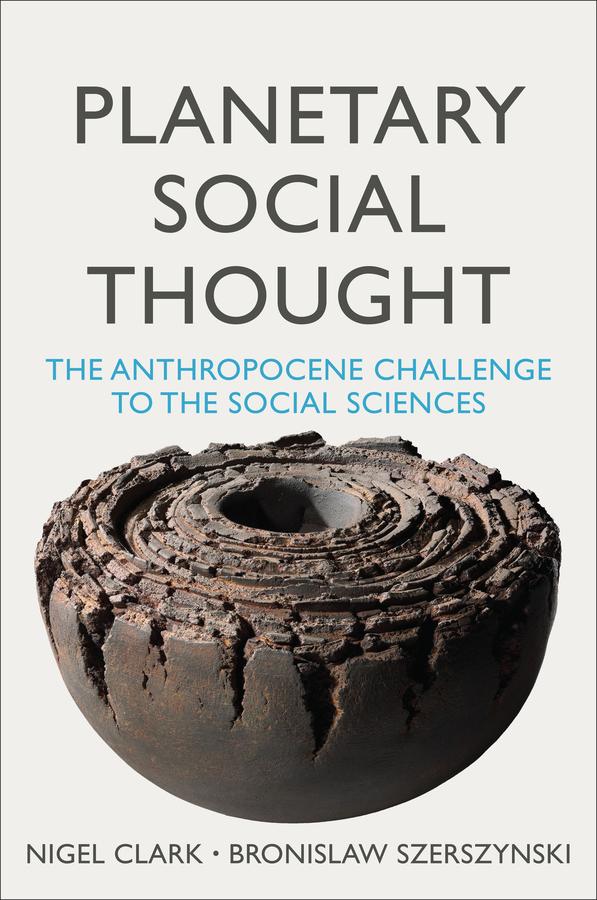
The Anthropocene has emerged as perhaps the scientific concept of the new millennium. Going further than earlier conceptions of the human–environment relationship, Anthropocene science proposes that human activity is tipping the whole Earth system into a new state, with unpredictable consequences. Social life has become a central ingredient in the dynamics of the planet itself.
How should the social sciences respond to the opportunities and challenges posed by this development? In this innovative book, Clark and Szerszynski argue that social thinkers need to revise their own presuppositions about the social: to understand it as the product of a dynamic planet, self-organizing over deep time. They outline ‘planetary social thought’: a transdisciplinary way of thinking social life with and through the Earth. Using a range of case studies, they show how familiar social processes can be radically recast when looked at through a planetary lens, revealing how the world-transforming powers of human social life have always depended on the forging of relations with the inhuman potentialities of our home planet.
Presenting a social theory of the planetary, this book will be essential reading for students and scholars interested in humanity’s relation to the changing Earth.
Betaal eenvoudig met kaart, Klarna, Apple Pay of Google Pay. Niet tevreden? Je hebt altijd 14 dagen bedenktijd. Lees meer in onze voorwaarden. Heb je vragen, mail ons dan via hello@memmo.org.
Memmo maakt studeren makkelijker – waar je ook bent ter wereld. Wij brengen je cursusboeken en slimme studietools samen op één plek: samenvattingen, quizzen, podcasts en flashcards. En Ted, je studievriend die antwoord geeft op alles wat je je afvraagt. Meer dan 50.000 studenten studeren hier al – gebouwd om je sneller te laten leren en minder stress te geven.