
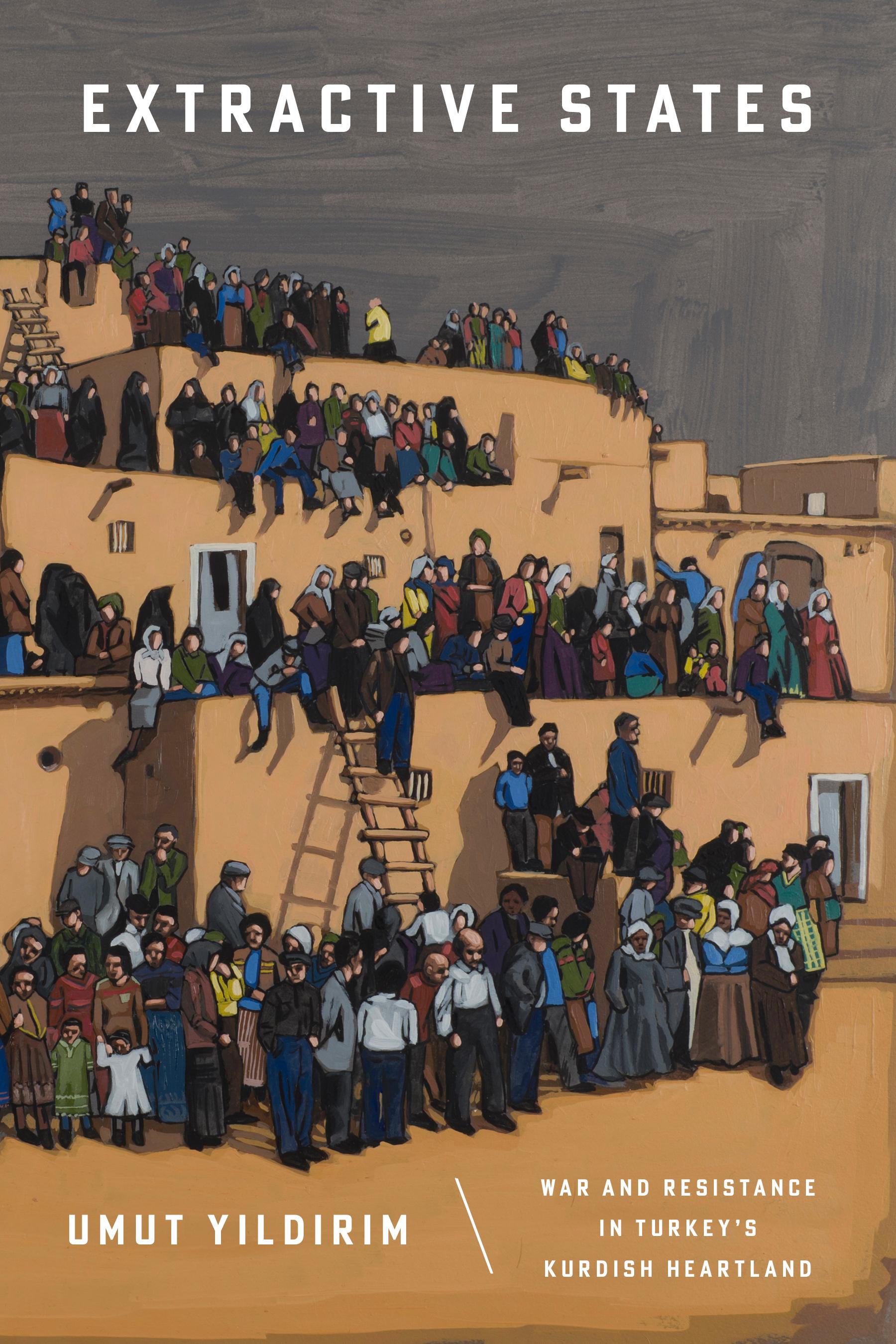
The Turkish state and the Kurdistan Workers' Party engaged in a counterinsurgency war for nearly four decades. Over this period, Diyarbakır, the de facto capital of Greater Kurdistan, was a site of sieges and ceasefires, welfare and humanitarian relief, NGO interventions and decolonial resistance—the complementary, intertwined processes of low-intensity war. War turned urban slums into high-security frontiers and transactional hubs for policy design, and settled deep into embodied knowledges and environments.
Through committed and engaged ethnography, Umut Yıldırım reveals how destruction and displacement became structures of extraction, by which the Turkish state subjugated the Kurdish population into an object to be intervened in, traded, and contained. She also tracks Kurdish efforts to reassert their own stories of war through fact-building, welfare and compensation, women's wellbeing, acts of solidarity, and environmental politics. What we see is a constant dance between war and peace, movement building and its containment, forced displacement and its rehabilitation, memory and its transmutations, environmental damage and its reconstruction. Extractive States offers compelling example of how low-intensity war transforms everyday needs, embodied knowledges, and uprooted populations into securitized knowledge—and how everyday sites of perseverance can reveal such extraction, and thus help conceive of novel modes of resistance.
Betaal eenvoudig met kaart, Klarna, Apple Pay of Google Pay. Niet tevreden? Je hebt altijd 14 dagen bedenktijd. Lees meer in onze voorwaarden. Heb je vragen, mail ons dan via hello@memmo.org.
Memmo maakt studeren makkelijker – waar je ook bent ter wereld. Wij brengen je cursusboeken en slimme studietools samen op één plek: samenvattingen, quizzen, podcasts en flashcards. En Ted, je studievriend die antwoord geeft op alles wat je je afvraagt. Meer dan 50.000 studenten studeren hier al – gebouwd om je sneller te laten leren en minder stress te geven.