
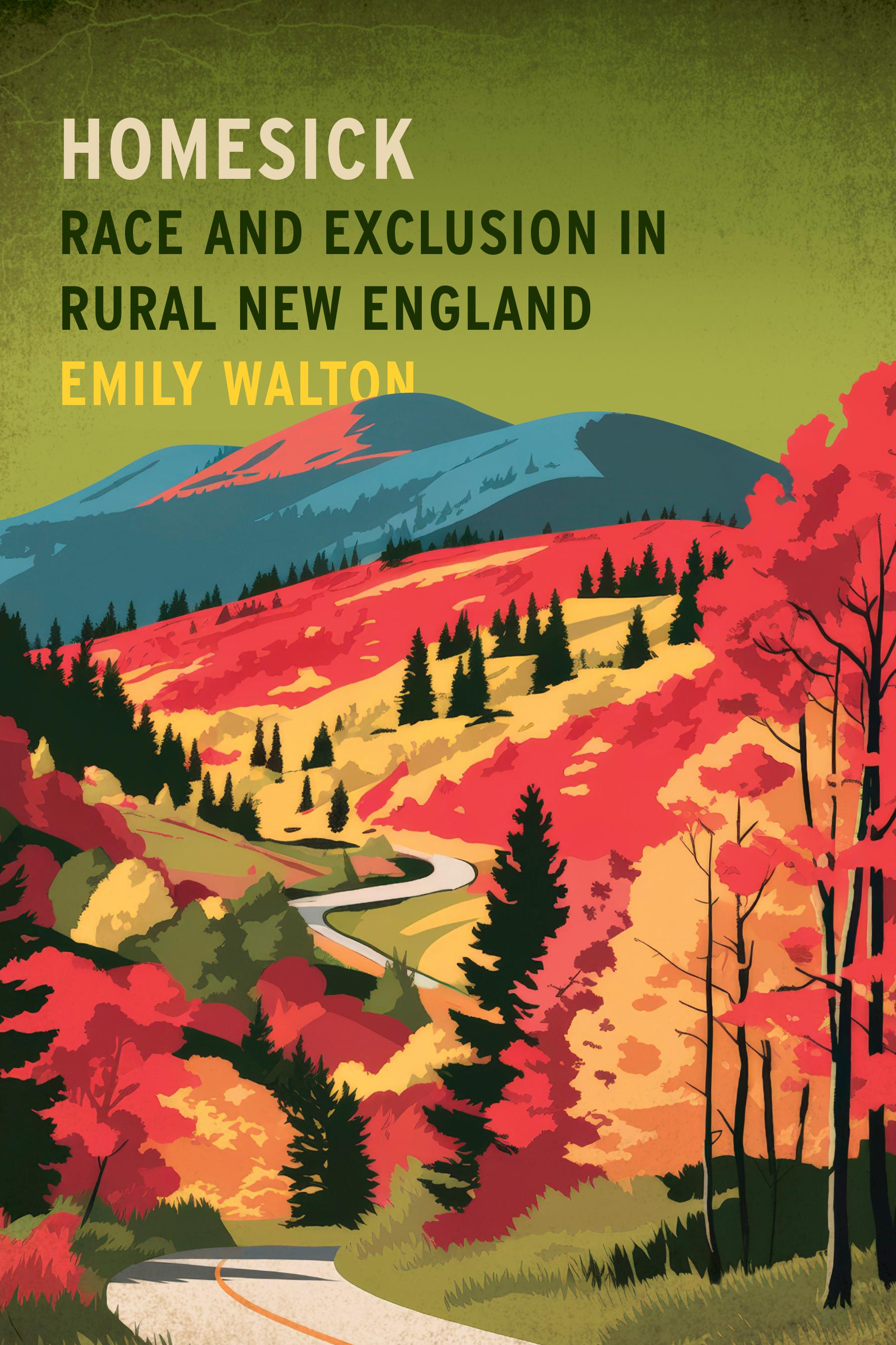
A racial demographic transition has come to rural northern New England. White population losses sit alongside racial and ethnic minority population gains in nearly all of the small towns of the Upper Valley region spanning New Hampshire and Vermont. Homesick considers these trends in a part of the country widely considered to be progressive, offering new insights on the ways white residents maintain racial hierarchies even there.
Walton focuses on the experiences of mostly well-educated migrants of color moving to the area to take well-paid jobs – in this case in health care, higher education, software development, and engineering. Walton shows that white residents maintain their social position through misrecognition—a failure or unwillingness to see people of color as legitimate, welcome, and valuable members of the community. The ultimate impact of such misrecognition is a profound sense of homesickness, a deep longing for a place in which one can feel safe, wanted, and accepted.
Tightly and sensitively argued, this book helps us better understand how to recognize and unsettle such processes of exclusion in diversifying spaces in general.
Betaal eenvoudig met kaart, Klarna, Apple Pay of Google Pay. Niet tevreden? Je hebt altijd 14 dagen bedenktijd. Lees meer in onze voorwaarden. Heb je vragen, mail ons dan via hello@memmo.org.
Memmo maakt studeren makkelijker – waar je ook bent ter wereld. Wij brengen je cursusboeken en slimme studietools samen op één plek: samenvattingen, quizzen, podcasts en flashcards. En Ted, je studievriend die antwoord geeft op alles wat je je afvraagt. Meer dan 50.000 studenten studeren hier al – gebouwd om je sneller te laten leren en minder stress te geven.