
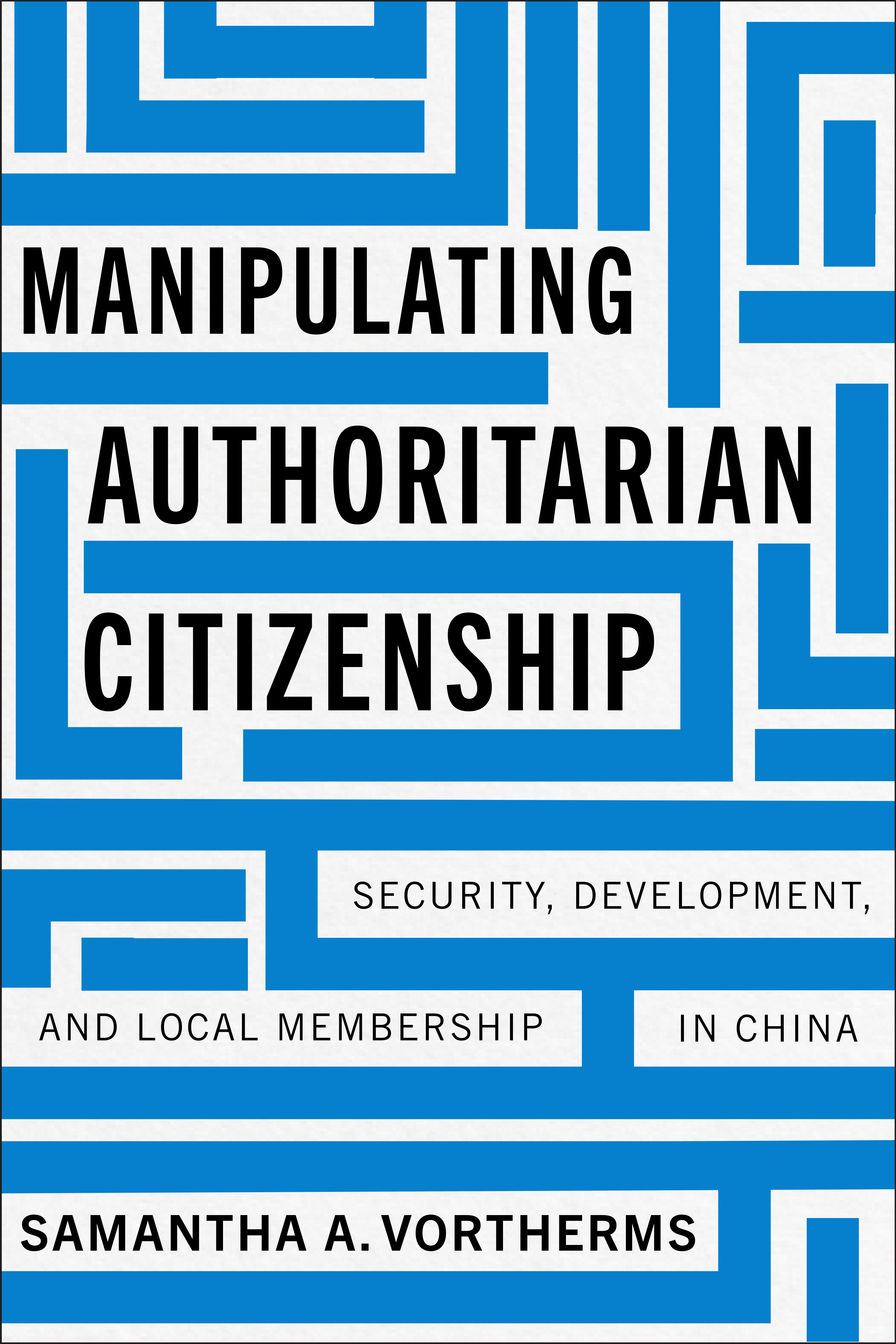
The redistribution of political and economic rights is inherently unequal in autocratic societies. Autocrats routinely divide their populations into included and excluded groups, creating particularistic citizenship through granting some groups access to rights and redistribution while restricting or denying access to others. This book asks: why would a government with powerful tools of exclusion expand access to socioeconomic citizenship rights? And when autocratic systems expand redistribution, whom do they choose to include?
In Manipulating Authoritarian Citizenship, Samantha A. Vortherms examines the crucial case of China—where internal citizenship regimes control who can and cannot become a local citizen through the household registration system (hukou)—and uncovers how autocrats use such institutions to create particularistic membership in citizenship. Vortherms shows how local governments explicitly manipulate local citizenship membership not only to ensure political security and stability, but also, crucially, to advance economic development. Vortherms demonstrates how autocrats use differentiated citizenship to control degrees of access to rights and thus fulfill the authoritarian bargain and balance security and economic incentives. This book expands our understanding of individual-state relations in both autocratic contexts and across a variety of regime types.
Betaal eenvoudig met kaart, Klarna, Apple Pay of Google Pay. Niet tevreden? Je hebt altijd 14 dagen bedenktijd. Lees meer in onze voorwaarden. Heb je vragen, mail ons dan via hello@memmo.org.
Memmo maakt studeren makkelijker – waar je ook bent ter wereld. Wij brengen je cursusboeken en slimme studietools samen op één plek: samenvattingen, quizzen, podcasts en flashcards. En Ted, je studievriend die antwoord geeft op alles wat je je afvraagt. Meer dan 50.000 studenten studeren hier al – gebouwd om je sneller te laten leren en minder stress te geven.