
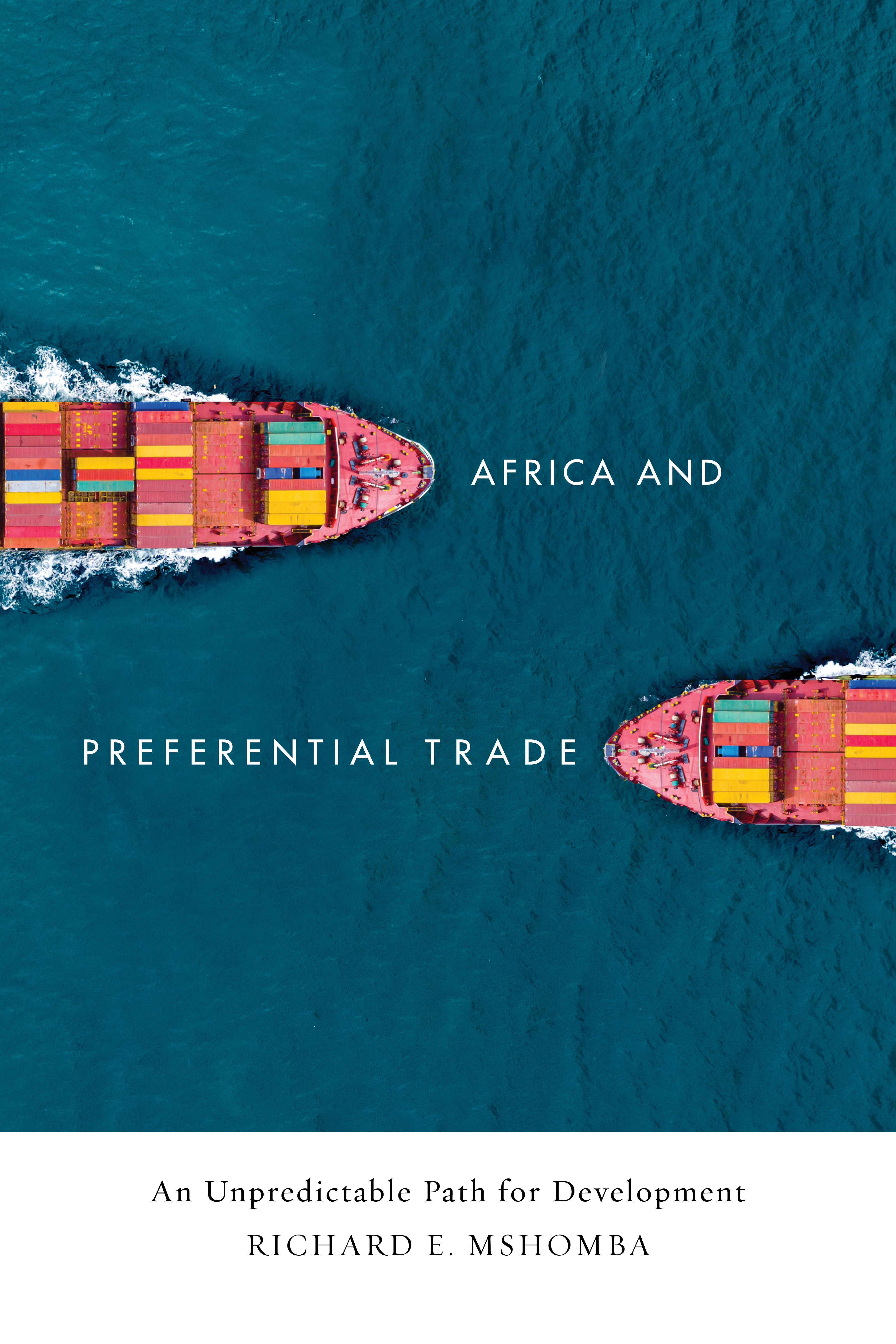
Nonreciprocal preferential trade arrangements are a defining feature of the relationship between developed and developing countries dating back to the colonial era. In the late 1950s, these arrangements started to take a multilateral form when members of the European Economic Community established special trade arrangements with their colonies. Since then, several trade arrangements have featured African countries among the preference-receiving countries. Yet it is not always clear how preferential these arrangements are and whether they in fact help African countries or instead lead them to perpetual dependence on specific markets and products.
Richard E. Mshomba carefully examines the history of these programs and their salient features. He analyzes negotiations between the EU and African countries to form Economic Partnership Agreements. Nonreciprocal preferential trade arrangements are often unpredictable, since the duration and magnitude of preferences are at the discretion of the preference-giving countries. However, when used in conjunction with other development programs and with laws and regulations that encourage long-term investment and protect employees, they can increase economic opportunities and foster human development. This book recognizes the potential impact of nonreciprocal preferential trade arrangements and provides recommendations to increase their viability.
Betaal eenvoudig met kaart, Klarna, Apple Pay of Google Pay. Niet tevreden? Je hebt altijd 14 dagen bedenktijd. Lees meer in onze voorwaarden. Heb je vragen, mail ons dan via hello@memmo.org.
Memmo maakt studeren makkelijker – waar je ook bent ter wereld. Wij brengen je cursusboeken en slimme studietools samen op één plek: samenvattingen, quizzen, podcasts en flashcards. En Ted, je studievriend die antwoord geeft op alles wat je je afvraagt. Meer dan 50.000 studenten studeren hier al – gebouwd om je sneller te laten leren en minder stress te geven.