
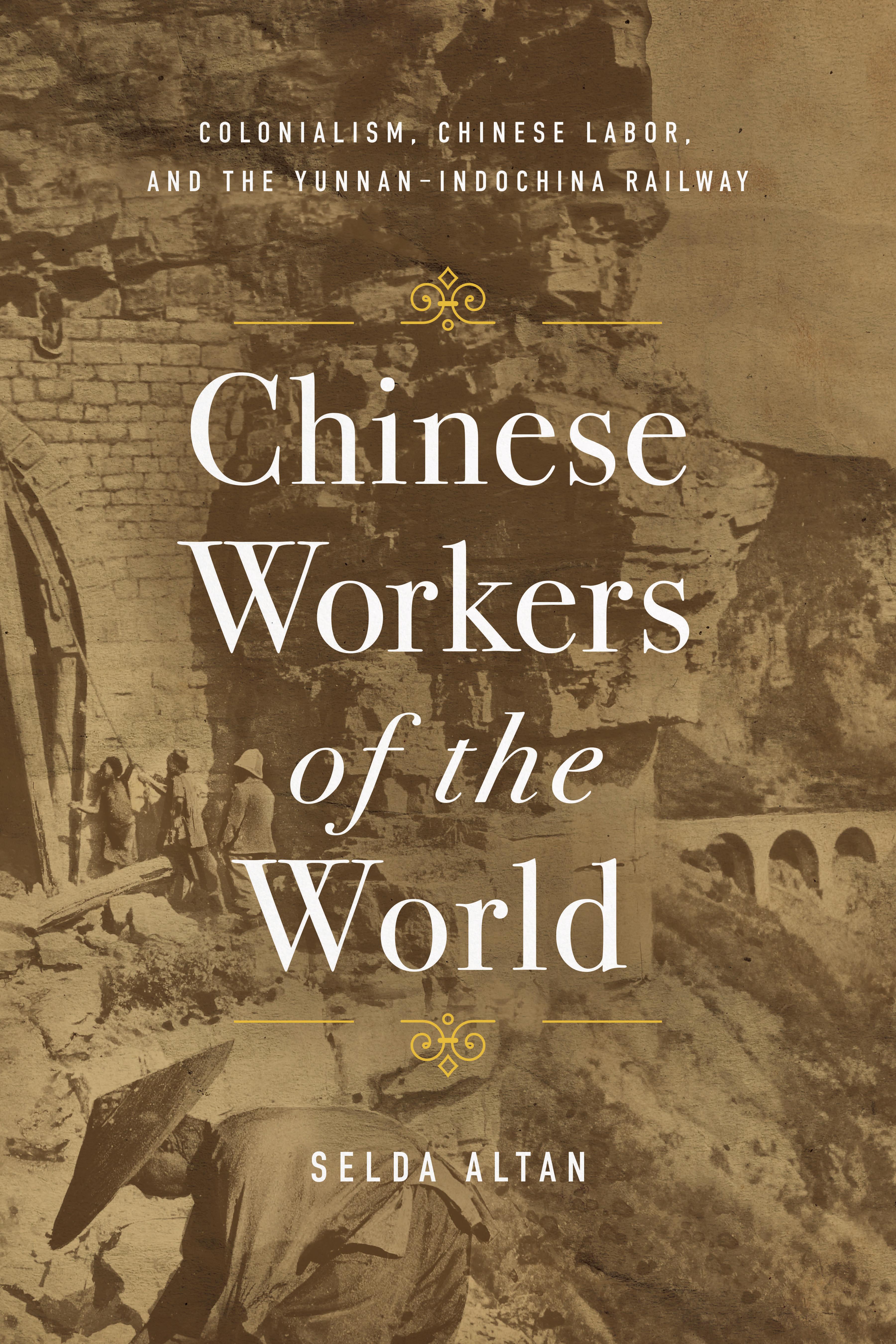
Chinese workers helped build the modern world. They labored on New World plantations, worked in South African mines, and toiled through the construction of the Panama Canal, among many other projects. While most investigations of Chinese workers focus on migrant labor, Chinese Workers of the World explores Chinese labor under colonial regimes within China through an examination of the Yunnan-Indochina Railway, constructed between 1898–1910. The Yunnan railway—a French investment in imperial China during the age of "railroad colonialism"—connected French-colonized Indochina to Chinese markets with a promise of cross-border trade in tin, silk, tea, and opium. However, this ambitious project resulted in fiasco. Thousands of Chinese workers died during the horrid construction process, and costs exceeded original estimates by 74%.
Drawing on Chinese, French, and British archival accounts of day-to-day worker struggles and labor conflicts along the railway, Selda Altan argues that long before the Chinese Communist Party defined Chinese workers as the vanguard of a revolutionary movement in the 1920s, the modern figure of the Chinese worker was born in the crosscurrents of empire and nation in the late nineteenth century. Yunnan railway workers contested the conditions of their employment with the knowledge of a globalizing capitalist market, fundamentally reshaping Chinese ideas of free labor, national sovereignty, and regional leadership in East and Southeast Asia.
Betaal eenvoudig met kaart, Klarna, Apple Pay of Google Pay. Niet tevreden? Je hebt altijd 14 dagen bedenktijd. Lees meer in onze voorwaarden. Heb je vragen, mail ons dan via hello@memmo.org.
Memmo maakt studeren makkelijker – waar je ook bent ter wereld. Wij brengen je cursusboeken en slimme studietools samen op één plek: samenvattingen, quizzen, podcasts en flashcards. En Ted, je studievriend die antwoord geeft op alles wat je je afvraagt. Meer dan 50.000 studenten studeren hier al – gebouwd om je sneller te laten leren en minder stress te geven.