
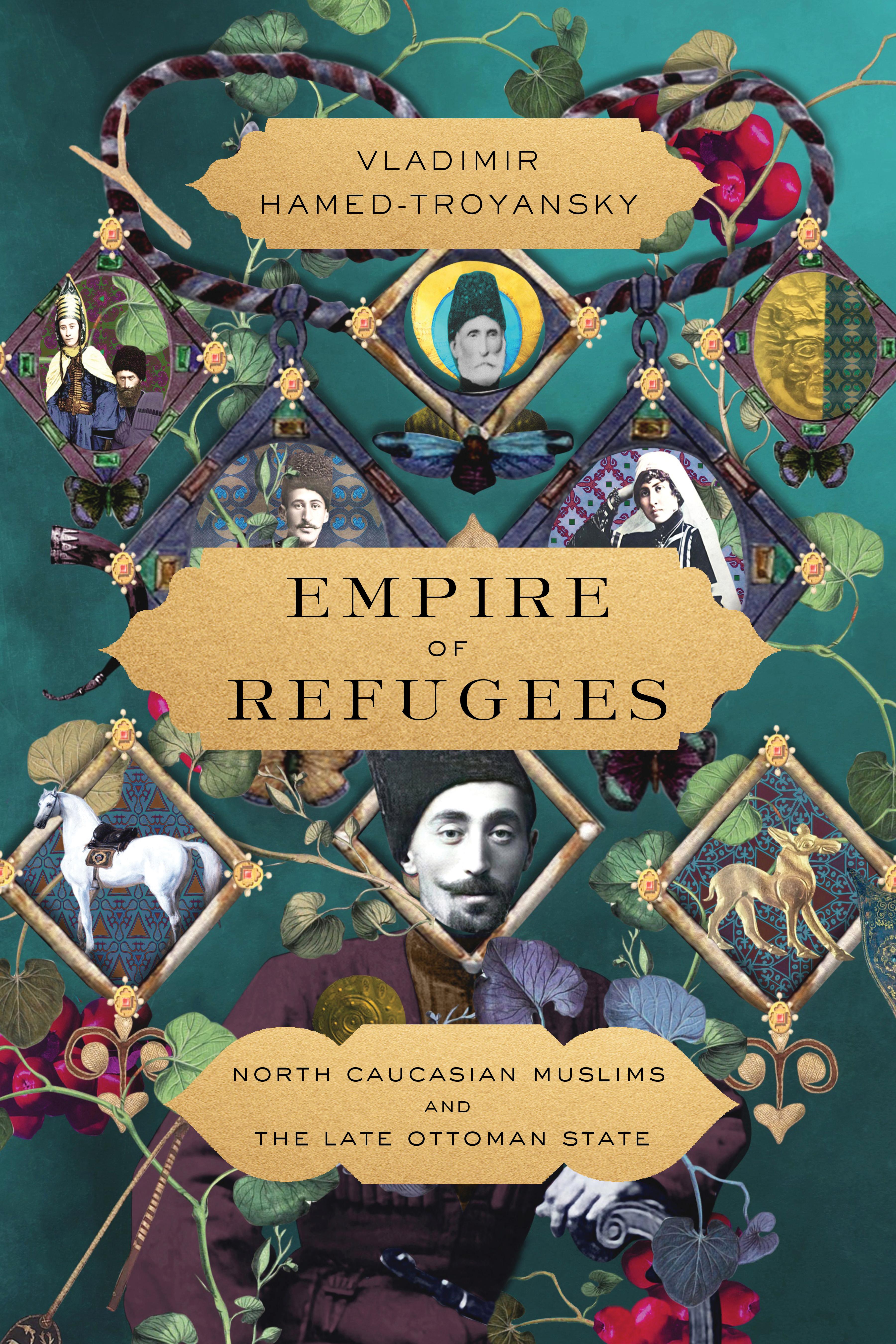
Between the 1850s and World War I, about one million North Caucasian Muslims sought refuge in the Ottoman Empire. This resettlement of Muslim refugees from Russia changed the Ottoman state. Circassians, Chechens, Dagestanis, and others established hundreds of refugee villages throughout the Ottoman Balkans, Anatolia, and the Levant. Most villages still exist today, including what is now the city of Amman. Muslim refugee resettlement reinvigorated regional economies, but also intensified competition over land and, at times, precipitated sectarian tensions, setting in motion fundamental shifts in the borderlands of the Russian and Ottoman empires.
Empire of Refugees reframes late Ottoman history through mass displacement and reveals the origins of refugee resettlement in the modern Middle East. Vladimir Hamed-Troyansky offers a historiographical corrective: the nineteenth-century Ottoman Empire created a refugee regime, predating refugee systems set up by the League of Nations and the United Nations. Grounded in archival research in over twenty public and private archives across ten countries, this book contests the boundaries typically assumed between forced and voluntary migration, and refugees and immigrants, rewriting the history of Muslim migration in the nineteenth and early twentieth centuries.
Betaal eenvoudig met kaart, Klarna, Apple Pay of Google Pay. Niet tevreden? Je hebt altijd 14 dagen bedenktijd. Lees meer in onze voorwaarden. Heb je vragen, mail ons dan via hello@memmo.org.
Memmo maakt studeren makkelijker – waar je ook bent ter wereld. Wij brengen je cursusboeken en slimme studietools samen op één plek: samenvattingen, quizzen, podcasts en flashcards. En Ted, je studievriend die antwoord geeft op alles wat je je afvraagt. Meer dan 50.000 studenten studeren hier al – gebouwd om je sneller te laten leren en minder stress te geven.