
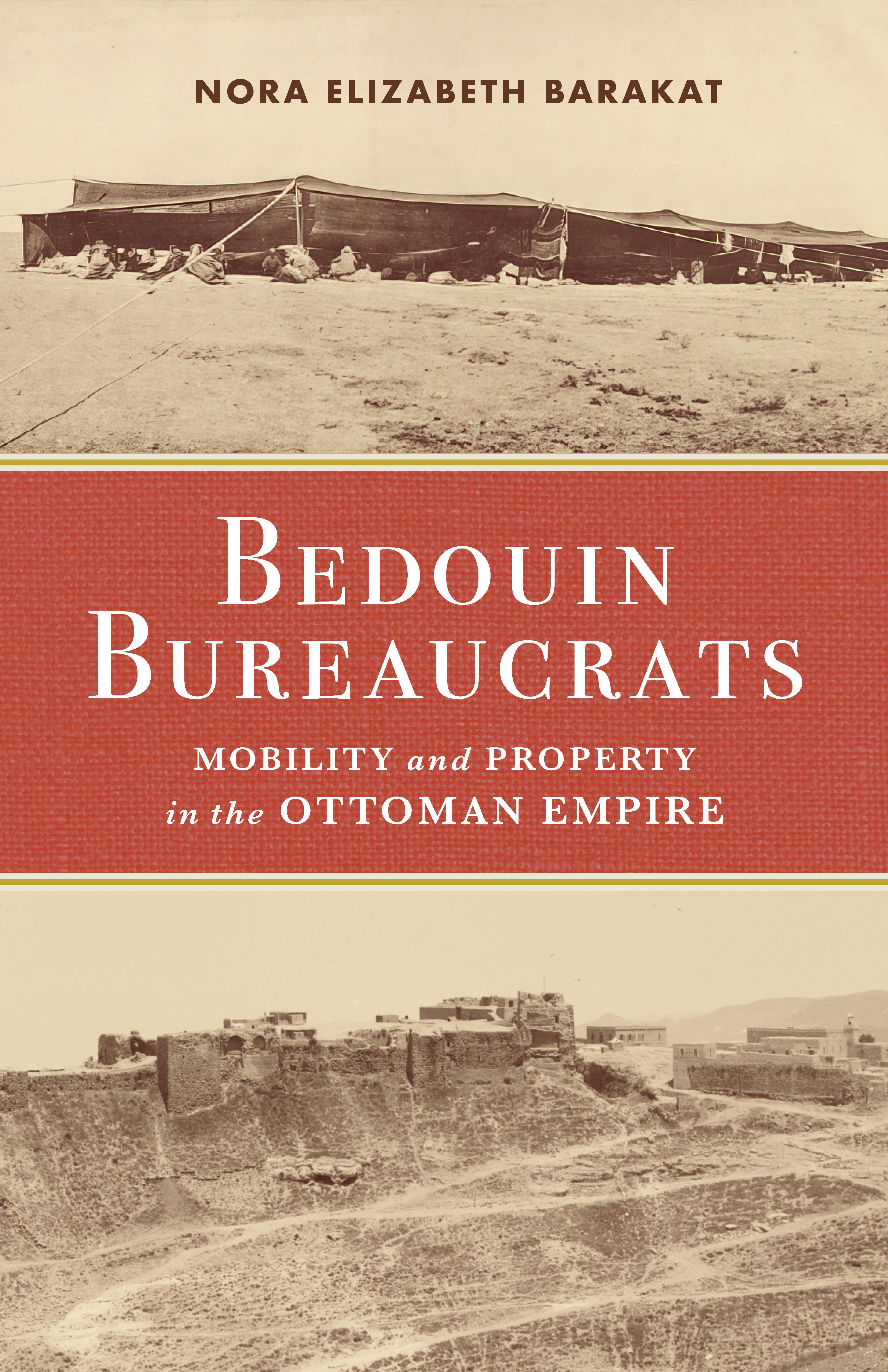
In the late nineteenth century, the Ottoman government sought to fill landscapes they legally defined as "empty." Both land and people were incorporated into territorially bounded grids of administrative law. Bedouin Bureaucrats examines how tent-dwelling, seasonally migrating Bedouin engaged in these processes of Ottoman state transformation on local, imperial, and global scales. As the "tribe" became a category of Ottoman administration, Bedouin in the Syrian interior used this category both to gain political influence and to organize community resistance to maintain control over land.
Narrating the lives of Bedouin individuals involved in Ottoman administration, Nora Elizabeth Barakat brings this population to the center of modern state-making, from their involvement in the pilgrimage administration in the eighteenth century and their performance of land registration and taxation as the Ottoman bureaucracy expanded in the nineteenth, to their eventual rejection of Ottoman attempts to reallocate the "empty land" they inhabited in the twentieth. She places the Syrian interior in a global context of imperial expansion into regions formerly deemed marginal, especially in relation to American and Russian empires. Ultimately, the book illuminates Ottoman state formation attempts within Bedouin communities and the unique trajectory of Bedouin in Syria, who maintained their control over land.
Betaal eenvoudig met kaart, Klarna, Apple Pay of Google Pay. Niet tevreden? Je hebt altijd 14 dagen bedenktijd. Lees meer in onze voorwaarden. Heb je vragen, mail ons dan via hello@memmo.org.
Memmo maakt studeren makkelijker – waar je ook bent ter wereld. Wij brengen je cursusboeken en slimme studietools samen op één plek: samenvattingen, quizzen, podcasts en flashcards. En Ted, je studievriend die antwoord geeft op alles wat je je afvraagt. Meer dan 50.000 studenten studeren hier al – gebouwd om je sneller te laten leren en minder stress te geven.