
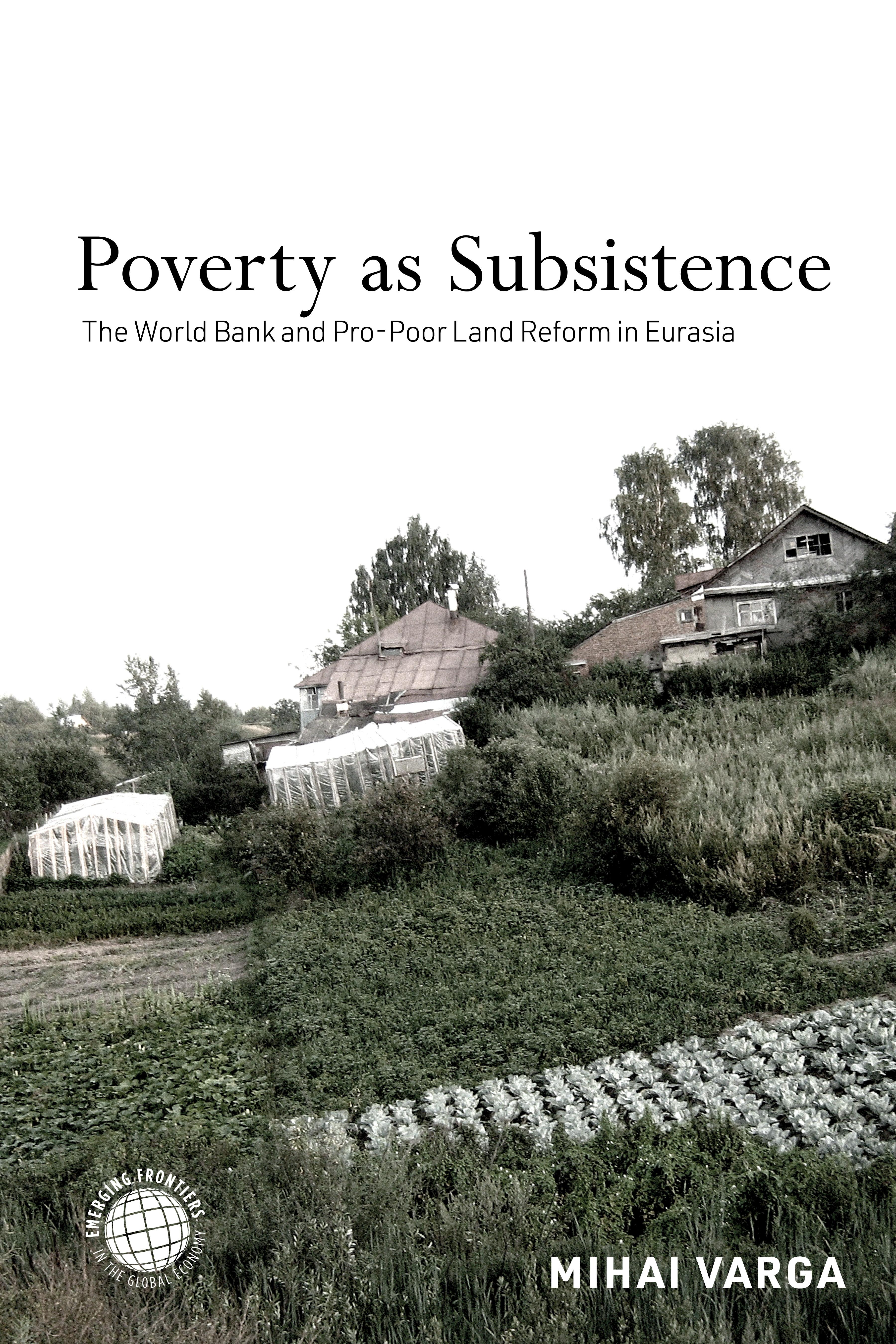
Poverty as Subsistence explores the "propertizing" land reform policy that the World Bank advocated throughout the transitioning countries of Eurasia, expecting poverty reduction to result from distributing property titles over agricultural land to local (rural) populations. China's early 1980s land reform offered support for this expectation, but while the spread of propertizing reform to post-communist Eurasia created numerous "subsistence" smallholders, it failed to stimulate entrepreneurship or market-based production among the rural poor. Varga argues that the World Bank advocated a simplified version of China's land reform that ignored a key element of successful reforms: the smallholders' immediate environment, the structure of actors and institutions determining whether smallholders survive and grow in their communities. With concrete insights from analysis of the land reform program throughout post-communist Eurasia and multisited fieldwork in Romania and Ukraine, this book details how and why land reform led to subsistence and the mechanisms underpinning informal commercialization.
Betaal eenvoudig met kaart, Klarna, Apple Pay of Google Pay. Niet tevreden? Je hebt altijd 14 dagen bedenktijd. Lees meer in onze voorwaarden. Heb je vragen, mail ons dan via hello@memmo.org.
Memmo maakt studeren makkelijker – waar je ook bent ter wereld. Wij brengen je cursusboeken en slimme studietools samen op één plek: samenvattingen, quizzen, podcasts en flashcards. En Ted, je studievriend die antwoord geeft op alles wat je je afvraagt. Meer dan 50.000 studenten studeren hier al – gebouwd om je sneller te laten leren en minder stress te geven.