
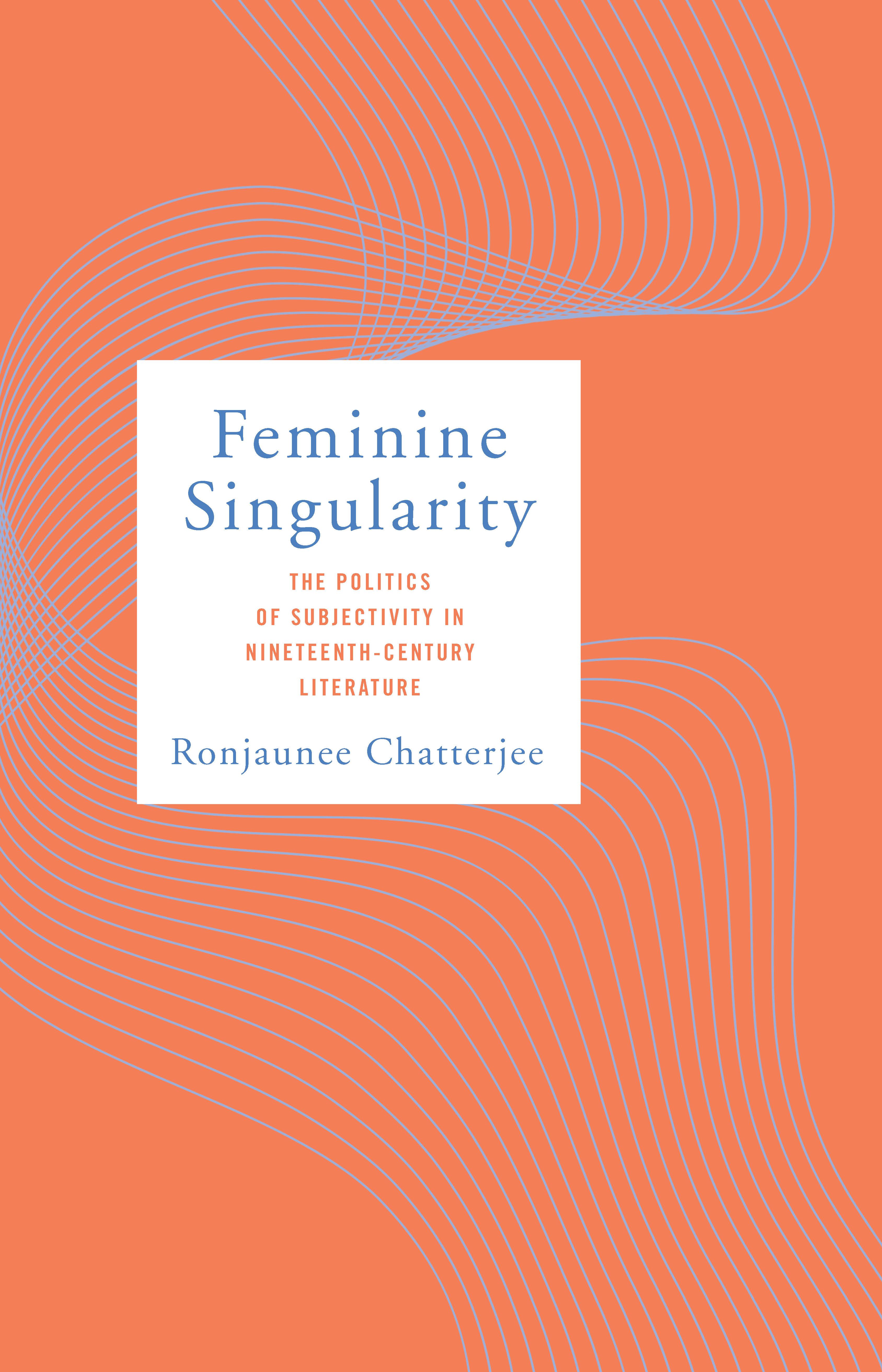
What happens if we read nineteenth-century and Victorian texts not for the autonomous liberal subject, but for singularity—for what is partial, contingent, and in relation, rather than what is merely "alone"? Feminine Singularity offers a powerful feminist theory of the subject—and shows us paths to thinking subjectivity, race, and gender anew in literature and in our wider social world.
Through fresh, sophisticated readings of Lewis Carroll, Christina Rossetti, Charles Baudelaire, and Wilkie Collins in conversation with psychoanalysis, Black feminist and queer-of-color theory, and continental philosophy, Ronjaunee Chatterjee uncovers a lexicon of feminine singularity that manifests across poetry and prose through likeness and minimal difference, rather than individuality and identity. Reading for singularity shows us the ways femininity is fundamentally entangled with racial difference in the nineteenth century and well into the contemporary, as well as how rigid categories can be unsettled and upended.
Grappling with the ongoing violence embedded in the Western liberal imaginary, Feminine Singularity invites readers to commune with the subversive potentials in nineteenth-century literature for thinking subjectivity today.
Betaal eenvoudig met kaart, Klarna, Apple Pay of Google Pay. Niet tevreden? Je hebt altijd 14 dagen bedenktijd. Lees meer in onze voorwaarden. Heb je vragen, mail ons dan via hello@memmo.org.
Memmo maakt studeren makkelijker – waar je ook bent ter wereld. Wij brengen je cursusboeken en slimme studietools samen op één plek: samenvattingen, quizzen, podcasts en flashcards. En Ted, je studievriend die antwoord geeft op alles wat je je afvraagt. Meer dan 50.000 studenten studeren hier al – gebouwd om je sneller te laten leren en minder stress te geven.