
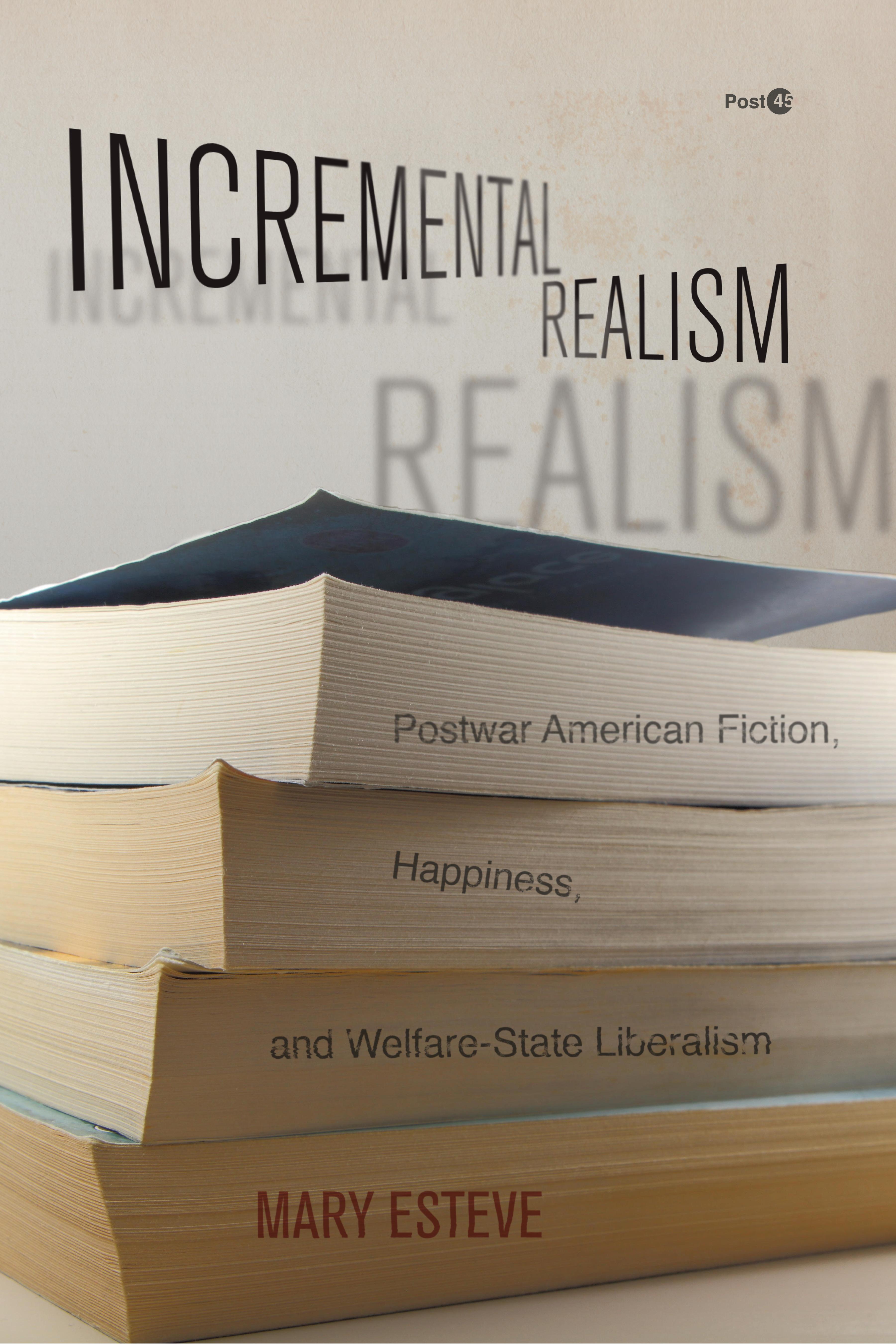
The postwar US political imagination coalesced around a quintessential midcentury American trope: happiness. In Incremental Realism, Mary Esteve offers a bold, revisionist literary and cultural history of efforts undertaken by literary realists, public intellectuals, and policy activists to advance the value of public institutions and the claims of socioeconomic justice.
Esteve specifically focuses on era-defining authors of realist fiction, including Philip Roth, Gwendolyn Brooks, Patricia Highsmith, Paula Fox, Peter Taylor, and Mary McCarthy, who mobilized the trope of happiness to reinforce the crucial value of public institutions, such as the public library, and the importance of pursuing socioeconomic justice, as envisioned by the United Nations Universal Declaration of Human Rights and welfare-state liberals. In addition to embracing specific symbols of happiness, these writers also developed narrative modes—what Esteve calls "incremental realism"—that made justifiable the claims of disadvantaged Americans on the nation-state and promoted a small-canvas aesthetics of moderation. With this powerful demonstration of the way postwar literary fiction linked the era's familiar trope of happiness to political arguments about socioeconomic fairness and individual flourishing, Esteve enlarges our sense of the postwar liberal imagination and its attentiveness to better, possible worlds.
Betaal eenvoudig met kaart, Klarna, Apple Pay of Google Pay. Niet tevreden? Je hebt altijd 14 dagen bedenktijd. Lees meer in onze voorwaarden. Heb je vragen, mail ons dan via hello@memmo.org.
Memmo maakt studeren makkelijker – waar je ook bent ter wereld. Wij brengen je cursusboeken en slimme studietools samen op één plek: samenvattingen, quizzen, podcasts en flashcards. En Ted, je studievriend die antwoord geeft op alles wat je je afvraagt. Meer dan 50.000 studenten studeren hier al – gebouwd om je sneller te laten leren en minder stress te geven.