
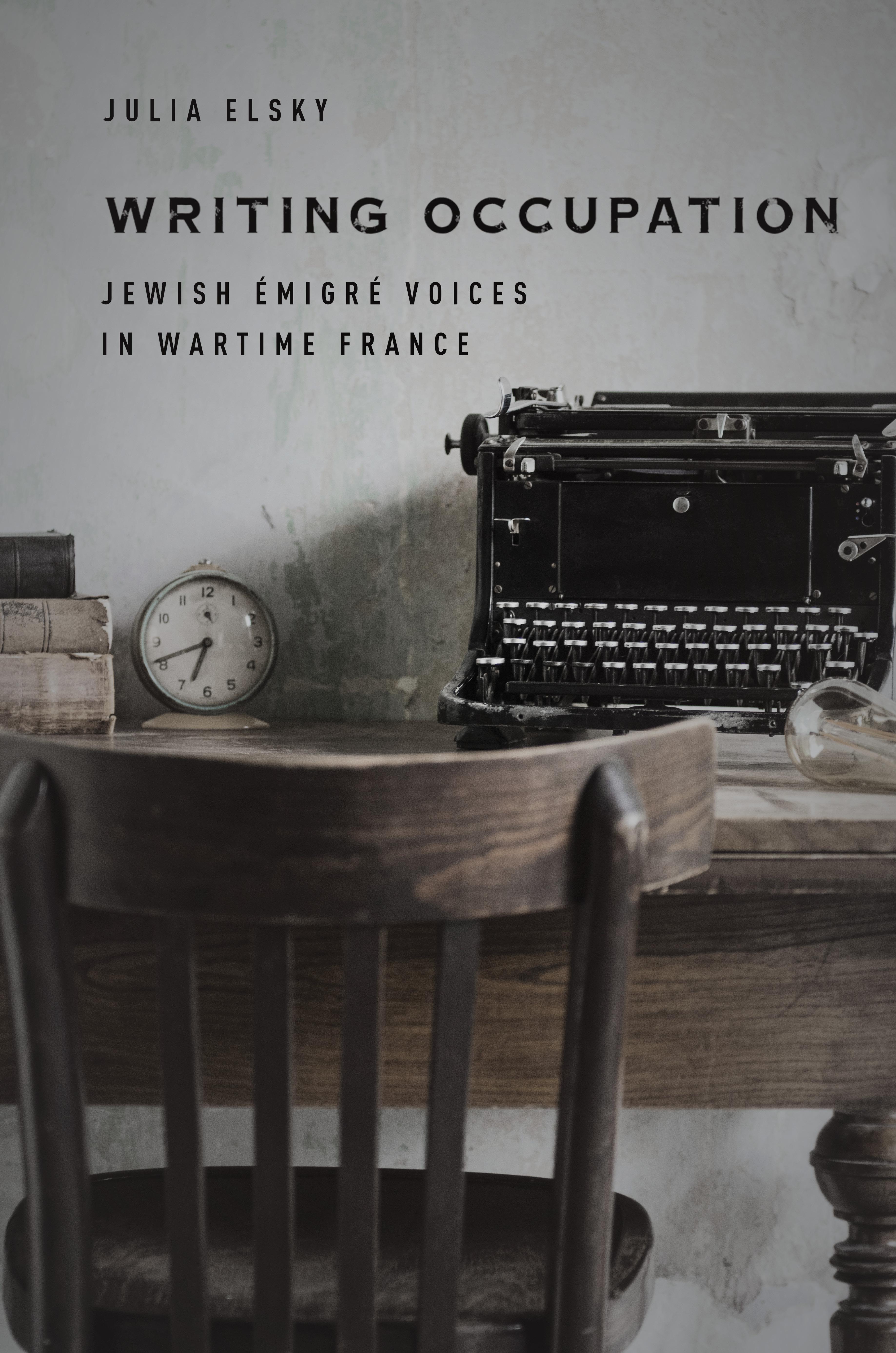
Among the Jewish writers who emigrated from Eastern Europe to France in the 1910s and 1920s, a number chose to switch from writing in their languages of origin to writing primarily in French, a language that represented both a literary center and the promises of French universalism. But under the Nazi occupation of France from 1940 to 1944, these Jewish émigré writers—among them Irène Némirovsky, Benjamin Fondane, Romain Gary, Jean Malaquais, and Elsa Triolet—continued to write in their adopted language, even as the Vichy regime and Nazi occupiers denied their French identity through xenophobic and antisemitic laws. In this book, Julia Elsky argues that these writers reexamined both their Jewishness and their place as authors in France through the language in which they wrote.
The group of authors Elsky considers depicted key moments in the war from their perspective as Jewish émigrés, including the June 1940 civilian flight from Paris, life in the occupied and southern zones, the roundups and internment camps, and the Resistance in France and in London. Writing in French, they expressed multiple cultural, religious, and linguistic identities, challenging the boundaries between center and periphery, between French and foreign, even when their sense of belonging was being violently denied.
Betaal eenvoudig met kaart, Klarna, Apple Pay of Google Pay. Niet tevreden? Je hebt altijd 14 dagen bedenktijd. Lees meer in onze voorwaarden. Heb je vragen, mail ons dan via hello@memmo.org.
Memmo maakt studeren makkelijker – waar je ook bent ter wereld. Wij brengen je cursusboeken en slimme studietools samen op één plek: samenvattingen, quizzen, podcasts en flashcards. En Ted, je studievriend die antwoord geeft op alles wat je je afvraagt. Meer dan 50.000 studenten studeren hier al – gebouwd om je sneller te laten leren en minder stress te geven.