
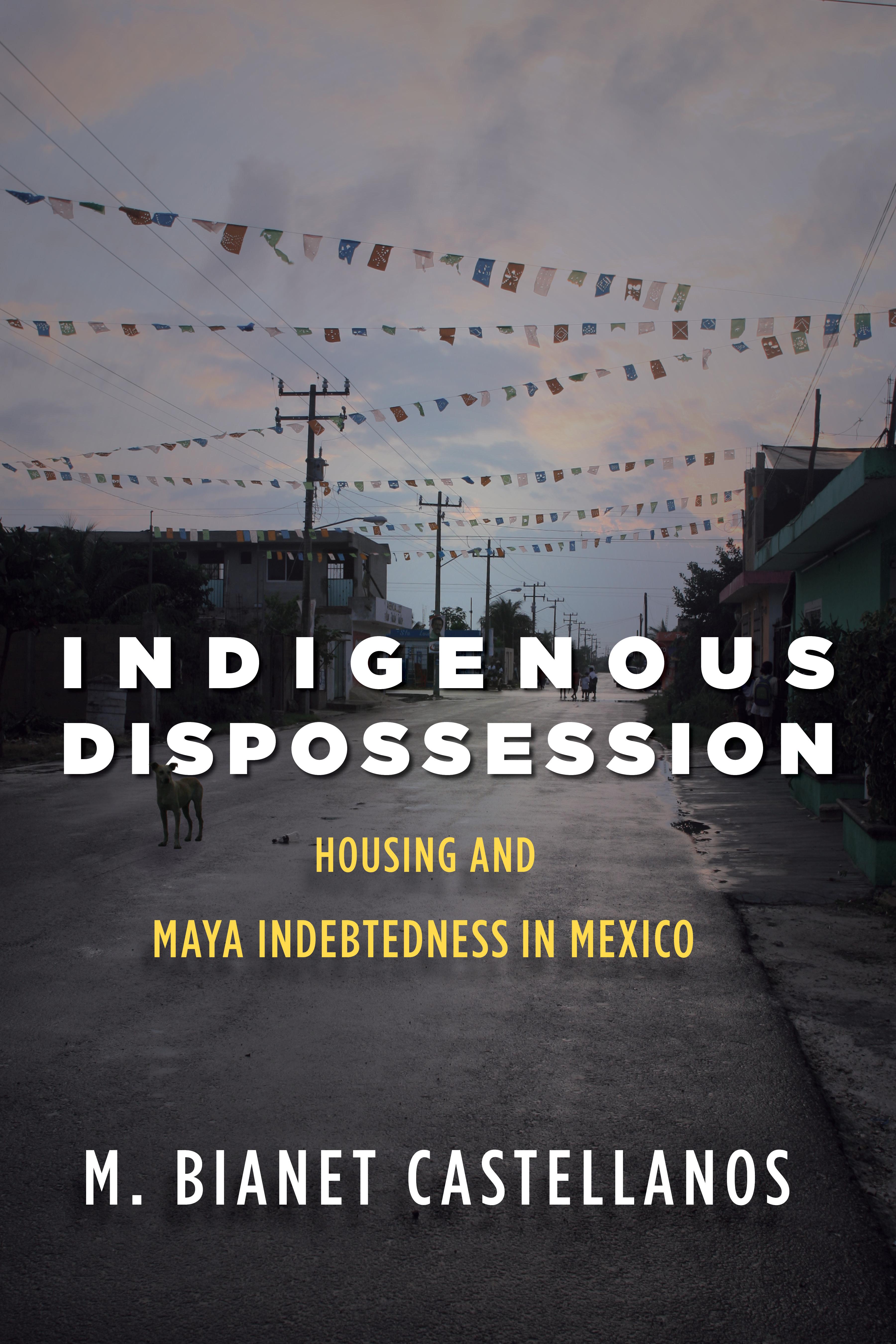
Following the recent global housing boom, tract housing development became a billion-dollar industry in Mexico. At the national level, neoliberal housing policy has overtaken debates around land reform. For Indigenous peoples, access to affordable housing remains crucial to alleviating poverty. But as palapas, traditional thatch and wood houses, are replaced by tract houses in the Yucatán Peninsula, Indigenous peoples' relationship to land, urbanism, and finance is similarly transformed, revealing a legacy of debt and dispossession.
Indigenous Dispossession examines how Maya families grapple with the ramifications of neoliberal housing policies. M. Bianet Castellanos relates Maya migrants' experiences with housing and mortgage finance in Cancún, one of Mexico's fastest-growing cities. Their struggle to own homes reveals colonial and settler colonial structures that underpin the city's economy, built environment, and racial order. But even as Maya people contend with predatory lending practices and foreclosure, they cultivate strategies of resistance—from "waiting out" the state, to demanding Indigenous rights in urban centers. As Castellanos argues, it is through these maneuvers that Maya migrants forge a new vision of Indigenous urbanism.
Betaal eenvoudig met kaart, Klarna, Apple Pay of Google Pay. Niet tevreden? Je hebt altijd 14 dagen bedenktijd. Lees meer in onze voorwaarden. Heb je vragen, mail ons dan via hello@memmo.org.
Memmo maakt studeren makkelijker – waar je ook bent ter wereld. Wij brengen je cursusboeken en slimme studietools samen op één plek: samenvattingen, quizzen, podcasts en flashcards. En Ted, je studievriend die antwoord geeft op alles wat je je afvraagt. Meer dan 50.000 studenten studeren hier al – gebouwd om je sneller te laten leren en minder stress te geven.