
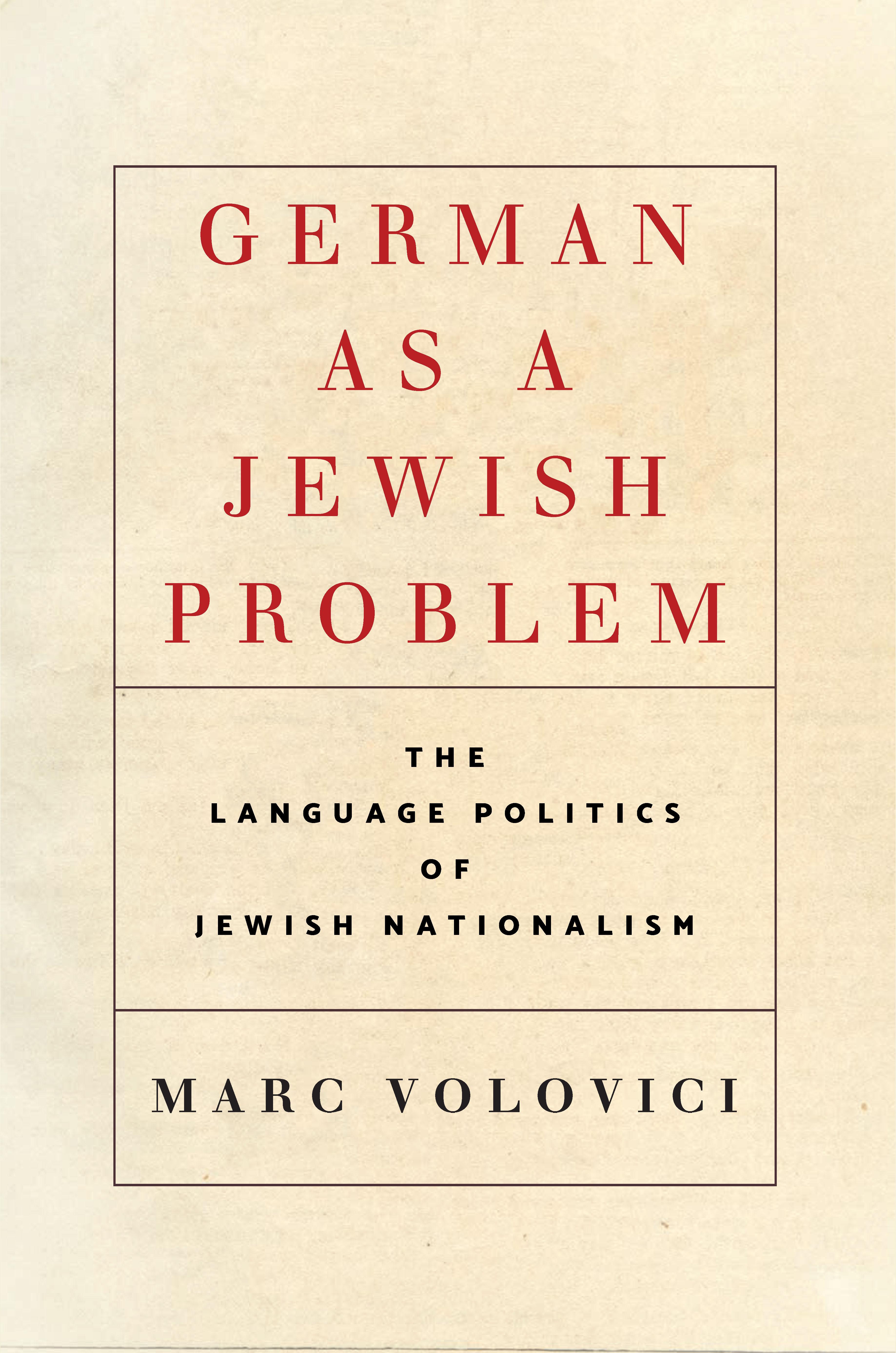
The German language holds an ambivalent and controversial place in the modern history of European Jews, representing different—often conflicting—historical currents. It was the language of the German classics, of German Jewish writers and scientists, of Central European Jewish culture, and of Herzl and the Zionist movement. But it was also the language of Hitler, Goebbels, and the German guards in Nazi concentration camps. The crucial role of German in the formation of Jewish national culture and politics in the late nineteenth century has been largely overshadowed by the catastrophic events that befell Jews under Nazi rule.
German as a Jewish Problem tells the Jewish history of the German language, focusing on Jewish national movements in Central and Eastern Europe and Palestine/Israel. Marc Volovici considers key writers and activists whose work reflected the multilingual nature of the Jewish national sphere and the centrality of the German language within it, and argues that it is impossible to understand the histories of modern Hebrew and Yiddish without situating them in relation to German. This book offers a new understanding of the language problem in modern Jewish history, turning to German to illuminate the questions and dilemmas that largely defined the experience of European Jews in the age of nationalism.
Betaal eenvoudig met kaart, Klarna, Apple Pay of Google Pay. Niet tevreden? Je hebt altijd 14 dagen bedenktijd. Lees meer in onze voorwaarden. Heb je vragen, mail ons dan via hello@memmo.org.
Memmo maakt studeren makkelijker – waar je ook bent ter wereld. Wij brengen je cursusboeken en slimme studietools samen op één plek: samenvattingen, quizzen, podcasts en flashcards. En Ted, je studievriend die antwoord geeft op alles wat je je afvraagt. Meer dan 50.000 studenten studeren hier al – gebouwd om je sneller te laten leren en minder stress te geven.