
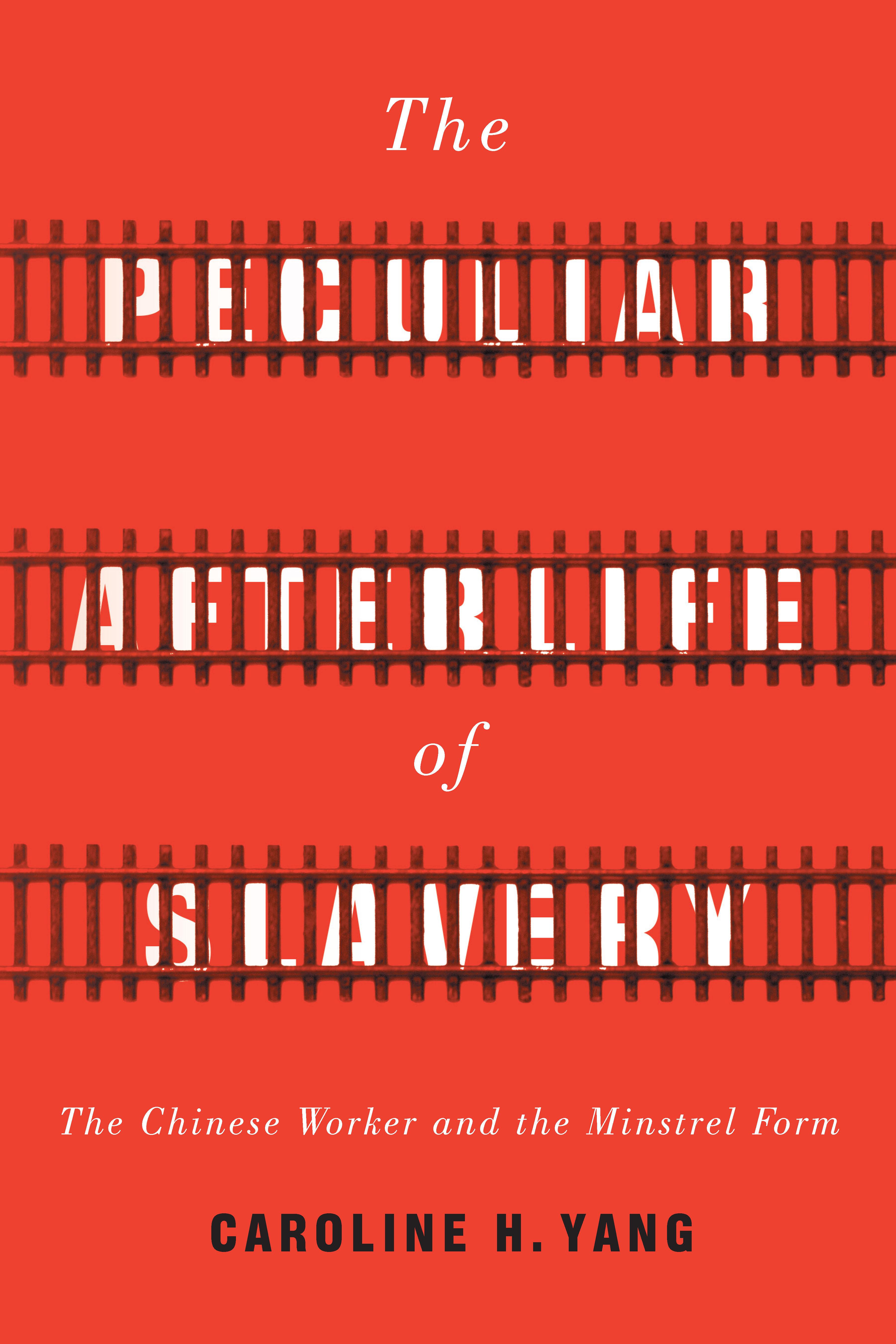
The Peculiar Afterlife of Slavery explores how antiblack racism lived on through the figure of the Chinese worker in US literature after emancipation. Drawing out the connections between this liminal figure and the formal aesthetics of blackface minstrelsy in literature of the Reconstruction and post-Reconstruction eras, Caroline H. Yang reveals the ways antiblackness structured US cultural production during a crucial moment of reconstructing and re-narrating US empire after the Civil War.
Examining texts by major American writers in the late nineteenth and early twentieth centuries—including Harriet Beecher Stowe, Bret Harte, Mark Twain, Ambrose Bierce, Sui Sin Far, and Charles Chesnutt—Yang traces the intertwined histories of blackface minstrelsy and Chinese labor. Her bold rereading of these authors' contradictory positions on race and labor sees the figure of the Chinese worker as both hiding and making visible the legacy of slavery and antiblackness. Ultimately, The Peculiar Afterlife of Slavery shows how the Chinese worker manifests the inextricable links between US literature, slavery, and empire, as well as the indispensable role of antiblackness as a cultural form in the United States.
Betaal eenvoudig met kaart, Klarna, Apple Pay of Google Pay. Niet tevreden? Je hebt altijd 14 dagen bedenktijd. Lees meer in onze voorwaarden. Heb je vragen, mail ons dan via hello@memmo.org.
Memmo maakt studeren makkelijker – waar je ook bent ter wereld. Wij brengen je cursusboeken en slimme studietools samen op één plek: samenvattingen, quizzen, podcasts en flashcards. En Ted, je studievriend die antwoord geeft op alles wat je je afvraagt. Meer dan 50.000 studenten studeren hier al – gebouwd om je sneller te laten leren en minder stress te geven.