
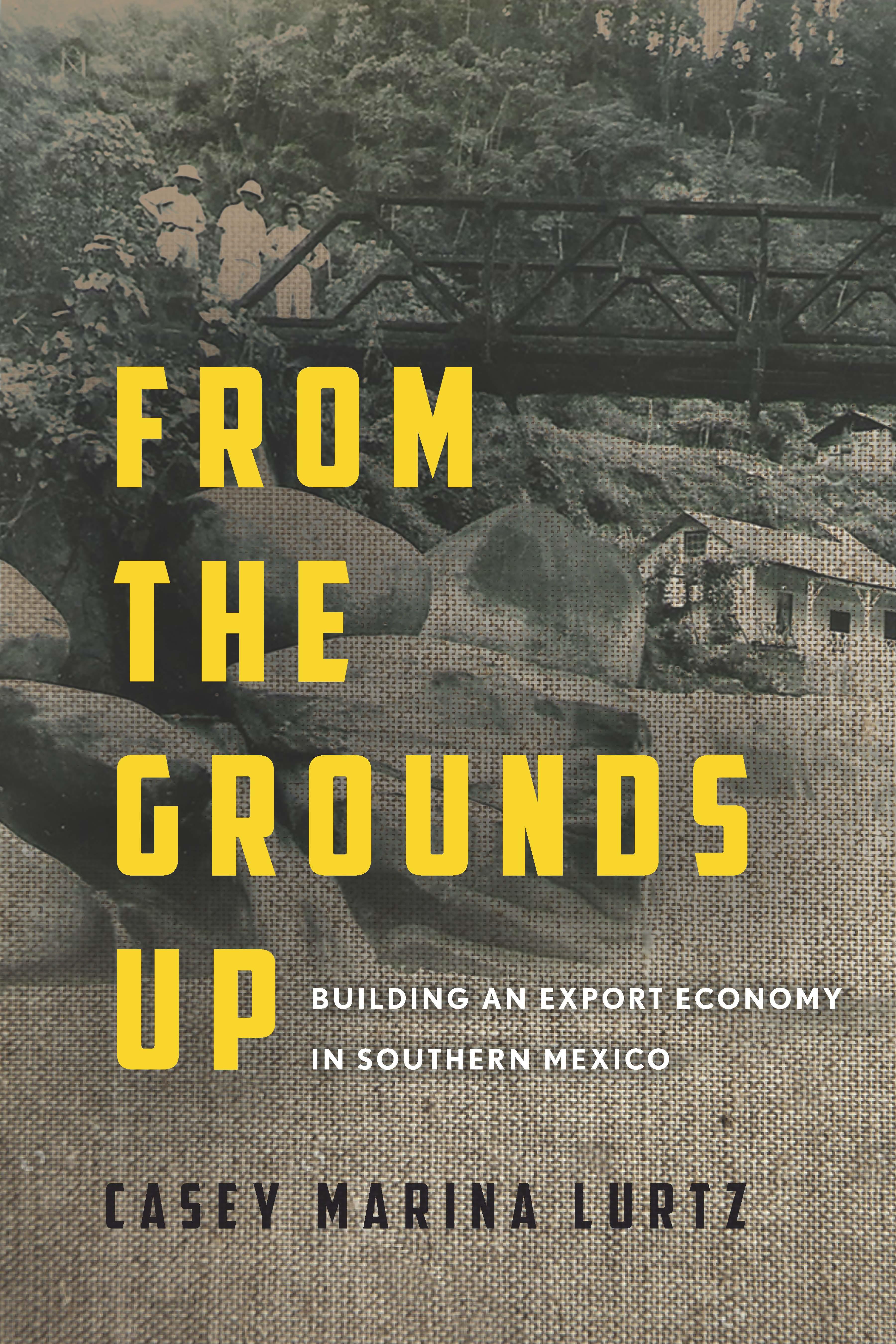
In the late nineteenth century, Latin American exports boomed. From Chihuahua to Patagonia, producers sent industrial fibers, tropical fruits, and staple goods across oceans to satisfy the ever-increasing demand from foreign markets. In southern Mexico's Soconusco district, the coffee trade would transform rural life. A regional history of the Soconusco as well as a study in commodity capitalism, From the Grounds Up places indigenous and mestizo villagers, migrant workers, and local politicians at the center of our understanding of the export boom.
An isolated, impoverished backwater for most of the nineteenth century, by 1920, the Soconusco had transformed into a small but vibrant node in the web of global commerce. Alongside plantation owners and foreign investors, a dense but little-explored web of small-time producers, shopowners, and laborers played key roles in the rapid expansion of export production. Their deep engagement with rural development challenges the standard top-down narrative of market integration led by economic elites allied with a strong state. Here, Casey Marina Lurtz argues that the export boom owed its success to a diverse body of players whose choices had profound impacts on Latin America's export-driven economy during the first era of globalization.
Betaal eenvoudig met kaart, Klarna, Apple Pay of Google Pay. Niet tevreden? Je hebt altijd 14 dagen bedenktijd. Lees meer in onze voorwaarden. Heb je vragen, mail ons dan via hello@memmo.org.
Memmo maakt studeren makkelijker – waar je ook bent ter wereld. Wij brengen je cursusboeken en slimme studietools samen op één plek: samenvattingen, quizzen, podcasts en flashcards. En Ted, je studievriend die antwoord geeft op alles wat je je afvraagt. Meer dan 50.000 studenten studeren hier al – gebouwd om je sneller te laten leren en minder stress te geven.