
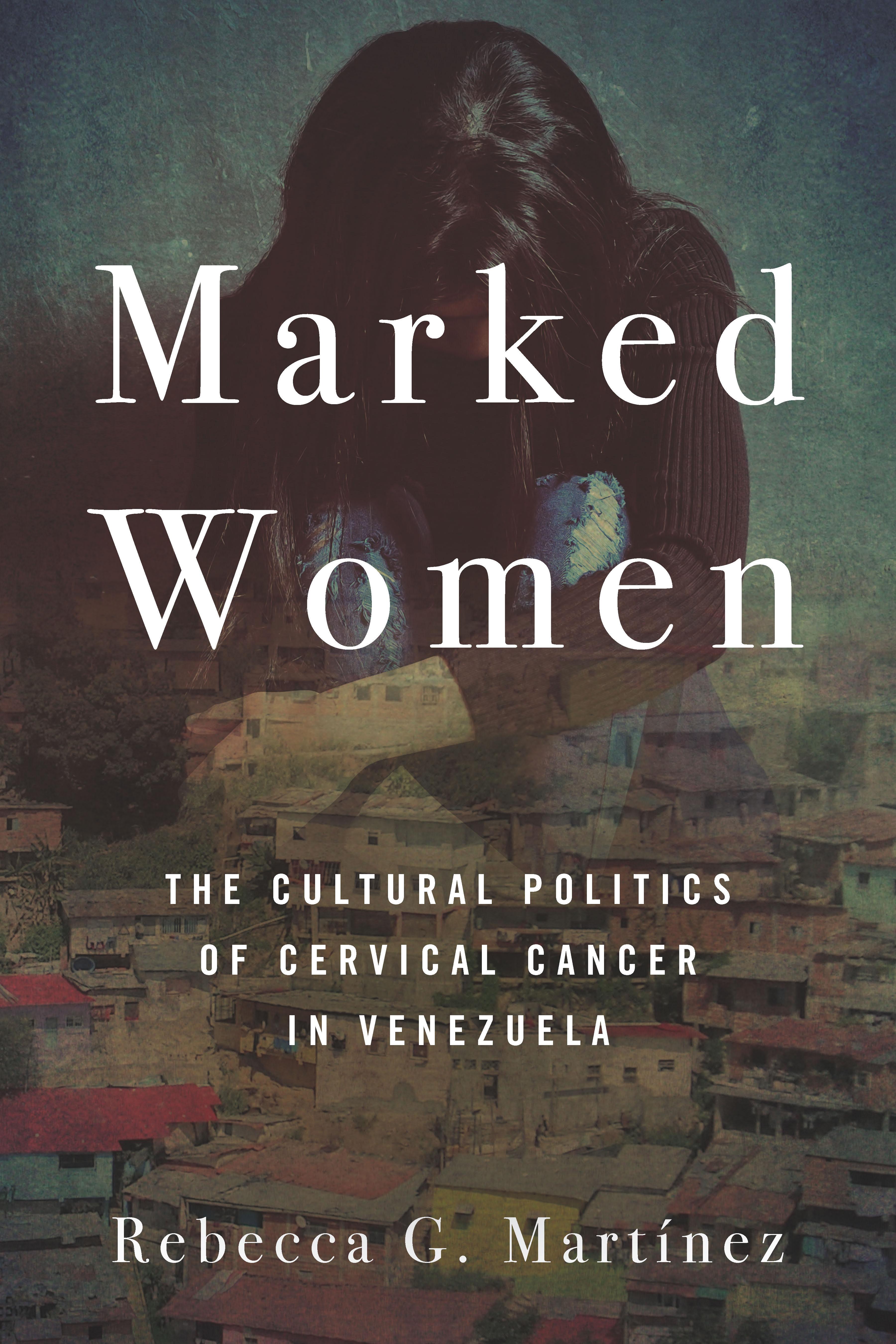
Cervical cancer is the third leading cause of death among women in Venezuela, with poor and working-class women bearing the brunt of it. Doctors and public health officials regard promiscuity and poor hygiene—coded indicators for low class, low culture, and bad morals—as risk factors for the disease.
Drawing on in-depth fieldwork conducted in two oncology hospitals in Caracas, Marked Women is an ethnography of women's experiences with cervical cancer, the doctors and nurses who treat them, and the public health officials and administrators who set up intervention programs to combat the disease. Rebecca G. Martínez contextualizes patient-doctor interactions within a historical arc of Venezuelan nationalism, modernity, neoliberalism, and Chavismo to understand the scientific, social, and political discourses surrounding the disease. The women, marked as deviant for their sexual transgressions, are not only characterized as engaging in unhygienic, uncultured, and promiscuous behaviors, but also become embodiments of these very behaviors. Ultimately, Marked Women explores how epidemiological risk is a socially, culturally, and historically embedded process—and how this enables cervical cancer to stigmatize women as socially marginal, burdens on society, and threats to the "health" of the modern nation.
Betaal eenvoudig met kaart, Klarna, Apple Pay of Google Pay. Niet tevreden? Je hebt altijd 14 dagen bedenktijd. Lees meer in onze voorwaarden. Heb je vragen, mail ons dan via hello@memmo.org.
Memmo maakt studeren makkelijker – waar je ook bent ter wereld. Wij brengen je cursusboeken en slimme studietools samen op één plek: samenvattingen, quizzen, podcasts en flashcards. En Ted, je studievriend die antwoord geeft op alles wat je je afvraagt. Meer dan 50.000 studenten studeren hier al – gebouwd om je sneller te laten leren en minder stress te geven.