
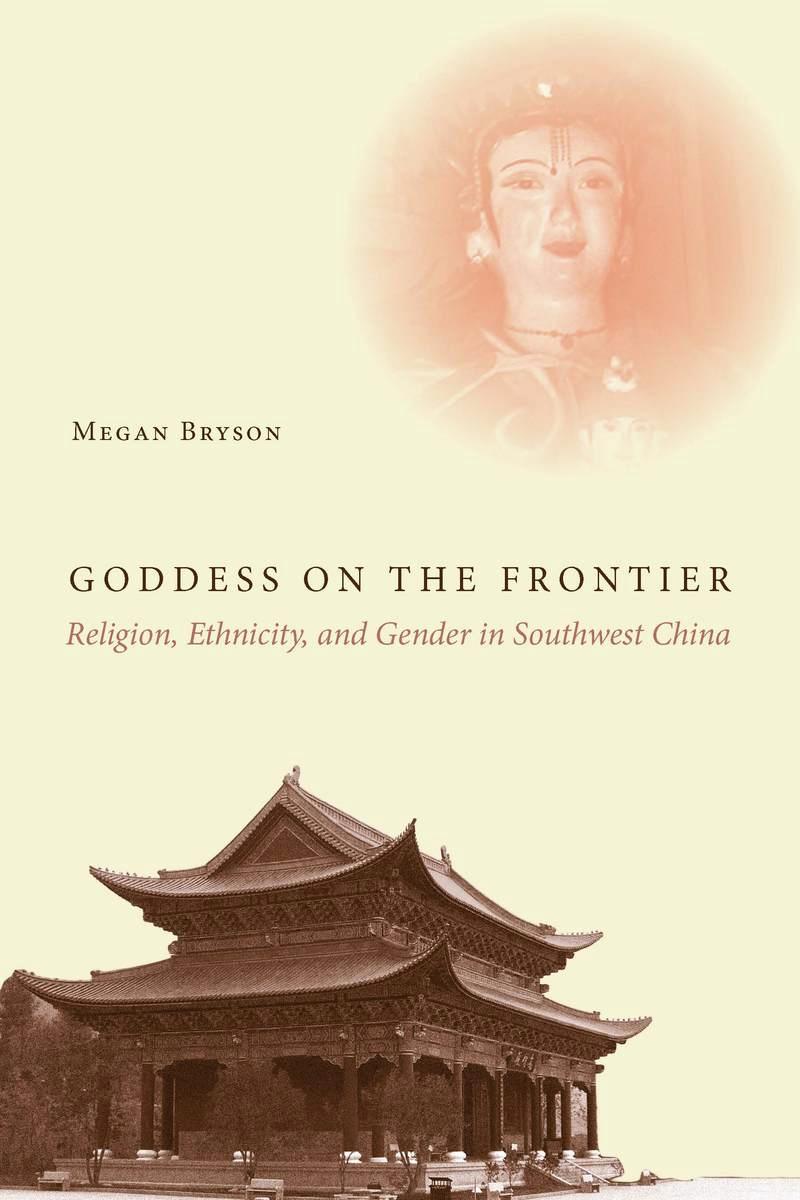
Dali is a small region on a high plateau in Southeast Asia. Its main deity, Baijie, has assumed several gendered forms throughout the area's history: Buddhist goddess, the mother of Dali's founder, a widowed martyr, and a village divinity. What accounts for so many different incarnations of a local deity?
Goddess on the Frontier argues that Dali's encounters with forces beyond region and nation have influenced the goddess's transformations. Dali sits at the cultural crossroads of Southeast Asia, India, and Tibet; it has been claimed by different countries but is currently part of Yunnan Province in Southwest China. Megan Bryson incorporates historical-textual studies, art history, and ethnography in her book to argue that Baijie provided a regional identity that enabled Dali to position itself geopolitically and historically. In doing so, Bryson provides a case study of how people craft local identities out of disparate cultural elements and how these local identities transform over time in relation to larger historical changes—including the increasing presence of the Chinese state.
Betaal eenvoudig met kaart, Klarna, Apple Pay of Google Pay. Niet tevreden? Je hebt altijd 14 dagen bedenktijd. Lees meer in onze voorwaarden. Heb je vragen, mail ons dan via hello@memmo.org.
Memmo maakt studeren makkelijker – waar je ook bent ter wereld. Wij brengen je cursusboeken en slimme studietools samen op één plek: samenvattingen, quizzen, podcasts en flashcards. En Ted, je studievriend die antwoord geeft op alles wat je je afvraagt. Meer dan 50.000 studenten studeren hier al – gebouwd om je sneller te laten leren en minder stress te geven.