
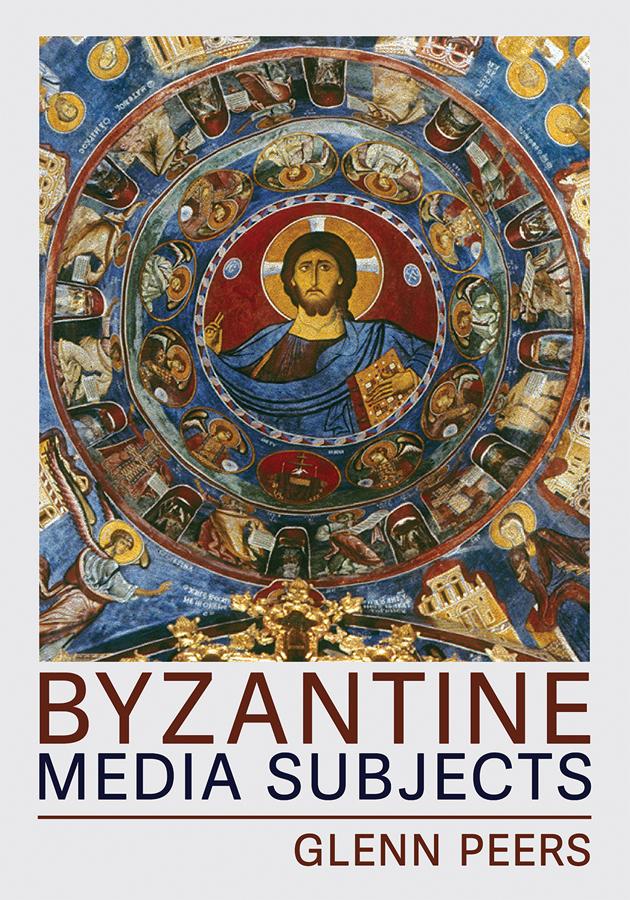
Byzantine Media Subjects invites readers into a world replete with images—icons, frescoes, and mosaics filling places of worship, politics, and community. Glenn Peers asks readers to think themselves into a world where representation reigned and humans followed, and indeed were formed. Interrogating the fundamental role of representation in the making of the Byzantine human, Peers argues that Byzantine culture was (already) posthuman.
The Byzantine experience reveals the extent to which media like icons, manuscripts, music, animals, and mirrors fundamentally determine humans. In the Byzantine world, representation as such was deeply persuasive, even coercive; it had the power to affect human relationships, produce conflict, and form self-perception. Media studies has made its subject the modern world, but this book argues for media having made historical subjects. Here, it is shown that media long ago also made Byzantine humans, defining them, molding them, mediating their relationship to time, to nature, to God, and to themselves.
Betaal eenvoudig met kaart, Klarna, Apple Pay of Google Pay. Niet tevreden? Je hebt altijd 14 dagen bedenktijd. Lees meer in onze voorwaarden. Heb je vragen, mail ons dan via hello@memmo.org.
Memmo maakt studeren makkelijker – waar je ook bent ter wereld. Wij brengen je cursusboeken en slimme studietools samen op één plek: samenvattingen, quizzen, podcasts en flashcards. En Ted, je studievriend die antwoord geeft op alles wat je je afvraagt. Meer dan 50.000 studenten studeren hier al – gebouwd om je sneller te laten leren en minder stress te geven.