
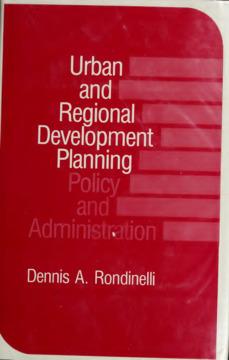
Widely accepted principles and assumptions of American planning theory come under heavy fire in this refreshing and provocative book. The author's main contention is that, contrary to current supposition, development planning is, in practice, a highly political activity.
Professor Rondinelli maintains that it is because the dynamics of the policy-making process are not properly understood that current planning prescriptions are inadequate when they are applied within organizationally complex urban regions. To illustrate his argument, he offers a case history of federally aided redevelopment programs for an urban region in northeastern Pennsylvania that experienced three decades of economic decline.
He further believes that existing programs of planning education do not provide the skills, knowledge, and experience necessary for effective management of urban change. Curricula must be reoriented, he says, if planners are to have an impact on future urban and regional development. Finally, he sets forth positive alternatives to current planning processes, stressing the need for planning theory and practice that recognize and cope with the characteristics of the complex policy-making system.
Betaal eenvoudig met kaart, Klarna, Apple Pay of Google Pay. Niet tevreden? Je hebt altijd 14 dagen bedenktijd. Lees meer in onze voorwaarden. Heb je vragen, mail ons dan via hello@memmo.org.
Memmo maakt studeren makkelijker – waar je ook bent ter wereld. Wij brengen je cursusboeken en slimme studietools samen op één plek: samenvattingen, quizzen, podcasts en flashcards. En Ted, je studievriend die antwoord geeft op alles wat je je afvraagt. Meer dan 50.000 studenten studeren hier al – gebouwd om je sneller te laten leren en minder stress te geven.