
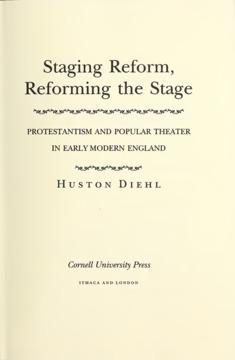
Huston Diehl sees Elizabethan and Jacobean drama as both a product of the Protestant Reformation—a reformed drama—and a producer of Protestant habits of thought—a reforming drama. According to Diehl, the popular London theater, which flourished in the years after Elizabeth reestablished Protestantism in England, rehearsed the religious crises that disrupted, divided, energized, and in many respects revolutionized English society.
Drawing on the insights of symbolic anthropologists, Diehl explores the relationship between the suppression of late medieval religious cultures, with their rituals, symbols, plays, processions, and devotional practices, and the emergence of a popular theater under the Protestant monarchs Elizabeth and James. Questioning long-held assumptions that the reformed religion was inherently antitheatrical, she shows how the reformers invented new forms of theater, even as they condemned a Roman Catholic theatricality they associated with magic, sensuality, and duplicity.
Using as her central texts the tragedies of Thomas Kyd, Christopher Marlowe, William Shakespeare, Thomas Middleton, and John Webster, Diehl maintains that plays of the period reflexively explore their own power to dazzle, seduce, and deceive. Employing a reformed rhetoric that is both powerful and profoundly disturbing, they disrupt their own stunning spectacles. Out of this creative tension between theatricality and antitheatricality emerges a distinctly Protestant aesthetic.
Betaal eenvoudig met kaart, Klarna, Apple Pay of Google Pay. Niet tevreden? Je hebt altijd 14 dagen bedenktijd. Lees meer in onze voorwaarden. Heb je vragen, mail ons dan via hello@memmo.org.
Memmo maakt studeren makkelijker – waar je ook bent ter wereld. Wij brengen je cursusboeken en slimme studietools samen op één plek: samenvattingen, quizzen, podcasts en flashcards. En Ted, je studievriend die antwoord geeft op alles wat je je afvraagt. Meer dan 50.000 studenten studeren hier al – gebouwd om je sneller te laten leren en minder stress te geven.