
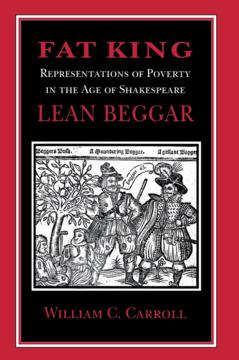
Investigating representations of poverty in Tudor-Stuart England, Fat King, Lean Beggar reveals the gaps and outright contradictions in what poets, pamphleteers, government functionaries, and dramatists of the period said about beggars and vagabonds. William C. Carroll analyzes these conflicting "truths" and reveals the various aesthetic, political, and socio-economic purposes Renaissance constructions of beggary were made to serve.
Carroll begins with a broad survey of both the official images and explanations of poverty and also their unsettling unofficial counterparts. This discourse defines and contains the beggar by continually linking him with his hierarchical inversion, the king. Carroll then turns his attention to the exemplary case of Nicholas Genings, perhaps the single most famous beggar of the period, whose machinations as fraudulent parasite and histrionic genius were chronicled by Thomas Harman. Carroll next assesses institutional responses to poverty by considering two hospitals for the destitute, Bridewell and Bedlam, and their role as real and symbolic places in Elizabethan drama.
Fat King, Lean Beggar then focuses on dramatic inscriptions of poverty, primarily in Shakespeare's plays. Carroll's analysis of The Taming of the Shrew and The Winter's Tale links the tradition of the merry beggar to the socioeconomic forces of the day; and his reading of King Lear makes a case for the uniqueness of Edgar, the Bedlam beggar, in the history of drama. Carroll also considers later plays such as Fletcher and Massinger's Beggars' Bush and Richard Brome's Jovial Crew to show how idealizations of the beggar ironically equate him with a monarch in his supposed freedom.
Betaal eenvoudig met kaart, Klarna, Apple Pay of Google Pay. Niet tevreden? Je hebt altijd 14 dagen bedenktijd. Lees meer in onze voorwaarden. Heb je vragen, mail ons dan via hello@memmo.org.
Memmo maakt studeren makkelijker – waar je ook bent ter wereld. Wij brengen je cursusboeken en slimme studietools samen op één plek: samenvattingen, quizzen, podcasts en flashcards. En Ted, je studievriend die antwoord geeft op alles wat je je afvraagt. Meer dan 50.000 studenten studeren hier al – gebouwd om je sneller te laten leren en minder stress te geven.