
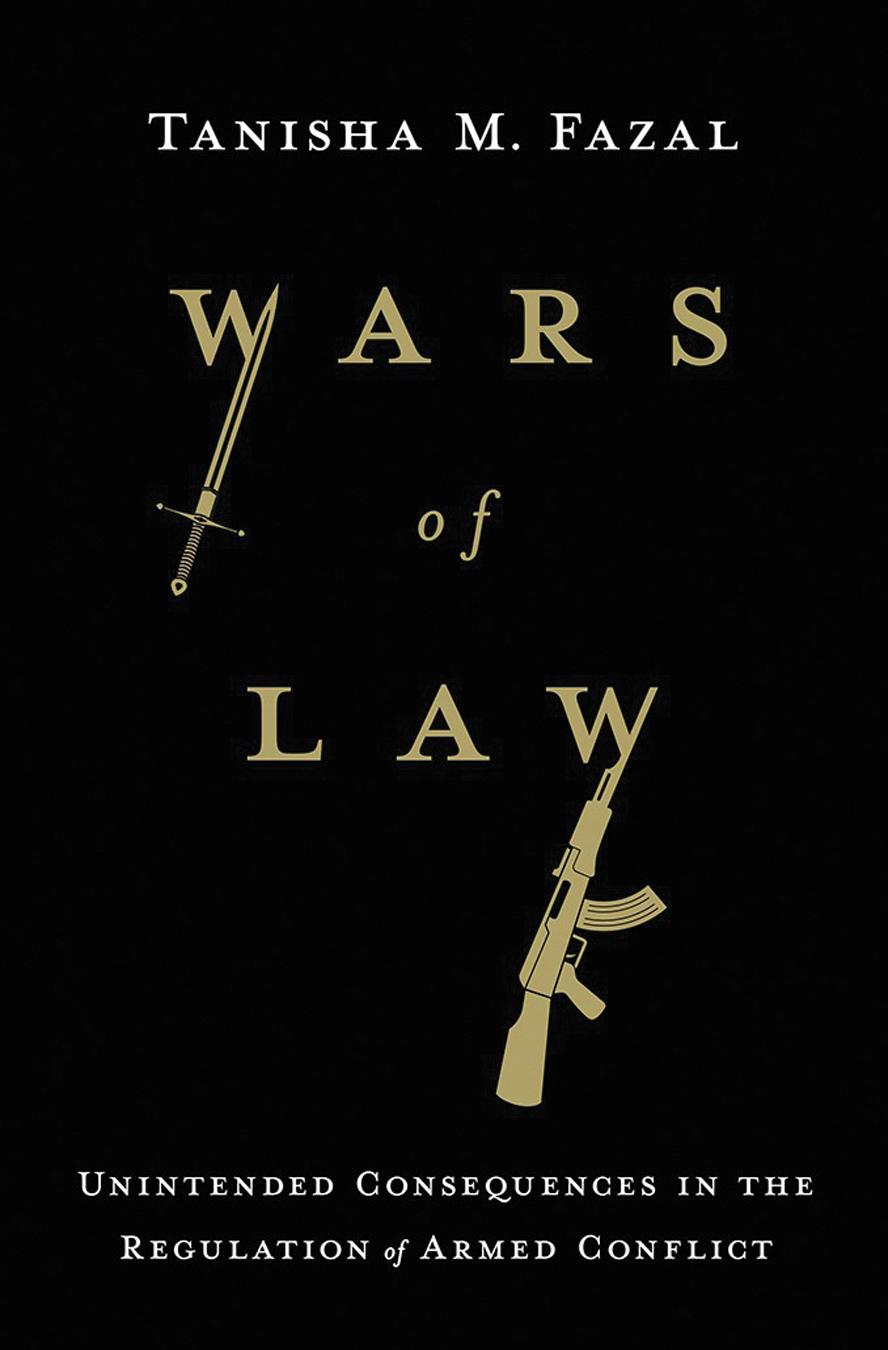
In Wars of Law, Tanisha M. Fazal assesses the unintended consequences of the proliferation of the laws of war for the commencement, conduct, and conclusion of wars over the course of the past one hundred fifty years.
Fazal outlines three main arguments: early laws of war favored belligerents, but more recent additions have constrained them; this shift may be attributable to a growing divide between lawmakers and those who must comply with international humanitarian law; and lawmakers have been consistently inattentive to how rebel groups might receive these laws. By using the laws of war strategically, Fazal suggests, belligerents in both interstate and civil wars relate those laws to their big-picture goals.
Why have states stopped issuing formal declarations of war? Why have states stopped concluding formal peace treaties? Why are civil wars especially likely to end in peace treaties today? In addressing such questions, Fazal provides a lively and intriguing account of the implications of the laws of war.
Betaal eenvoudig met kaart, Klarna, Apple Pay of Google Pay. Niet tevreden? Je hebt altijd 14 dagen bedenktijd. Lees meer in onze voorwaarden. Heb je vragen, mail ons dan via hello@memmo.org.
Memmo maakt studeren makkelijker – waar je ook bent ter wereld. Wij brengen je cursusboeken en slimme studietools samen op één plek: samenvattingen, quizzen, podcasts en flashcards. En Ted, je studievriend die antwoord geeft op alles wat je je afvraagt. Meer dan 50.000 studenten studeren hier al – gebouwd om je sneller te laten leren en minder stress te geven.