
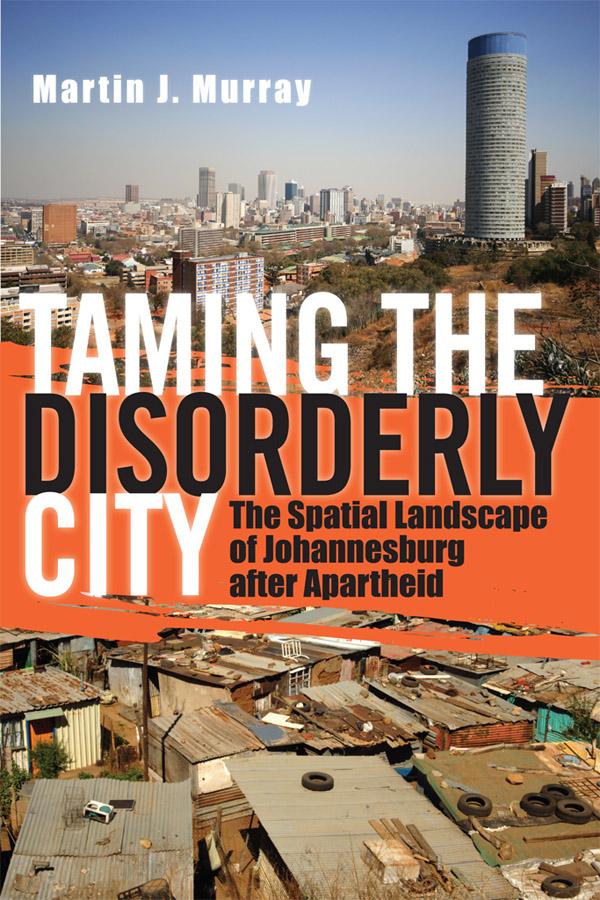
In postapartheid Johannesburg, tensions of race and class manifest themselves starkly in struggles over "rights to the city." Real-estate developers and the very poor fight for control of space as the municipal administration steps aside, almost powerless to shape the direction of change. Having ceded control of development to the private sector, the Johannesburg city government has all but abandoned residential planning to the unpredictability of market forces. This failure to plan for the civic good—and the resulting confusion—is a perfect example of the entrepreneurial approaches to urban governance that are sweeping much of the Global South as well as the cities of the North.
Martin J. Murray brings together a wide range of urban theory and local knowledge to draw a nuanced portrait of contemporary Johannesburg. In Taming the Disorderly City, he provides a focused intellectual and political critique of the often-ambivalent urban dynamics that have emerged after the end of apartheid. Exploring the behaviors of the rich and poor, each empowered in their own way, as they rebuild a new Johannesburg, we see the entrepreneurial city: high-rises, shopping districts, and gated communities surrounded by and intermingled with poverty. In graceful prose, Murray offers a compelling portrait of the everyday lives of the urban poor as seen through the lens of real-estate capitalism and revitalization efforts.
Betaal eenvoudig met kaart, Klarna, Apple Pay of Google Pay. Niet tevreden? Je hebt altijd 14 dagen bedenktijd. Lees meer in onze voorwaarden. Heb je vragen, mail ons dan via hello@memmo.org.
Memmo maakt studeren makkelijker – waar je ook bent ter wereld. Wij brengen je cursusboeken en slimme studietools samen op één plek: samenvattingen, quizzen, podcasts en flashcards. En Ted, je studievriend die antwoord geeft op alles wat je je afvraagt. Meer dan 50.000 studenten studeren hier al – gebouwd om je sneller te laten leren en minder stress te geven.