
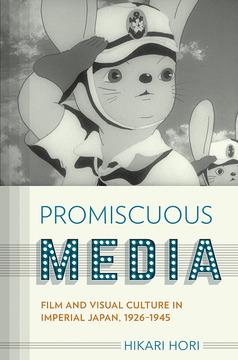
In Promiscuous Media, Hikari Hori makes a compelling case that the visual culture of Showa-era Japan articulated urgent issues of modernity rather than serving as a simple expression of nationalism. Hori makes clear that the Japanese cinema of the time was in fact almost wholly built on a foundation of Russian and British film theory as well as American film genres and techniques. Hori provides a range of examples that illustrate how maternal melodrama and animated features, akin to those popularized by Disney, were adopted wholesale by Japanese filmmakers.
Emperor Hirohito's image, Hori argues, was inseparable from the development of mass media; he was the first emperor whose public appearances were covered by media ranging from postcards to radio broadcasts. Worship of the emperor through viewing his image, Hori shows, taught the Japanese people how to look at images and primed their enjoyment of early animation and documentary films alike. Promiscuous Media links the political and the cultural closely in a way that illuminates the nature of twentieth-century Japanese society.
Betaal eenvoudig met kaart, Klarna, Apple Pay of Google Pay. Niet tevreden? Je hebt altijd 14 dagen bedenktijd. Lees meer in onze voorwaarden. Heb je vragen, mail ons dan via hello@memmo.org.
Memmo maakt studeren makkelijker – waar je ook bent ter wereld. Wij brengen je cursusboeken en slimme studietools samen op één plek: samenvattingen, quizzen, podcasts en flashcards. En Ted, je studievriend die antwoord geeft op alles wat je je afvraagt. Meer dan 50.000 studenten studeren hier al – gebouwd om je sneller te laten leren en minder stress te geven.