
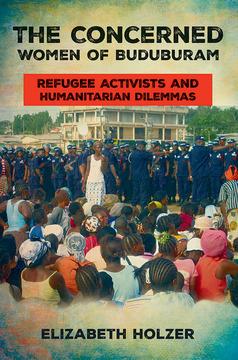
In The Concerned Women of Buduburam, Elizabeth Holzer offers an unprecedented firsthand account of the rise and fall of social protests in a long-standing refugee camp. The UN High Commissioner for Refugees (UNHCR) and the host government of Ghana established the Buduburam Refugee Camp in 1990 to provide sanctuary for refugees from the Liberian civil war (1989–2003). Long hailed as a model of effectiveness, Buduburam offered a best-case scenario for how to handle a refugee crisis. But what happens when refugees and humanitarian actors disagree over humanitarian aid? In Buduburam, refugee protesters were met with Ghanaian riot police. Holzer uses the clash to delve into the complex and often hidden world of humanitarian politics and refugee activism.
Drawing on fifteen months of ethnographic fieldwork in Ghana and subsequent interviews with participants now returned to Liberia, Holzer exposes a distinctive form of rule that accompanies humanitarian intervention: compassionate authoritarianism. Humanitarians strive to relieve the suffering of refugees, but refugees have little or no access to grievance procedures, and humanitarian authorities face little or no accountability for political failures. By casting humanitarians and refugees as co-creators of a shared sociopolitical world, Holzer throws into sharp relief the contradictory elements of humanitarian crisis and of transnational interventions in poor countries more broadly.
Betaal eenvoudig met kaart, Klarna, Apple Pay of Google Pay. Niet tevreden? Je hebt altijd 14 dagen bedenktijd. Lees meer in onze voorwaarden. Heb je vragen, mail ons dan via hello@memmo.org.
Memmo maakt studeren makkelijker – waar je ook bent ter wereld. Wij brengen je cursusboeken en slimme studietools samen op één plek: samenvattingen, quizzen, podcasts en flashcards. En Ted, je studievriend die antwoord geeft op alles wat je je afvraagt. Meer dan 50.000 studenten studeren hier al – gebouwd om je sneller te laten leren en minder stress te geven.