
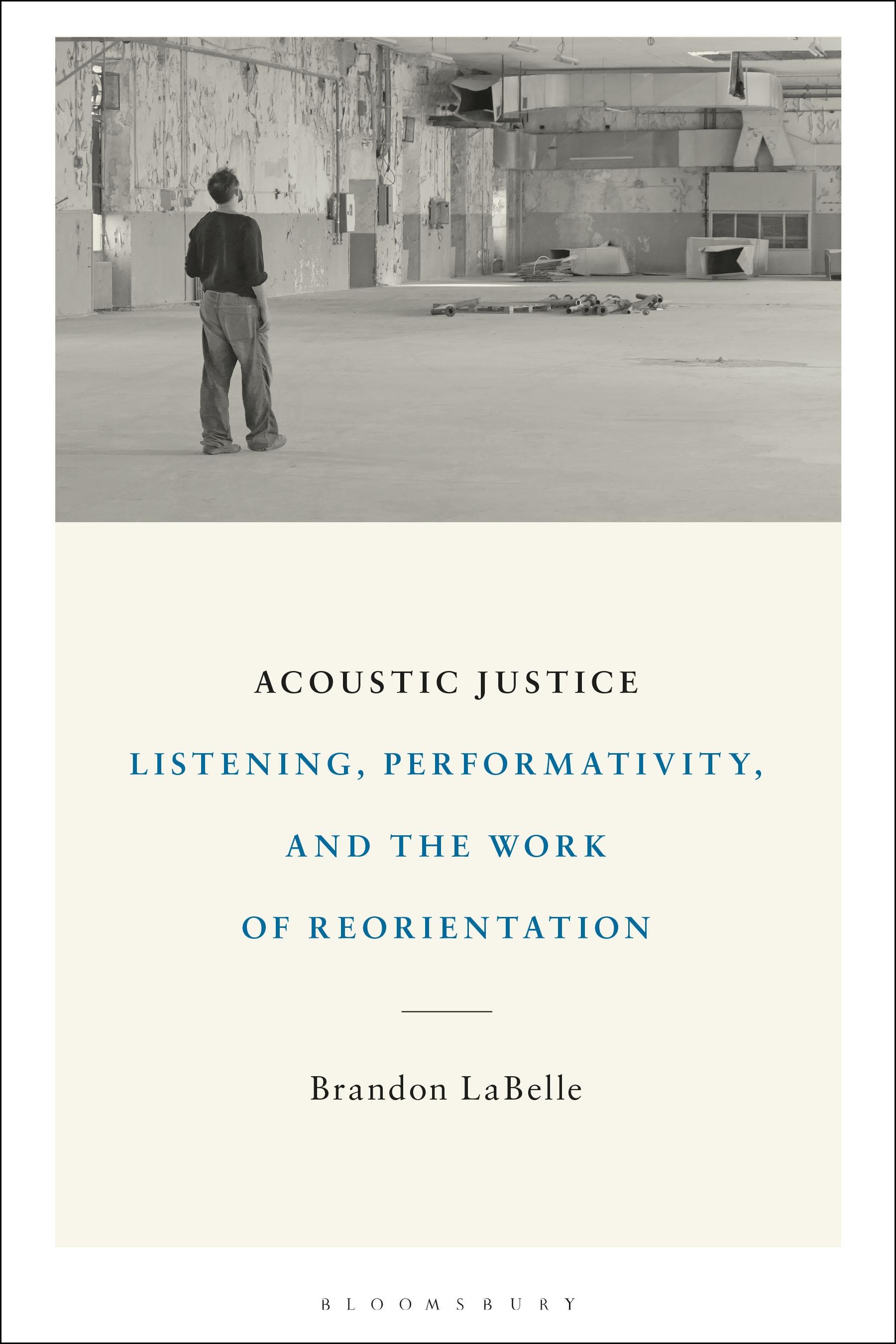
Acoustic Justice engages issues of recognition and misrecognition by mobilizing an acoustic framework. From the vibrational intensities of common life to the rhythm of bodies in movement, and drawing from his ongoing work on sound and agency, Brandon LaBelle positions acoustics, and the broader experience of listening, as a dynamic means for fostering responsiveness, understanding, dispute, and the work of reorientation. As such, acoustic justice emerges as a compelling platform for engaging struggles over the right to speak and to be heard that extends toward a broader materialist and planetary view. This entails critically addressing questions of space, borders, community, and the acoustic norms defining capacities of listening, leading to what LaBelle terms “poetic ecologies of resonance.” Acoustic Justice works at issues of recognition and resistance, place and displacement, by moving across a range of pertinent references and topics, from social practices and sound art to the performativity of skin and the poetics of Deaf voice. Through such transversality, LaBelle captures acoustics as the basis for strategies of refusal and repair.
Betaal eenvoudig met kaart, Klarna, Apple Pay of Google Pay. Niet tevreden? Je hebt altijd 14 dagen bedenktijd. Lees meer in onze voorwaarden. Heb je vragen, mail ons dan via hello@memmo.org.
Memmo maakt studeren makkelijker – waar je ook bent ter wereld. Wij brengen je cursusboeken en slimme studietools samen op één plek: samenvattingen, quizzen, podcasts en flashcards. En Ted, je studievriend die antwoord geeft op alles wat je je afvraagt. Meer dan 50.000 studenten studeren hier al – gebouwd om je sneller te laten leren en minder stress te geven.