
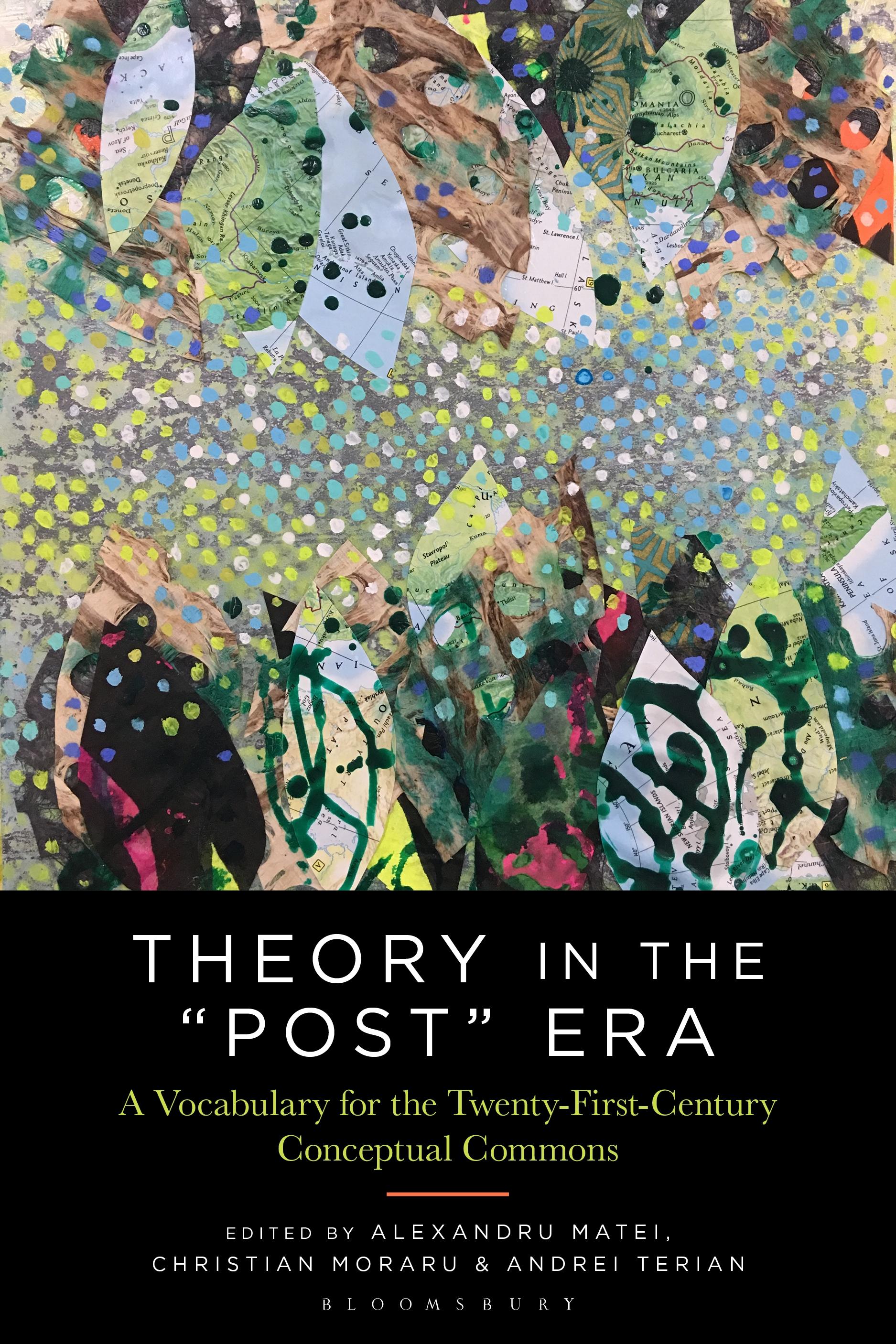
Shortlisted for the AATSEEL 2022 Award for Best Edited Multi-Author Scholarly Volume (AATSEEL is The American Association of Teachers of Slavic and East European Languages)
Theory in the "Post" Era brings together the work and perspectives of a group of Romanian theorists who discuss the morphings of contemporary theory in what the editors call the “post” era. Since the Cold War's end and especially in the third millennium, theorists have been exploring the aftermath - and sometimes just the “after” - of whole paradigms, the crisis or “passing” of anthropocentrism, the twilight of an entire ontological and cultural “condition,” as well as the corresponding rise of an antagonist model, of an “anti,” “meta,” or “neo” alternative, with examples ranging from “posthumanism” and “post-postmodernism” to “post-aesthetics,” “postanalog” interpretation or “digicriticism,” “post-presentism,” “post-memory,” “post-“ or “neo-critique,” and so forth.
It is no coincidence, the contributors to this volume argue, that this “post” moment is also a time when theory is practiced as a world genre. If theory has always been a “worlded” enterprise, a quintessentially communal, cross-cultural and international project, this is truer at present than ever. Perhaps more than other humanist constituencies, today's theorists work and belong in a theory commons that is transnational if still uneven economically, politically, and otherwise. Theory in the "Post" Era reports the results of Romanian theory experiments that join efforts made in other places to foster a theory for the “post” age.
Theory in the "Post" Era brings together the work and perspectives of a group of Romanian theorists who discuss the morphings of contemporary theory in what the editors call the “post” era. Since the Cold War's end and especially in the third millennium, theorists have been exploring the aftermath - and sometimes just the “after” - of whole paradigms, the crisis or “passing” of anthropocentrism, the twilight of an entire ontological and cultural “condition,” as well as the corresponding rise of an antagonist model, of an “anti,” “meta,” or “neo” alternative, with examples ranging from “posthumanism” and “post-postmodernism” to “post-aesthetics,” “postanalog” interpretation or “digicriticism,” “post-presentism,” “post-memory,” “post-“ or “neo-critique,” and so forth.
It is no coincidence, the contributors to this volume argue, that this “post” moment is also a time when theory is practiced as a world genre. If theory has always been a “worlded” enterprise, a quintessentially communal, cross-cultural and international project, this is truer at present than ever. Perhaps more than other humanist constituencies, today's theorists work and belong in a theory commons that is transnational if still uneven economically, politically, and otherwise. Theory in the "Post" Era reports the results of Romanian theory experiments that join efforts made in other places to foster a theory for the “post” age.
Betaal eenvoudig met kaart, Klarna, Apple Pay of Google Pay. Niet tevreden? Je hebt altijd 14 dagen bedenktijd. Lees meer in onze voorwaarden. Heb je vragen, mail ons dan via hello@memmo.org.
Memmo maakt studeren makkelijker – waar je ook bent ter wereld. Wij brengen je cursusboeken en slimme studietools samen op één plek: samenvattingen, quizzen, podcasts en flashcards. En Ted, je studievriend die antwoord geeft op alles wat je je afvraagt. Meer dan 50.000 studenten studeren hier al – gebouwd om je sneller te laten leren en minder stress te geven.