
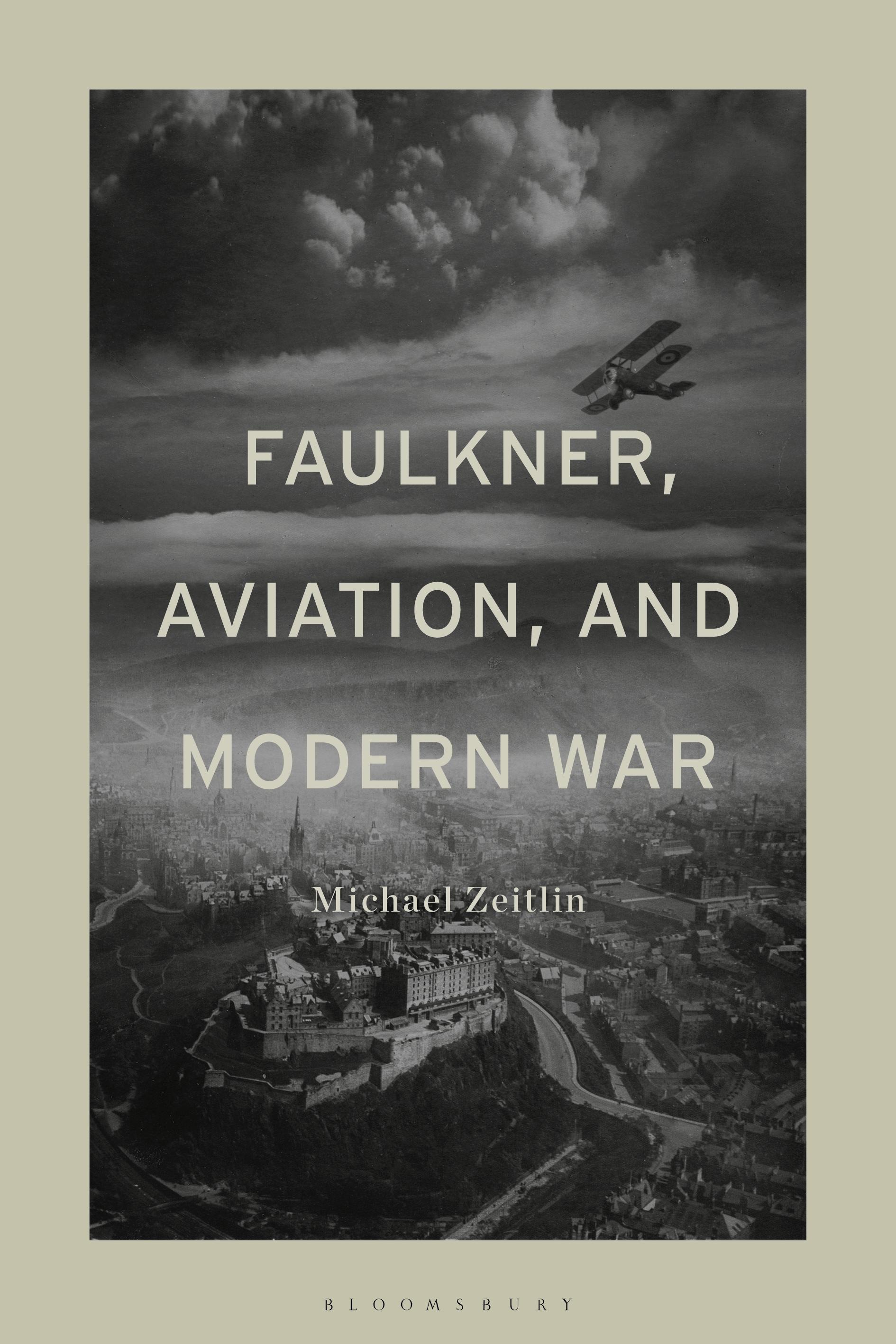
Faulkner, Aviation, and Modern War frames William Faulkner's airplane narratives against major scenes of the early 20th century: the Great War, the rise of European fascism in the 1920s and 30s, the Second World War, and the aviation arms race extending from the Wright Flyer in 1903 into the Cold War era. Placing biographical accounts of Faulkner's time in the Royal Air Force Canada against analysis of such works as Soldiers' Pay (1926), "All the Dead Pilots" (1931), Pylon (1935), and A Fable (1954), this book situates Faulkner's aviation writing within transatlantic historical contexts that have not been sufficiently appreciated in Faulkner's work.
Michael Zeitlin unpacks a broad selection of Faulkner's novels, stories, film treatments, essays, book reviews, and letters to outline Faulkner's complex and ambivalent relationship to the ideologies of masculine performance and martial heroism in an age dominated by industrialism and military technology.
Michael Zeitlin unpacks a broad selection of Faulkner's novels, stories, film treatments, essays, book reviews, and letters to outline Faulkner's complex and ambivalent relationship to the ideologies of masculine performance and martial heroism in an age dominated by industrialism and military technology.
Betaal eenvoudig met kaart, Klarna, Apple Pay of Google Pay. Niet tevreden? Je hebt altijd 14 dagen bedenktijd. Lees meer in onze voorwaarden. Heb je vragen, mail ons dan via hello@memmo.org.
Memmo maakt studeren makkelijker – waar je ook bent ter wereld. Wij brengen je cursusboeken en slimme studietools samen op één plek: samenvattingen, quizzen, podcasts en flashcards. En Ted, je studievriend die antwoord geeft op alles wat je je afvraagt. Meer dan 50.000 studenten studeren hier al – gebouwd om je sneller te laten leren en minder stress te geven.