
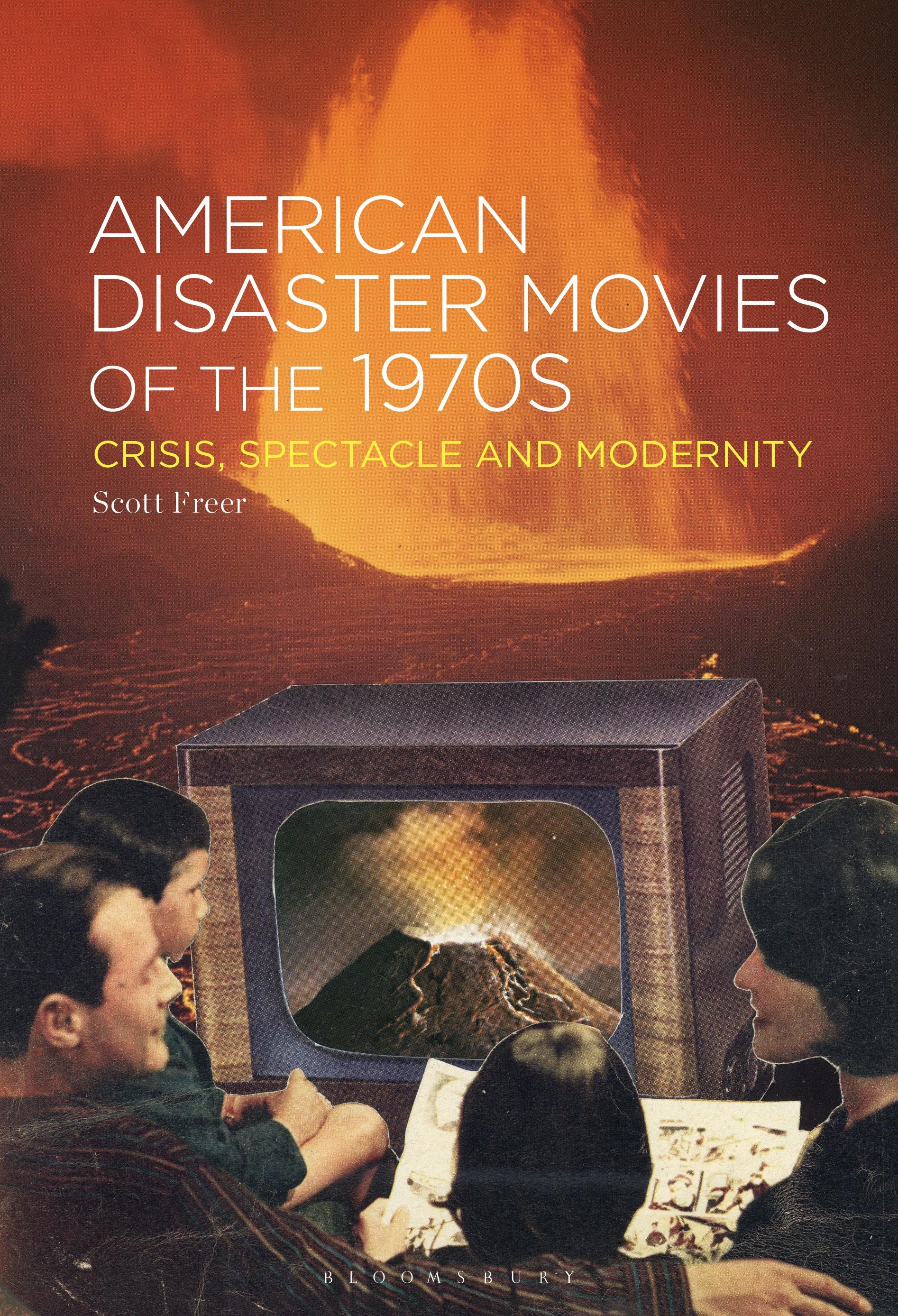
American Disaster Movies of the 1970s is the first scholarly book dedicated to the disaster cycle that dominated American cinema and television in the 1970s.
Through examining films such as Airport (1970), The Poseidon Adventure (1972), Two-Minute Warning (1976) and The Swarm (1978), alongside their historical contexts and American contemporaneous trends, the disaster cycle is treated as a time-bound phenomenon. This book further contextualises the cycle by drawing on the longer cultural history of modernist reactions to modern anxieties, including the widespread dependence on technology and corporate power.
Each chapter considers cinematic precursors, such as the 'ark movie', and contemporaneous trends, such as New Hollywood, vigilante and blaxploitation films, as well as the immediate American context: the end of the civil rights and countercultural era, the Watergate crisis, and the defeat in Vietnam.As Scott Freer argues, the disaster movie is a modern, demotic form of tragedy that satisfies a taste for the macabre. It is also an aesthetic means for processing painful truths, and many of the dramatized themes anticipate present-day monstrosities of modernity.
Through examining films such as Airport (1970), The Poseidon Adventure (1972), Two-Minute Warning (1976) and The Swarm (1978), alongside their historical contexts and American contemporaneous trends, the disaster cycle is treated as a time-bound phenomenon. This book further contextualises the cycle by drawing on the longer cultural history of modernist reactions to modern anxieties, including the widespread dependence on technology and corporate power.
Each chapter considers cinematic precursors, such as the 'ark movie', and contemporaneous trends, such as New Hollywood, vigilante and blaxploitation films, as well as the immediate American context: the end of the civil rights and countercultural era, the Watergate crisis, and the defeat in Vietnam.As Scott Freer argues, the disaster movie is a modern, demotic form of tragedy that satisfies a taste for the macabre. It is also an aesthetic means for processing painful truths, and many of the dramatized themes anticipate present-day monstrosities of modernity.
Betaal eenvoudig met kaart, Klarna, Apple Pay of Google Pay. Niet tevreden? Je hebt altijd 14 dagen bedenktijd. Lees meer in onze voorwaarden. Heb je vragen, mail ons dan via hello@memmo.org.
Memmo maakt studeren makkelijker – waar je ook bent ter wereld. Wij brengen je cursusboeken en slimme studietools samen op één plek: samenvattingen, quizzen, podcasts en flashcards. En Ted, je studievriend die antwoord geeft op alles wat je je afvraagt. Meer dan 50.000 studenten studeren hier al – gebouwd om je sneller te laten leren en minder stress te geven.