
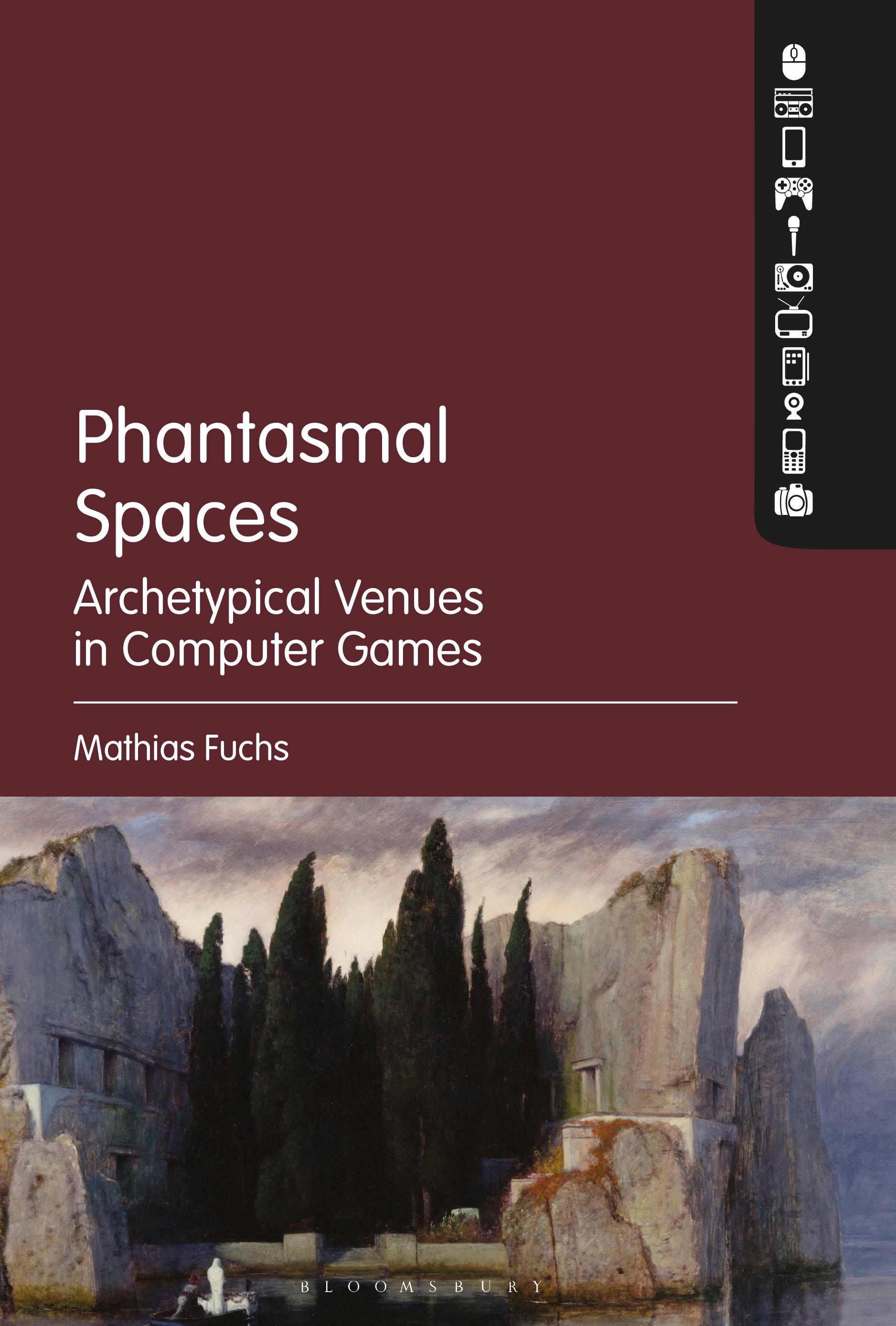
Recognizable, recurring spatial settings in video games serve not only as points of reference and signposts for orientation, but also as implicit sources of content. These spatial archetypes denote more than real-world objects or settings: they suggest and bring forward emotional states, historical context, atmospheric “attunement,” in the words of Massumi, and aesthetic programs that go beyond plain semiotic reference.
In each chapter, Mathias Fuchs brings to the fore an archetype commonly found in old and new digital games: The Ruin, The Cave, The Cloud, The Portal, The Road, The Forest, and The Island are each analysed at length, through the perspectives of aesthetics, games technology, psychoanalysis, and intertextuality. Gridding these seven tropes together with these four analytical lenses provides the reader with a systematic framework to understand the various complex considerations at play in evocative game design.
In each chapter, Mathias Fuchs brings to the fore an archetype commonly found in old and new digital games: The Ruin, The Cave, The Cloud, The Portal, The Road, The Forest, and The Island are each analysed at length, through the perspectives of aesthetics, games technology, psychoanalysis, and intertextuality. Gridding these seven tropes together with these four analytical lenses provides the reader with a systematic framework to understand the various complex considerations at play in evocative game design.
Betaal eenvoudig met kaart, Klarna, Apple Pay of Google Pay. Niet tevreden? Je hebt altijd 14 dagen bedenktijd. Lees meer in onze voorwaarden. Heb je vragen, mail ons dan via hello@memmo.org.
Memmo maakt studeren makkelijker – waar je ook bent ter wereld. Wij brengen je cursusboeken en slimme studietools samen op één plek: samenvattingen, quizzen, podcasts en flashcards. En Ted, je studievriend die antwoord geeft op alles wat je je afvraagt. Meer dan 50.000 studenten studeren hier al – gebouwd om je sneller te laten leren en minder stress te geven.