
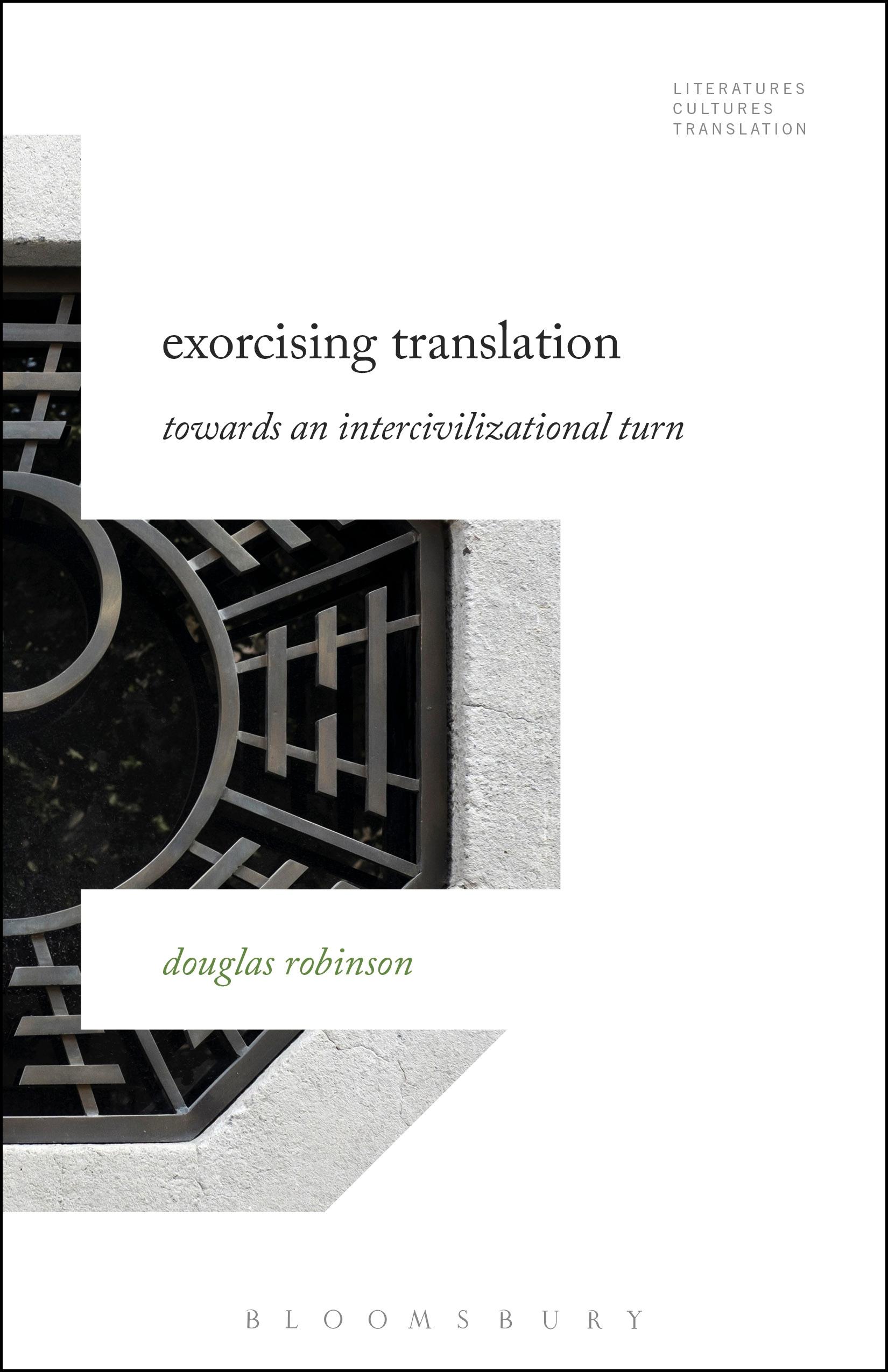
Exorcising Translation, a new volume in Bloomsbury's Literatures, Cultures, Translation series, makes critical contributions to translation as well as to comparative and postcolonial literary studies.
The hot-button issue of Eurocentrism in translation studies has roiled the discipline in the past few years, with critiques followed by defenses and defenses followed by enhanced critiques. Douglas Robinson identifies Eurocentrism in translation studies as what Sakai Naoki calls a “civilizational spell.” Exorcising Translation tracks two translation histories. In the first, moving from Friedrich Nietzsche to Harold Bloom, we find ourselves caught, trapped, cursed, haunted by the spell. In the second, focused on English translations and translators of Chinese literature, Robinson explores accusations against American translators not only for their inadequate (or even totally absent) knowledge of Chinese and Daoism, but for their Americanness, their trappedness in individualistic and secular Western thought. A closer look at that history shows that Western thought and Chinese thought are mutually shaped in fascinating ways. Exorcising Translation presents a major re-envisioning of translation studies, and indeed the literary relationship between East and West, by a pioneering scholar in the field.
The hot-button issue of Eurocentrism in translation studies has roiled the discipline in the past few years, with critiques followed by defenses and defenses followed by enhanced critiques. Douglas Robinson identifies Eurocentrism in translation studies as what Sakai Naoki calls a “civilizational spell.” Exorcising Translation tracks two translation histories. In the first, moving from Friedrich Nietzsche to Harold Bloom, we find ourselves caught, trapped, cursed, haunted by the spell. In the second, focused on English translations and translators of Chinese literature, Robinson explores accusations against American translators not only for their inadequate (or even totally absent) knowledge of Chinese and Daoism, but for their Americanness, their trappedness in individualistic and secular Western thought. A closer look at that history shows that Western thought and Chinese thought are mutually shaped in fascinating ways. Exorcising Translation presents a major re-envisioning of translation studies, and indeed the literary relationship between East and West, by a pioneering scholar in the field.
Pagina's: 192
Categorie: Kultur-, Genus- & Postkoloniala studier
e-ISBN: 9781501326066
Verzendgewicht: 1.2 kg
Verzending binnen: 1-2 dagen
Betaal eenvoudig met kaart, Klarna, Apple Pay of Google Pay. Niet tevreden? Je hebt altijd 14 dagen bedenktijd. Lees meer in onze voorwaarden. Heb je vragen, mail ons dan via hello@memmo.org.
Memmo maakt studeren makkelijker – waar je ook bent ter wereld. Wij brengen je cursusboeken en slimme studietools samen op één plek: samenvattingen, quizzen, podcasts en flashcards. En Ted, je studievriend die antwoord geeft op alles wat je je afvraagt. Meer dan 50.000 studenten studeren hier al – gebouwd om je sneller te laten leren en minder stress te geven.