
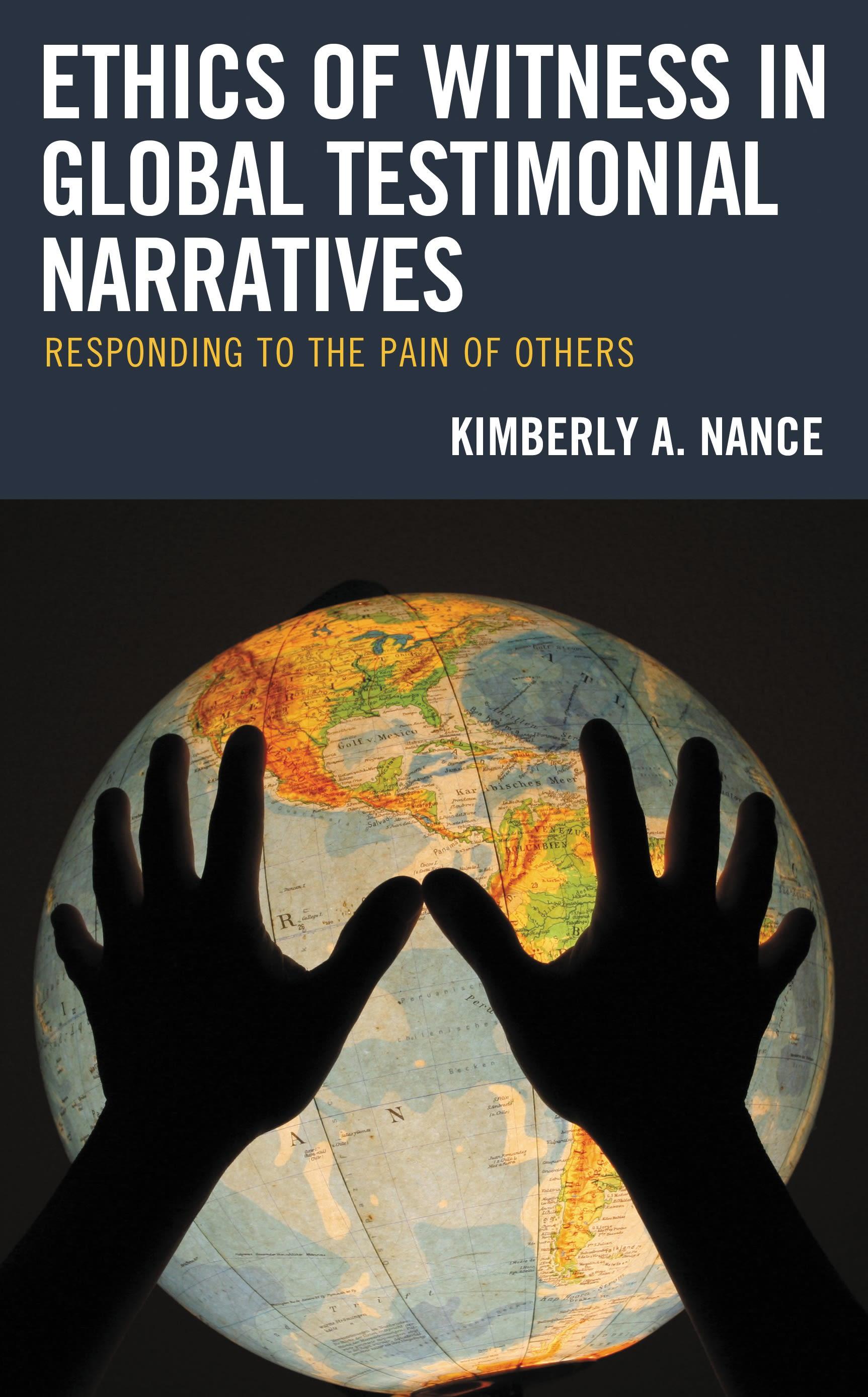
Inspired by Susan Sontag’s examination of the impact of “photography of conscience” in Regarding the Pain of Others, Kimberly A. Nance’s Responding to the Pain of Others: Ethics of Witness in Global Testimonial Narratives takes as its point of departure Sontag’s speculation that in combatting human rights abuse, “a narrative seems likely to be more effective than an image.” Building on her own earlier research on Aristotelian rhetorical theory and testimony, along with other interdisciplinary approaches, Nance analyzes the socio-literary narratives of Elvia Alvarado, Medea Benjamin, Peter Dickinson, Benjamin Alire Sáenz, Clea Koff, Delia Jarrett-Macauley, Valentino Achak Deng, Dave Eggers, Uwem Akpan, and Alicia Partnoy. Each of them, she finds, confronts a human rights discourse in which words—and witnesses—have become disconnected from actions. Recognizing that the genre’s own conventions have become an obstacle to its projects, these testimonialists draw on humor, irony, satire, parody, and innovative literary techniques, alongside strategies rooted in real-life organizing, in an effort to reactivate the discourse of human rights. They seek to persuade readers to exchange a solidarity of sentiment, a state Michael Vander Weele calls “an aesthetics in which the engine revs but the clutch is never engaged,” for actual social action.
Betaal eenvoudig met kaart, Klarna, Apple Pay of Google Pay. Niet tevreden? Je hebt altijd 14 dagen bedenktijd. Lees meer in onze voorwaarden. Heb je vragen, mail ons dan via hello@memmo.org.
Memmo maakt studeren makkelijker – waar je ook bent ter wereld. Wij brengen je cursusboeken en slimme studietools samen op één plek: samenvattingen, quizzen, podcasts en flashcards. En Ted, je studievriend die antwoord geeft op alles wat je je afvraagt. Meer dan 50.000 studenten studeren hier al – gebouwd om je sneller te laten leren en minder stress te geven.