
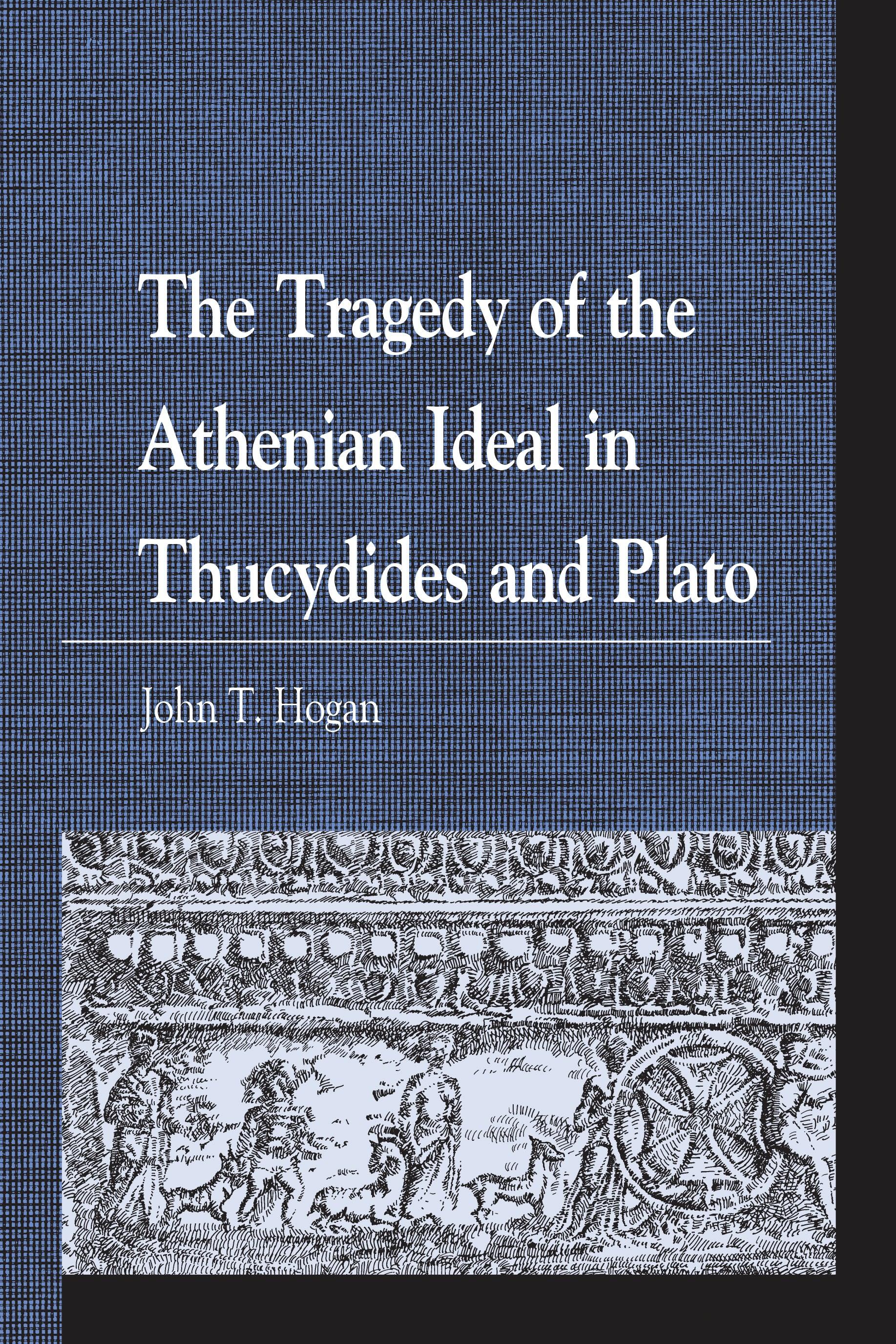
John T. Hogan’s The Tragedy of the Athenian Ideal in Thucydides and Plato assesses the roles of Pericles, Alcibiades, and Nicias in Athens’ defeat in Thucydides’ Peloponnesian War. Comparing Thucydides’ presentation of political leadership with ideas in Plato’s Statesman as well as Laches, Charmides, Meno, Symposium, Republic, Phaedo, Sophist, and Laws, it concludes that Plato and Thucydides reveal Pericles as lacking the political discipline (sophrosune) to plan a successful war against Sparta. Hogan argues that in his presentation of the collapse in the Corcyraean revolution of moral standards in political discourse, Thucydides shows how revolution destroys the morality implied in basic personal and political language. This reveals a general collapse in underlying prudential measurements needed for sound moral judgment. Furthermore, Hogan argues that the Statesman’s outline of the political leader serves as a paradigm for understanding the weaknesses of Pericles, Alcibiades, and Nicias in terms that parallel Thucydides’ direct and implied conclusions, which in Pericles’ case he highlights with dramatic irony. Hogan shows that Pericles failed both to develop a sufficiently robust practice of Athenian democratic rule and to set up a viable system for succession.
Pagina's: 374
Categorie: Arkeologi & Antikvetenskap
e-ISBN: 9781498596312
Verzendgewicht: 1.2 kg
Verzending binnen: 1-2 dagen
Betaal eenvoudig met kaart, Klarna, Apple Pay of Google Pay. Niet tevreden? Je hebt altijd 14 dagen bedenktijd. Lees meer in onze voorwaarden. Heb je vragen, mail ons dan via hello@memmo.org.
Memmo maakt studeren makkelijker – waar je ook bent ter wereld. Wij brengen je cursusboeken en slimme studietools samen op één plek: samenvattingen, quizzen, podcasts en flashcards. En Ted, je studievriend die antwoord geeft op alles wat je je afvraagt. Meer dan 50.000 studenten studeren hier al – gebouwd om je sneller te laten leren en minder stress te geven.