
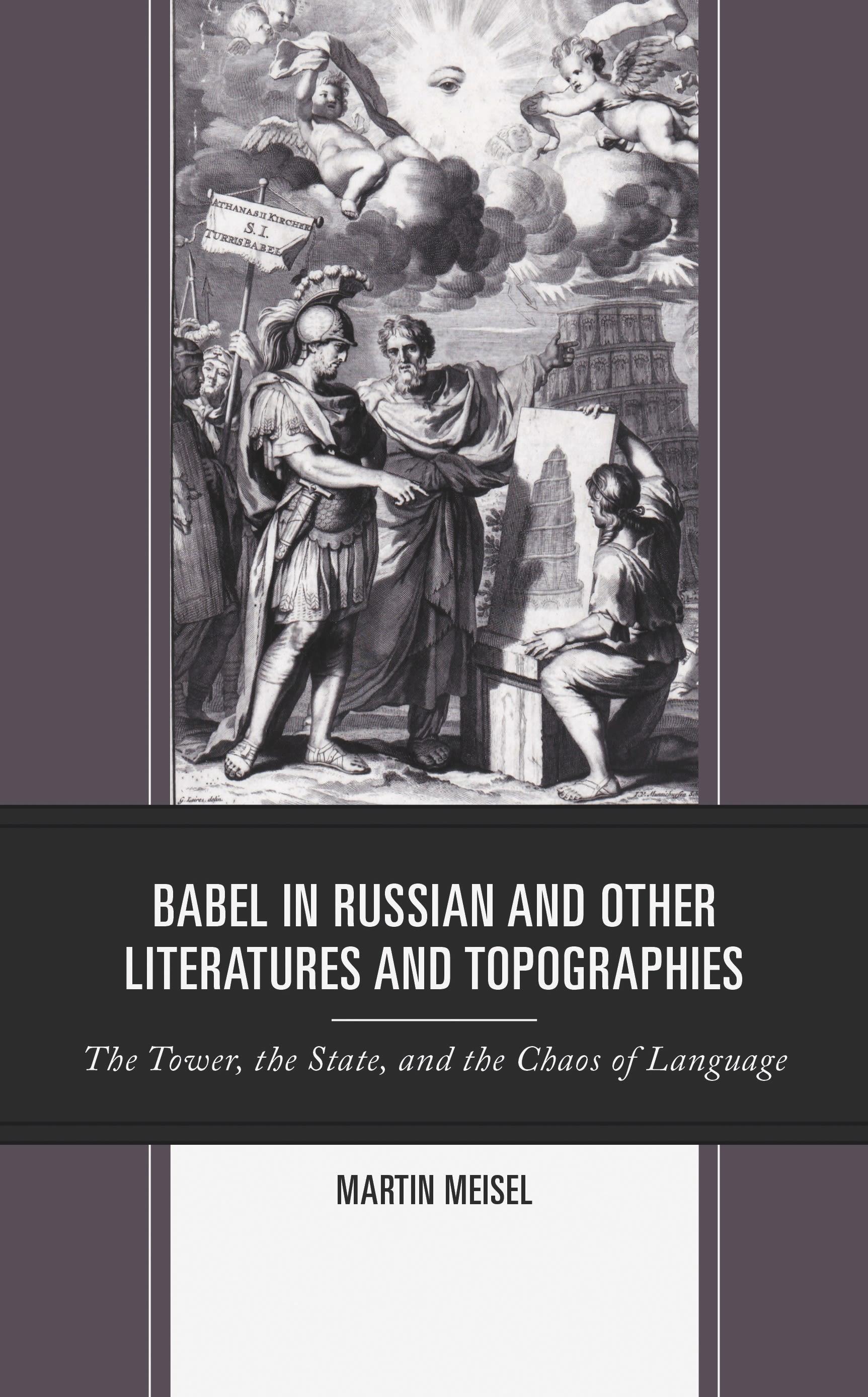
This study analyzes the biblical Tower of Babel story, a cautionary tale that accounts for the diversity of languages and peoples, in Russian literature and other topographies. The author pursues its linking of language, architecture, and society as well as its relevance in art and literature over centuries. To come to terms with a perceived disorder in the realm of language, alternative explanations and projects for remediation abound. The disorder and diversity themselves find expression in art, literature, and philosophical reflection and caused the emergence of a historical linguistics. The ambition of the builders—with its social and organizational premise—reemerges in both political and material form as cities, states, and monumental constructions. Utopian aspirations and linguistic claims permeate both revolutionary notions of universality and the romantic essentialism of the nation state. These in turn provoke dystopian critique in literature and film. As Martin Meisel reveals in this study, the wrestle with language in its recalcitrant instability and imperfect social function enters into dialogue with the celebration of its diversity, elasticity, and creativity.
Betaal eenvoudig met kaart, Klarna, Apple Pay of Google Pay. Niet tevreden? Je hebt altijd 14 dagen bedenktijd. Lees meer in onze voorwaarden. Heb je vragen, mail ons dan via hello@memmo.org.
Memmo maakt studeren makkelijker – waar je ook bent ter wereld. Wij brengen je cursusboeken en slimme studietools samen op één plek: samenvattingen, quizzen, podcasts en flashcards. En Ted, je studievriend die antwoord geeft op alles wat je je afvraagt. Meer dan 50.000 studenten studeren hier al – gebouwd om je sneller te laten leren en minder stress te geven.