
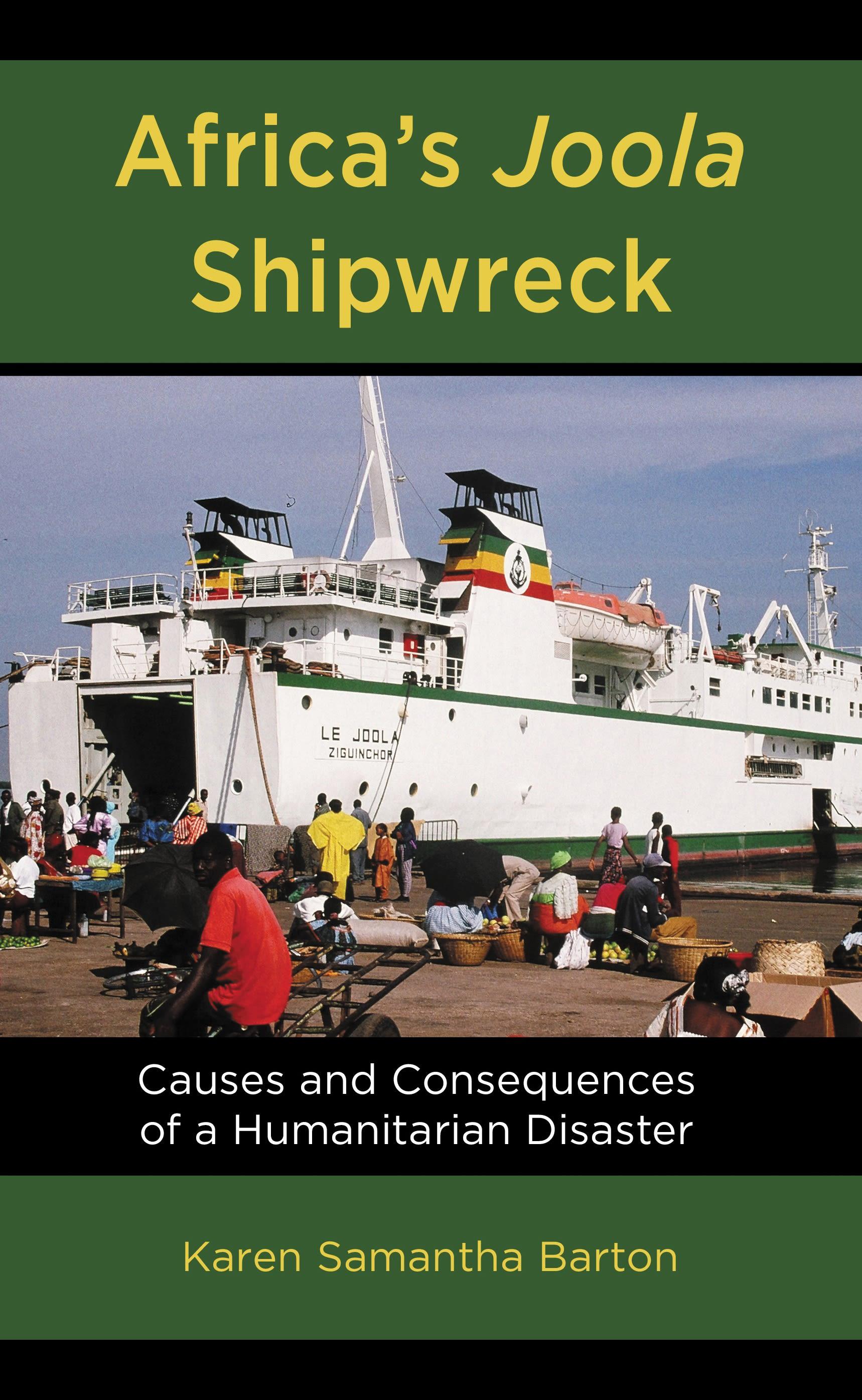
In 2002, a government-owned Senegalese ferry named the Joola capsized in a storm off the coast of The Gambia in a tragedy that killed 1,863 people and left 64 survivors, only one of them female. The Joola caused more human suffering than the Titanic yet no scholarly research to date has explored the political and environmental conditions in which this African crisis occurred. Africa’s Joola Shipwreck: Causes and Consequences of a Humanitarian Disaster investigates the roots of the Joola shipwreck and its consequences for Senegalese people, particularly those living in the rural south. Using three summers of field research in Senegal, Karen Samantha Barton unravels the geographical forces such as migration, colonial cartographies, and geographies of the sea that led to this humanitarian disaster and defined its aftermath. Barton shows how the Sufi tenet of “beautiful optimism” shaped community resilience in the wake of the shipwreck, despite the repercussions the event had on Senegalese society and space.
Betaal eenvoudig met kaart, Klarna, Apple Pay of Google Pay. Niet tevreden? Je hebt altijd 14 dagen bedenktijd. Lees meer in onze voorwaarden. Heb je vragen, mail ons dan via hello@memmo.org.
Memmo maakt studeren makkelijker – waar je ook bent ter wereld. Wij brengen je cursusboeken en slimme studietools samen op één plek: samenvattingen, quizzen, podcasts en flashcards. En Ted, je studievriend die antwoord geeft op alles wat je je afvraagt. Meer dan 50.000 studenten studeren hier al – gebouwd om je sneller te laten leren en minder stress te geven.