
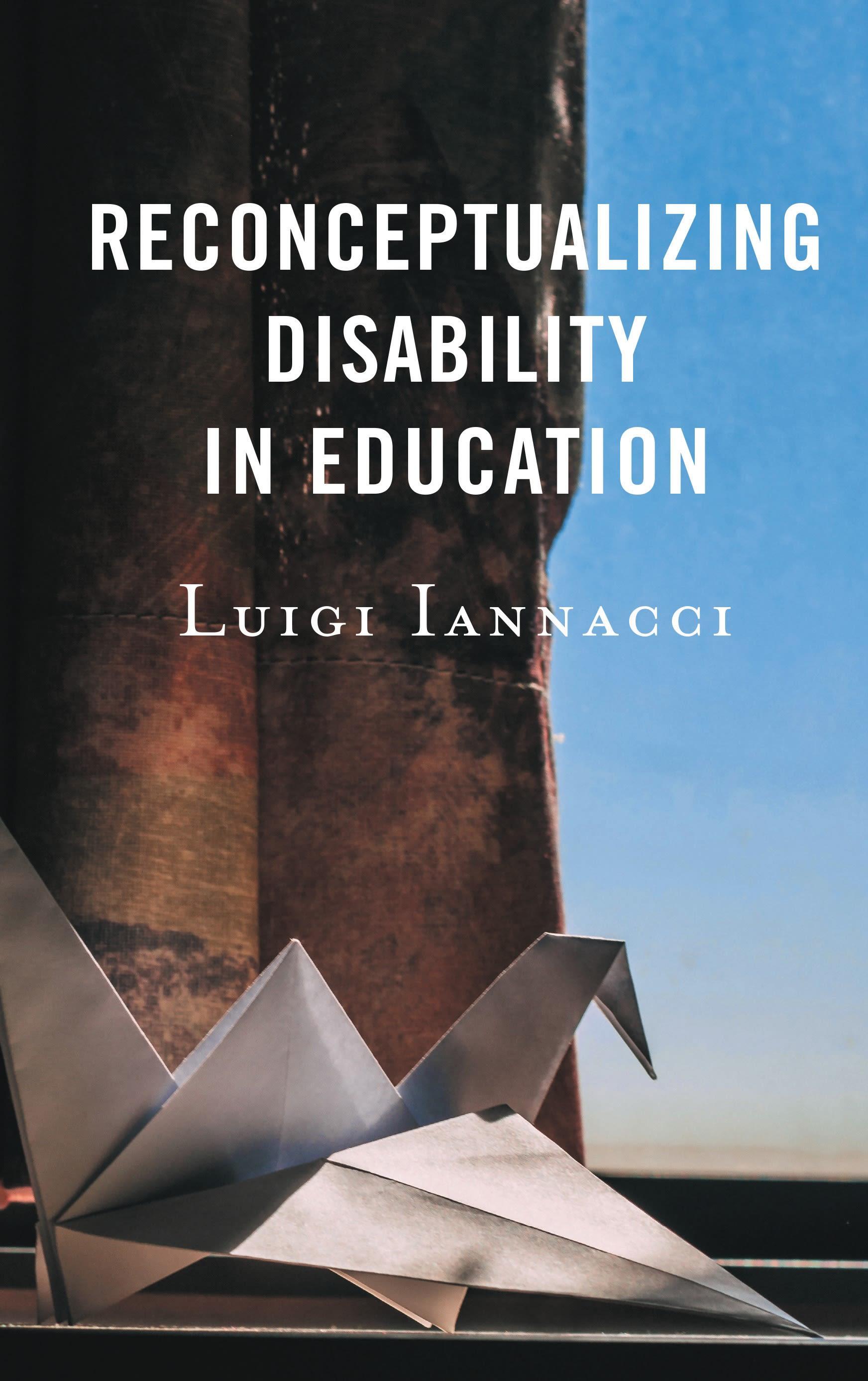
Reconceptualizing Disability in Education provides an essential critical exploration of problematic discourses, practices, and pedagogies that inform how disability is presently understood and responded to within the field of education. Luigi Iannacci interrogates and destabilizes ableist grand narratives that dominate every aspect of how disability is linguistically, bureaucratically, procedurally, and pedagogically configured within education. Ultimately, this book seeks to forward human rights for people with disabilities in educational contexts by clarifying and operationalizing inclusion so that it is not just a model necessitated by a hierarchy of legality, but rather a set of beliefs and practices based on critical analyses and a reconceptualization of current understandings and responses to disability that prevent inclusion and human rights from being realized.
As the book is grounded in reconceptualist theorizing, it draws on multiple perspectives—including critical disability theory, post-modernism, critical theory, critical pedagogy, and social constructivism—to deconstruct and destabilize what is currently taken for granted about disability and those ascribed disabled identities within education. A variety of personal, professional, research experiences and data are offered and drawn on to critically address questions regarding philosophical, epistemological, pedagogical, organizational, economic, and leadership issues as they relate to disability in education. Critical incidents, interviews, documents, and artifacts are drawn on and narratively presented to explore how disability is presently configured in language, identification, and placement processes, discourses, pedagogies, and interactions with students deemed disabled, as well as their parents/caregivers. This critical narrative approach fosters alternative ways of thinking, speaking, being, and doing that forward a human rights focused model of disability that sees as its mandate the amelioration of people with disabilities within education.
As the book is grounded in reconceptualist theorizing, it draws on multiple perspectives—including critical disability theory, post-modernism, critical theory, critical pedagogy, and social constructivism—to deconstruct and destabilize what is currently taken for granted about disability and those ascribed disabled identities within education. A variety of personal, professional, research experiences and data are offered and drawn on to critically address questions regarding philosophical, epistemological, pedagogical, organizational, economic, and leadership issues as they relate to disability in education. Critical incidents, interviews, documents, and artifacts are drawn on and narratively presented to explore how disability is presently configured in language, identification, and placement processes, discourses, pedagogies, and interactions with students deemed disabled, as well as their parents/caregivers. This critical narrative approach fosters alternative ways of thinking, speaking, being, and doing that forward a human rights focused model of disability that sees as its mandate the amelioration of people with disabilities within education.
Betaal eenvoudig met kaart, Klarna, Apple Pay of Google Pay. Niet tevreden? Je hebt altijd 14 dagen bedenktijd. Lees meer in onze voorwaarden. Heb je vragen, mail ons dan via hello@memmo.org.
Memmo maakt studeren makkelijker – waar je ook bent ter wereld. Wij brengen je cursusboeken en slimme studietools samen op één plek: samenvattingen, quizzen, podcasts en flashcards. En Ted, je studievriend die antwoord geeft op alles wat je je afvraagt. Meer dan 50.000 studenten studeren hier al – gebouwd om je sneller te laten leren en minder stress te geven.