
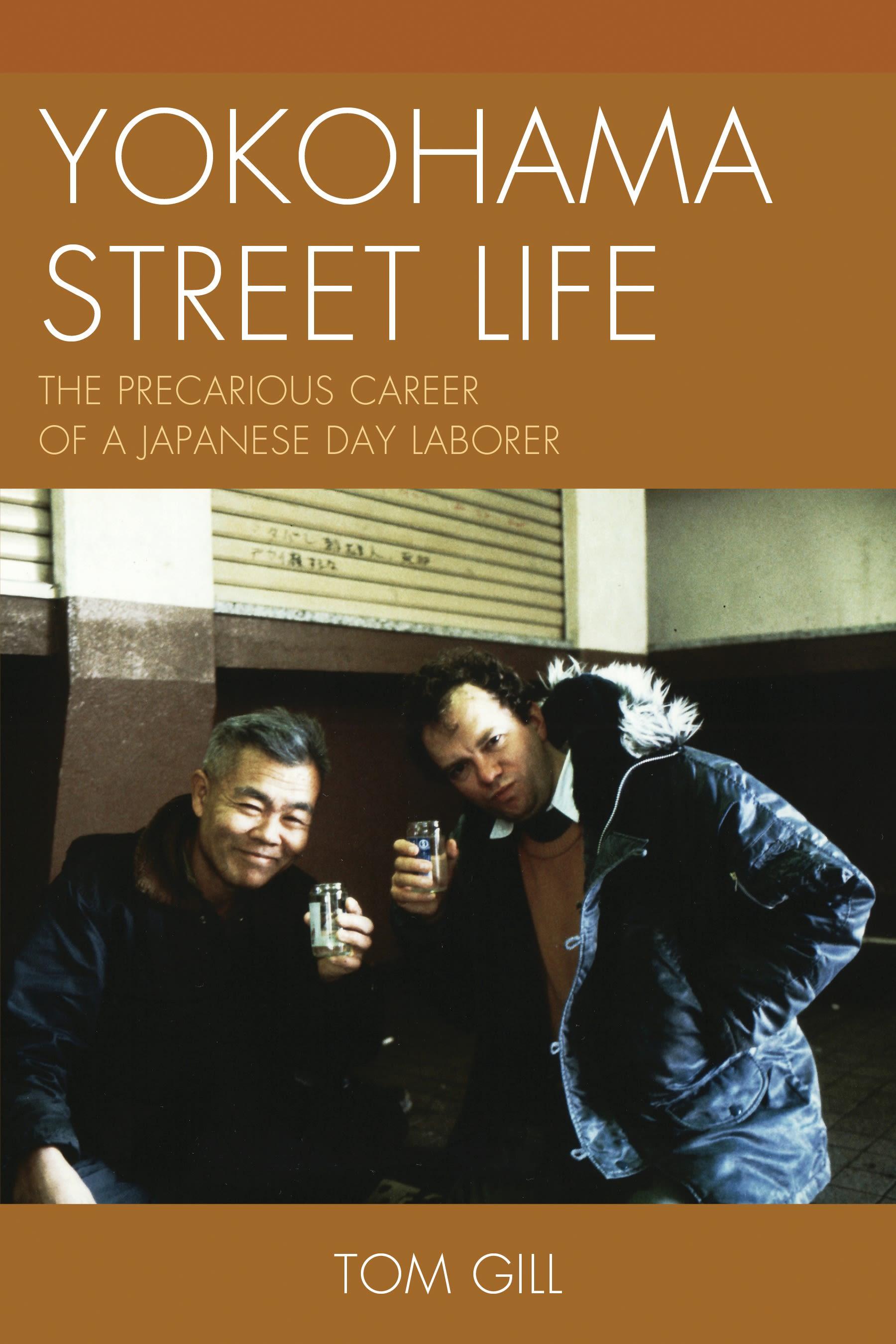
Yokohama Street Life: The Precarious Career of a Japanese Day Laborer is a one-man ethnography, tracing the career of a single Japanese day laborer called Kimitsu, from his wartime childhood in the southern island of Kyushu through a brief military career to a lifetime spent working on the docks and construction sites of Tokyo, Osaka and Yokohama. Kimitsu emerges as a unique voice from the Japanese ghetto, a self-educated philosopher whose thoughts on life in the slums, on post-war Japanese society and on more abstract intellectual concerns are conveyed in a series of conversations with British anthropologist Tom Gill, whose friendship with Kimitsu spans more than two decades. For Kimitsu, as for many of his fellow day laborers at the bottom of Japanese society, offers none of the comforting distractions of marriage, family life, or a long-term career in a settled workplace. It leads him through existential philosophy towards Buddhist mysticism as he fills the time between days of hard manual labor with visits to second-hand bookshops in search of enlightenment.
The book also portrays Kimitsu’s living environment, a Yokohama slum district called Kotobuki. Kotobuki is a ‘doya-gai’—a slum inhabited mainly by men, somewhat similar to the skid row districts that used to be common in American cities. Traditionally these men have earned a basic living by working as day laborers, but the decline in employment opportunities has forced many of them into welfare dependence or homelessness. Kimitsu’s life and thought are framed by an account of the changing way of life in Kotobuki, a place that has gradually been transformed from a casual laboring market to a large, shambolical welfare center. In Kotobuki the national Japanese issues of an aging workforce and economic decline set in much earlier than elsewhere, leading to a dramatic illustration of the challenges facing the Japanese welfare state.
The book also portrays Kimitsu’s living environment, a Yokohama slum district called Kotobuki. Kotobuki is a ‘doya-gai’—a slum inhabited mainly by men, somewhat similar to the skid row districts that used to be common in American cities. Traditionally these men have earned a basic living by working as day laborers, but the decline in employment opportunities has forced many of them into welfare dependence or homelessness. Kimitsu’s life and thought are framed by an account of the changing way of life in Kotobuki, a place that has gradually been transformed from a casual laboring market to a large, shambolical welfare center. In Kotobuki the national Japanese issues of an aging workforce and economic decline set in much earlier than elsewhere, leading to a dramatic illustration of the challenges facing the Japanese welfare state.
Betaal eenvoudig met kaart, Klarna, Apple Pay of Google Pay. Niet tevreden? Je hebt altijd 14 dagen bedenktijd. Lees meer in onze voorwaarden. Heb je vragen, mail ons dan via hello@memmo.org.
Memmo maakt studeren makkelijker – waar je ook bent ter wereld. Wij brengen je cursusboeken en slimme studietools samen op één plek: samenvattingen, quizzen, podcasts en flashcards. En Ted, je studievriend die antwoord geeft op alles wat je je afvraagt. Meer dan 50.000 studenten studeren hier al – gebouwd om je sneller te laten leren en minder stress te geven.