
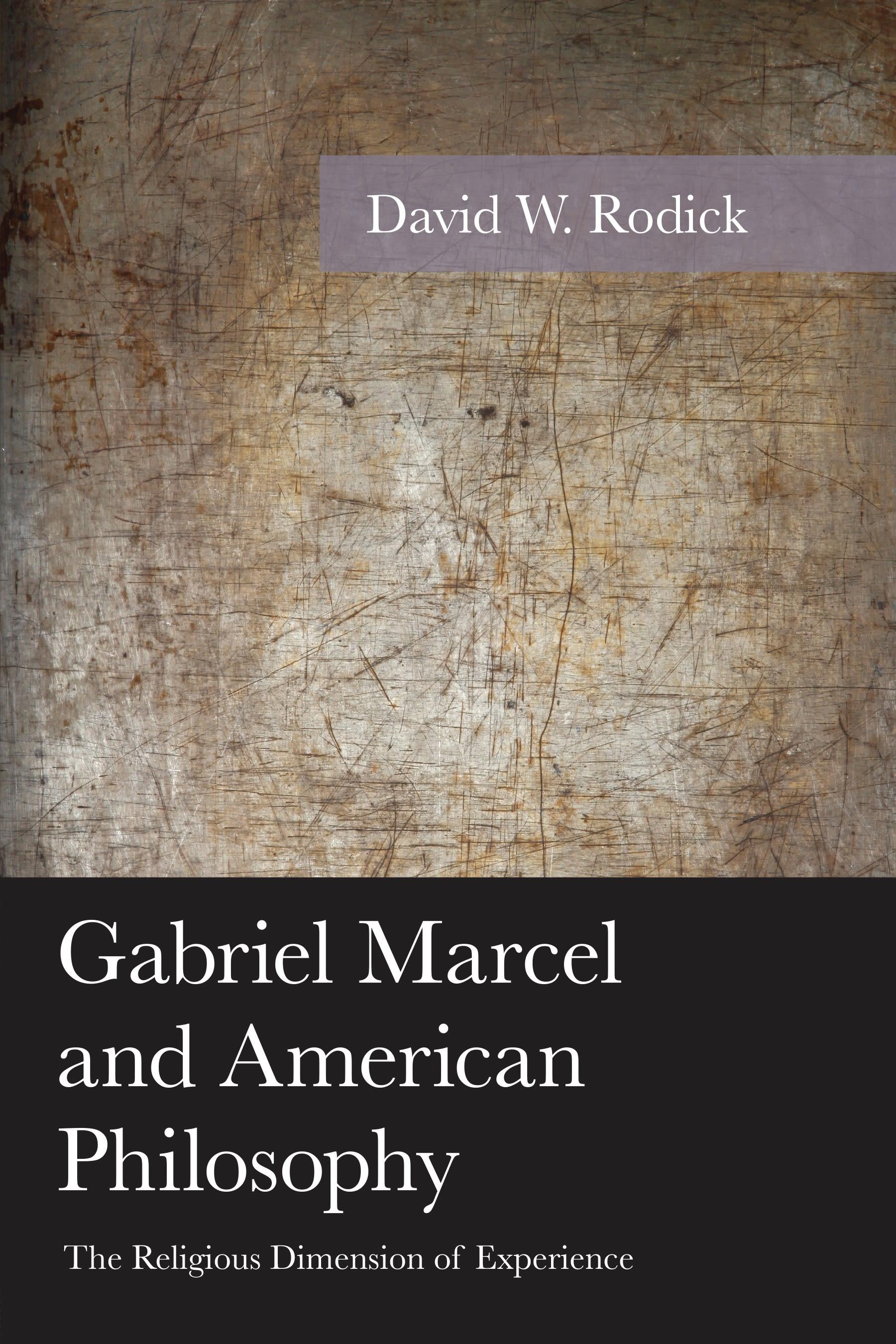
Gabriel Marcel and American Philosophy: The Religious Dimension of Experience examines the philosophy of Gabriel Marcel and its relationship to key figures in classical American Philosophy, in particular Josiah Royce, William Ernest Hocking, and Henry Bugbee. Few scholars have taken sufficient note of the fact that Gabriel Marcel’s thought is vitally informed by classical American philosophy.
Marcel’s essays on Royce offer a window into the soul of Marcel’s recent philosophical development. The idealism of early Marcel stemmed from an omnipresent sense of a “broken world”—an experience of rent or tear within the tissue of experience similar to what John Dewey referred to as an “inward laceration of the spirit.” Furthermore, Marcel’s intuition concerning the primacy of intersubjective experience can help us understand W. E. Hocking’s thought. Finally, Marcel’s notion of l exigence ontologique clarifies his relationship to Henry Bugbee. Marcel and Bugbee explore the contour of experience—the indigenous circuit of associations pertaining to the self as coesse. Through a reflexive act Marcel refers to as “ingatherdness,” the self undergoes increasing degrees of unification by experiencing “an act of faith made explicit only in a dialectical act of participation.”
David W. Rodick shows that Marcel’s relationship to these American philosophers is not coincidental, but rather the philosophical expression of his Christian faith. Marcel’s most important legacy is his commitment to unity of Christian philosophizing, a unity derived from both reason and revelation. Its diversity stems from the objective plurality of what is pursued as well as the subjective plurality of those who pursue it. Christian philosophizing seeks a truth that every Christian believes can never be untrue to itself.
Marcel’s essays on Royce offer a window into the soul of Marcel’s recent philosophical development. The idealism of early Marcel stemmed from an omnipresent sense of a “broken world”—an experience of rent or tear within the tissue of experience similar to what John Dewey referred to as an “inward laceration of the spirit.” Furthermore, Marcel’s intuition concerning the primacy of intersubjective experience can help us understand W. E. Hocking’s thought. Finally, Marcel’s notion of l exigence ontologique clarifies his relationship to Henry Bugbee. Marcel and Bugbee explore the contour of experience—the indigenous circuit of associations pertaining to the self as coesse. Through a reflexive act Marcel refers to as “ingatherdness,” the self undergoes increasing degrees of unification by experiencing “an act of faith made explicit only in a dialectical act of participation.”
David W. Rodick shows that Marcel’s relationship to these American philosophers is not coincidental, but rather the philosophical expression of his Christian faith. Marcel’s most important legacy is his commitment to unity of Christian philosophizing, a unity derived from both reason and revelation. Its diversity stems from the objective plurality of what is pursued as well as the subjective plurality of those who pursue it. Christian philosophizing seeks a truth that every Christian believes can never be untrue to itself.
Pagina's: 152
Categorie: Filosofi
e-ISBN: 9781498510448
Verzendgewicht: 1.2 kg
Verzending binnen: 1-2 dagen
Betaal eenvoudig met kaart, Klarna, Apple Pay of Google Pay. Niet tevreden? Je hebt altijd 14 dagen bedenktijd. Lees meer in onze voorwaarden. Heb je vragen, mail ons dan via hello@memmo.org.
Memmo maakt studeren makkelijker – waar je ook bent ter wereld. Wij brengen je cursusboeken en slimme studietools samen op één plek: samenvattingen, quizzen, podcasts en flashcards. En Ted, je studievriend die antwoord geeft op alles wat je je afvraagt. Meer dan 50.000 studenten studeren hier al – gebouwd om je sneller te laten leren en minder stress te geven.