
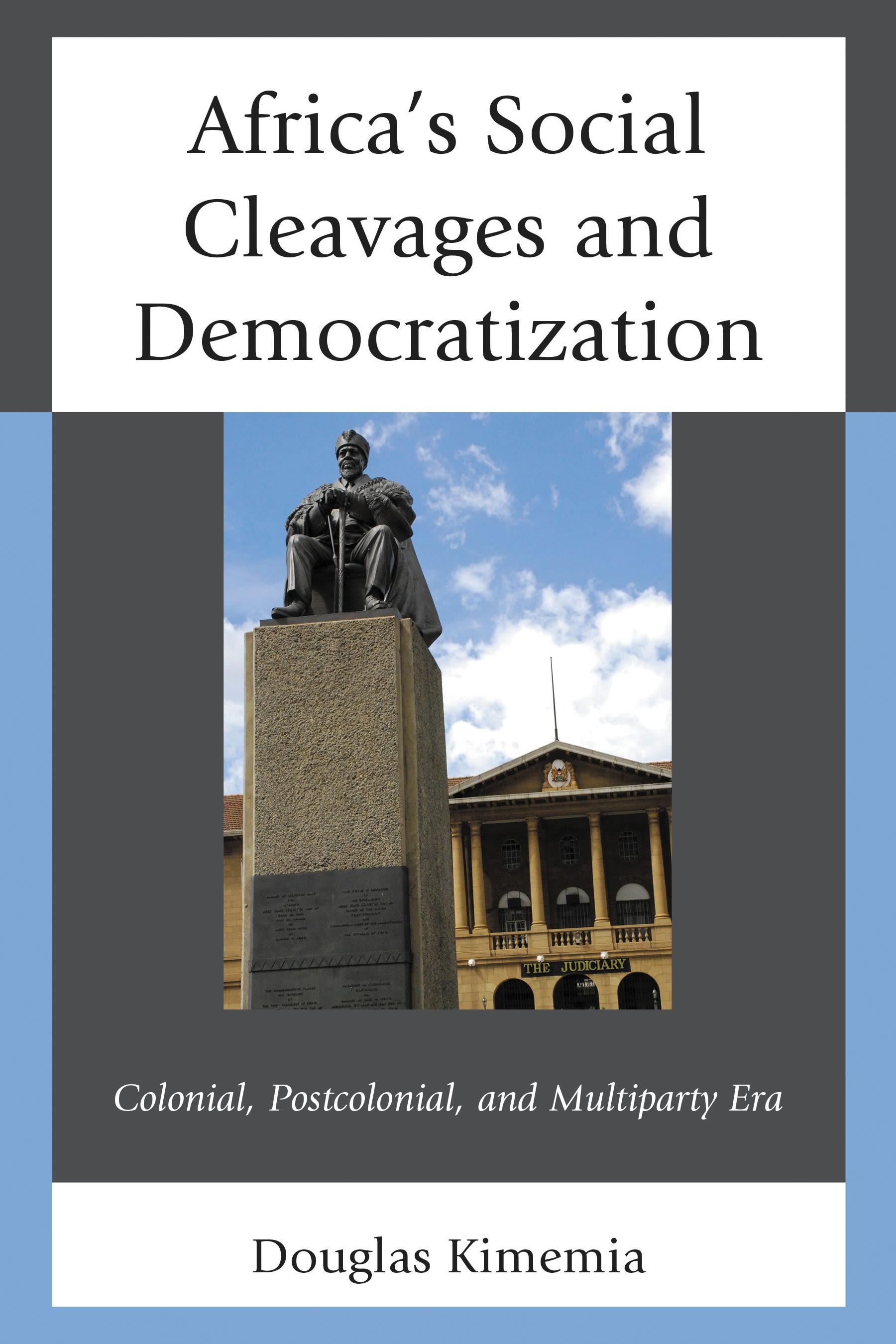
Africa’s Social Cleavages and Democratization offers a comparative approach to African countries by providing an in-depth analysis of the impact of ethnicity and religion on both multiparty and post-multiparty eras. By applying different theoretical frameworks, Douglas Kimemia explores and analyzes how social cleavages have affected the growth of democracy in Africa.
It is crucial to assess the relationship between democratic development and the impact of social cleavages, because multiparty politics have increased political competition, participation, transparency, and civic engagement in Africa. However, social divisions have significantly slowed the maturing of democracy, as these social cleavages have become polarizing factors, which are used by political elites for their own self-interest. As a result, politics of identity caused by competition of natural resources have led to increased conflicts and political instability in Africa. The social cleavages have also led to polarized party systems and caused adverse effects on democracy due to the highly polarized societies and political competition.
Despite the many positive impacts, multiparty politics have increased the consciousness of ethnic and religious identities, leading to unhealthy political competition as evidenced by highly fragmented societies prone to conflicts and violence. Kimemia comprehensively examines different governing, electoral, and party systems in order to determine the different incentives and how social divisions shape them. This analysis helps to distinguish more permanent political structures from the merely epiphenomenal within the African political scene.
It is crucial to assess the relationship between democratic development and the impact of social cleavages, because multiparty politics have increased political competition, participation, transparency, and civic engagement in Africa. However, social divisions have significantly slowed the maturing of democracy, as these social cleavages have become polarizing factors, which are used by political elites for their own self-interest. As a result, politics of identity caused by competition of natural resources have led to increased conflicts and political instability in Africa. The social cleavages have also led to polarized party systems and caused adverse effects on democracy due to the highly polarized societies and political competition.
Despite the many positive impacts, multiparty politics have increased the consciousness of ethnic and religious identities, leading to unhealthy political competition as evidenced by highly fragmented societies prone to conflicts and violence. Kimemia comprehensively examines different governing, electoral, and party systems in order to determine the different incentives and how social divisions shape them. This analysis helps to distinguish more permanent political structures from the merely epiphenomenal within the African political scene.
Pagina's: 396
Categorie: Statsvetenskap & Politik
e-ISBN: 9781498500203
Verzendgewicht: 1.2 kg
Verzending binnen: 1-2 dagen
Betaal eenvoudig met kaart, Klarna, Apple Pay of Google Pay. Niet tevreden? Je hebt altijd 14 dagen bedenktijd. Lees meer in onze voorwaarden. Heb je vragen, mail ons dan via hello@memmo.org.
Memmo maakt studeren makkelijker – waar je ook bent ter wereld. Wij brengen je cursusboeken en slimme studietools samen op één plek: samenvattingen, quizzen, podcasts en flashcards. En Ted, je studievriend die antwoord geeft op alles wat je je afvraagt. Meer dan 50.000 studenten studeren hier al – gebouwd om je sneller te laten leren en minder stress te geven.