
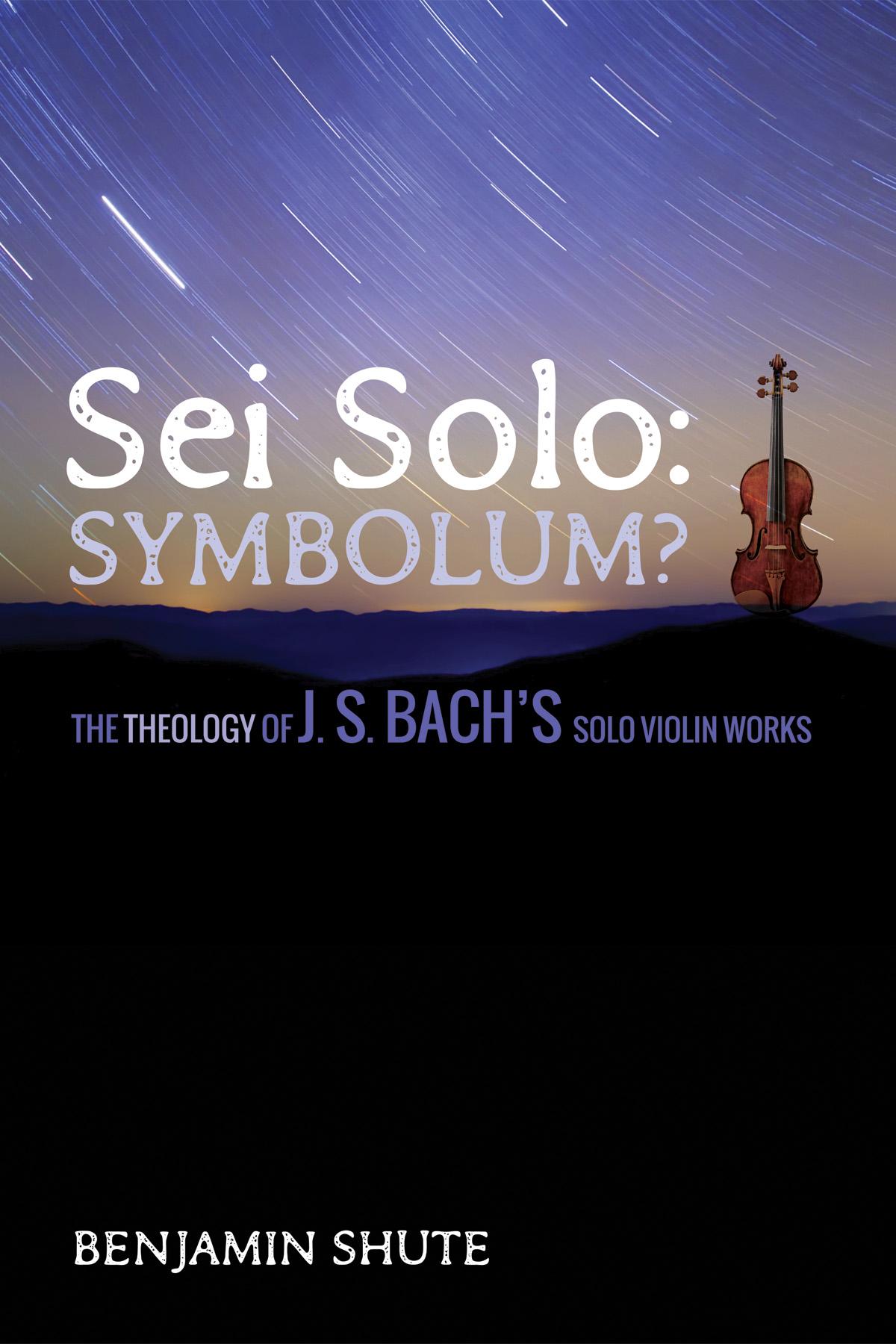
One of the jewels in the crown of Johann Sebastian Bach's sacred music is its use of astonishingly subtle and complex allegorical and representational devices. But when similar devices appear in the context of one of Bach's untexted, secular, instrumental collections such as the Six Solos (sonatas and partitas) for violin, the question arises whether he might be intending to embed discernible theological significances there as well, thus infusing the secular with the sacred. Such designs would be reasonably plausible within Bach's musical, cultural, and religious context.
Shute carefully investigates the extent to which musical features of the Six Solos that seem to invite theological parallels might indeed have been intended to do so. Although the precise extent of Bach's intentions cannot be ascertained with certainty, the degree of correlation among strong potential signifiers would seem to suggest that they, and many other features of the Six Solos, are best explained as the product of extensive theological-allegorical designs on Bach's part, like those evident in his texted vocal music.
Betaal eenvoudig met kaart, Klarna, Apple Pay of Google Pay. Niet tevreden? Je hebt altijd 14 dagen bedenktijd. Lees meer in onze voorwaarden. Heb je vragen, mail ons dan via hello@memmo.org.
Memmo maakt studeren makkelijker – waar je ook bent ter wereld. Wij brengen je cursusboeken en slimme studietools samen op één plek: samenvattingen, quizzen, podcasts en flashcards. En Ted, je studievriend die antwoord geeft op alles wat je je afvraagt. Meer dan 50.000 studenten studeren hier al – gebouwd om je sneller te laten leren en minder stress te geven.
Misschien vind je dit ook leuk
Koop het boek0